My first Wine Bloggers Conference!

I am going to my first Wine Bloggers Conference taking place later this year, August 13-16th, in the Finger Lakes in New York. I must confess I have never been to any type of bloggers conference.

I have been in the wine business for over a decade, but I have been mainly involved in sales. I have always loved reading articles and books from the great wine writers of the world, and even though I have fantasized about writing one day, I have never thought of myself as being a writer.

For many years, I have privately written my thoughts about wine and everything else in my life that I connect with wine. My writing was only for me, because I thought I could never write well. Last June, I decided to write a blog. I knew that I could never be a great writer (my work desperately needs an editor!), but I felt I had many thoughts that I wanted to share, and I wanted to hear back from others about all these ideas I would love to roll around in my brain.

After many months, I have received great feedback about my writing. Yes, it is not the most elegant in the world. I’m still working on that aspect of it. But it seems some people find my thoughts and ideas interesting. They like my “conversational” style. And I really have enjoyed the people I have met through social media who agree or disagree with my ideas. I love the debates and learning from other people who have far greater expertise in other areas of wine.

It has enriched my life tenfold, and I think back on my initial fears and I say to myself, “Why was I so afraid of putting my writing out there in the first place?” And so I am trying another first, I am attending my first Wine Bloggers Conference.

I really look forward to not only learning more about Blogging and everything that comes with it, but I look forward to meeting bloggers from all over the world.

Finger Lakes

And this is my first time in the Finger Lakes. I know, I know…I have lived in New York City for over 21 years. My husband went to school in the Finger Lakes and always talks about the beauty of the place. I have traveled to many vineyards around the world, but never the Finger Lakes. I guess I always took it for granted that I would go, and as we all know, time passes too quickly. And since I am turning 40 in May, I have made a promise to myself that there are no more “I’ll do it next year”…. especially if it is something that is within the realm of a realistic thing I can accomplish.

So I look forward to experiencing the stunning beauty of the Finger Lakes, meeting many of the other wine bloggers, and blogging my little heart out in August.

If you are interested in checking out some information about this conference, I have provided a link below:

2015 Wine Bloggers Conference, August 13-16th 2015 in Finger Lakes, New York

twitter: @WineBloggersCon

Hashtag: #WBC15

http://winebloggersconference.org/conference-details/

Posted in Dame Wine | Tagged | Leave a comment

Can producers express the same terroir differently? Or is there only one way to express that terroir?

The first line in The Oxford Companion to Wine says this under the definition of terroir: “Terroir — much-discussed term for the total natural environment of any viticultural site.”

Meo 2

I have been thinking about this topic since my tasting with Jean-Nicolas Méo and Sebastian Cathiard on February 25th. Even though it was a great honor to taste the wines of Sylvain Cathiard, and they were ridiculously stunning, it is the words of Jean-Nicolas Méo that keep echoing in my head.

Jean-Nicolas Méo talked about the importance of expressing terroir, but he also wanted to emphasize that they have a very specific winemaking style that brings a rich texture and focus of the expression of ripe fruit, first and foremost. I have loved Méo-Camuzet for many years, and his Clos Vougeot, which is the wine that has garnered them the most notoriety, has always been one of those wines that have blown me away.

I always knew their wine stood out from their contemporaries, but I never thought of their wines being so dominated by their winemaking practices. But Jean-Nicolas talked about how his father always believed in texture and a ripe fruit quality (almost giving a sweet impression), and accomplished it by not only producing high quality fruit, but by 100% de-stemming, cold soaking followed by a long fermentation on the skins which would reach temperatures as high as 35C, and lots of new oak. This gives the wine aromatics and structure, and these practices make them more accessible at a younger age.

Meo 3

I have to admit that it was surprising how good his 2012 Clos Vougeot tasted that day. I can not think of another producer of this Grand Cru that has such sensuous wines so early… or even anytime in its life, since Clos Vougeot is typically more reserved in style, especially on the body.

It is always interesting for me to hear a Burgundian producer talk about winemaking with such technical enthusiasm. I think because I used to place Burgundy on this unrealistic pedestal that it was quintessentially about place and the winemaking just needed to not get in the way. But when someone in the room asked if the “sweet fruit” quality was reflective of the vintage or vineyard of the 2012 Clos Vougeot, Jean-Nicolas said it was the winemaking, not the vintage or vineyard. And anyone who knows the 2012 Burgundies knows it is not a ripe vintage!

I remember talking to a producer several years ago, who came from a long line of Burgundian producers, who said that in his mind, the villages and vineyards of Burgundy did not show distinct differences because of the terroir, it was the winemaking. He said that producers made their wines in a particular style to meet the expectation of the place. I will not name this producer, as he told this to me during a private tour with only my husband and me. And I think he may have not been as honest about his opinion if he felt it was going to be written down in a blog. But I always think of what he told me.

But do we want all wines from a specific terroir to taste the same with each producer?

Clos Vougeot is a perfect example of producers not only having stylistic differences, but drastic quality differences as well. Yes, it is the largest Grand Cru vineyard in the Côte de Nuits, and you can even feel how it significantly slopes in certain areas when you walk around it. But these differences have something to do with winemaking practices as well. Some producers simply have more resources to buy better equipment and more staff on hand for better practices. Or some, like Méo, believe that even though you have high quality grapes, it doesn’t mean you cannot improve on them… or improve them according to what the ideal style should be to the producer.

What about natural microbial substances on the grapes? Do we want them to flourish to express terroir? Do we take away some terroir if winemaking interventions go too far?

Last year, I went to a seminar that was taught by Dr. Hildegarde Heymann, who teaches at the Department of Viticulture and Enology at UC Davis. She proudly spoke about the incredible work of one of her doctoral students. This student was in the process of proving that there are different  microbial substances on grapes in neighboring vineyards. His studies focused mainly on Sonoma, but it’s research that could be eventually applied to many different regions.

And this made me think about terroir in the sense of the expression of these microbial substances. Are modern winemaking practices keeping us from experiencing these bacteria and yeasts from these specific terroir?

Okay, now I’m going into a natural wine debate. And really this is not a blog post about the idea if producers should risk stuck ferments or bacterial spoilage for a more “natural” product. This blog post is about how far winemaking can go before it no longer expresses terroir.

When we think of expressing our true selves, do we think that we will allow any trait that naturally pops up in our personality? Unfortunately, I have known way too many people who have had the attitude that it was okay to do or say whatever they wanted as long as it was truly expressing themselves!

Or is it better to want to encourage and take on traits that are positive such as compassion, loving, wise and insightful traits, and work on getting rid of those negative traits such as  being selfish, insecure and uncaring. And yes, you can bring up the point that some people are born very compassionate, sweet people… even possibly going against their parentage, and some are born more selfish. They are even conducting experiments on the brain that show an area of where we are capable of compassion, and some people have more activity in that area than others. But no matter what we were handed in life, we can always work on it. They have even proven that people can form new connections in their brains by consciously choosing to think another way.

But let us take it even further. Some people encourage traits in themselves that others may find silly and unconventional. Would you say that a person is not a good representative of where they came from because they are not a typical example of their origin?

You can relate this to grapes. Some are higher quality than others, but in today’s modern times, producers can fix a lot of problems if they get to it soon enough. And there are some winemakers that want to express certain things about their terroir and not other things, and they would like to add some other flavor and textural elements, like oak, to enhance those qualities that they would like to highlight.

And there is no doubt that the Méo-Camuzet wines are great wines that have a huge following. And their Clos Vougeot expresses the terroir, but with a richer, more fruit driven style.

So yes, a producer can express terroir and express it in a different way than many of their counterparts…. and who knows, what is considered atypical now may one day become typical. And things are already changing. You cannot always count on a specific area of the world to employ a specific winemaking practice.

I have never been interested in a person’s pedigree: origin, family tree, education, social status; I have always been more interested in the choices they have made, and who they have decided to become… and I think that’s why I can appreciate a certain amount of manipulation to a wine that gives you a different experience of that place.

***************************************************************

meo 1

Tasting notes from wines tasted on February 25th, 2015

-2012 Méo-Camuzet Bourgogne Rouge
Fresh raspberry with slight truffle… yes, truffle at a Bourgogne level! And good amount of weight for this level, round tannins

-2012 Méo-Camuzet Clos Vougeot
Interesting spice on the nose such as coriander with saline minerality and sweet cherry finish… and the body and texture.. yes, it is very seductive. I know Clos Vougeot is not supposed to be this luscious, and especially from a lesser vintage, but every drop was enjoyable to taste

-2012 Sylvain Cathiard Nuits-Saint-Georges ‘Les Murgers’
Earthy, very structured wine with muscular tannins, black fruit, forest floor…both of Cathiard wines have an incredible energy to them.. much more reserved than Méo but if you wait and take your time with them, they are breathtaking

-2012 Sylvain Cathiard Vosne-Romanee ‘Les Malconsorts’
More weight on the mid palate and silky, more feminine tannins, and lovely floral note with bright red currant fruit

Posted in Dame Wine | Tagged , , , | 4 Comments

At the end of the day, the greatest wine is red.

I promise, I am not trying to be provocative. This is a past Masters of Wine question, and due to that fact, and the fact it seems like it will be a lot of fun to tackle… I’m taking the challenge of trying to answer it.

Carbonnieux

I started thinking about this essay when my store was visited by Marc Perrin, one of the family members of Château Carbonnieux. Since Carbonnieux is in the Pessac-Léognan (Graves) instead of the Haut-Médoc in Bordeaux, it is known more for their whites than their reds. At this tasting, we discussed how the Carbonnieux white sold itself on reputation alone, but the red needed some hand selling. But the red is still more expensive than the white. Why?

Historically red wine, as far back as we can remember, has garnered the most amount of praise from wine critics. If you are known as a wine professional or wine connoisseur, then the most common question that you are asked is, “Do you prefer red or white?” And the answer at one time would have been “RED”… but times have changed. Many in the trade and wine geekdom world know that it is not such an easy question to answer.

But let’s go back to that vulgar subject: Money

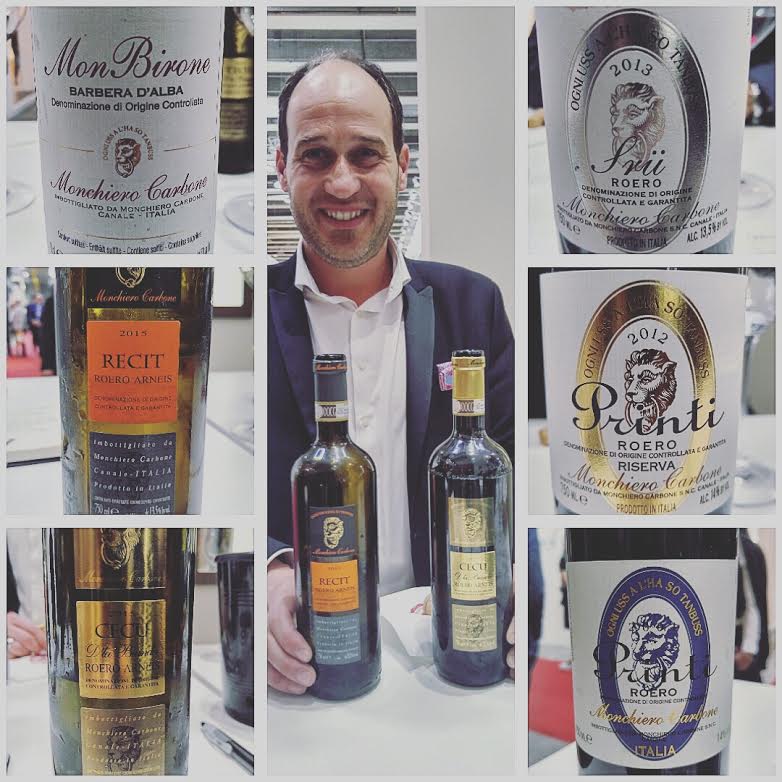
In general, red wines will always command more money than white wines. Even when Burgundy came out with their mind blowing 2010 whites, the reds were still more expensive than their quality equivalent white counterparts. And what about Giacosa’s Roero Arneis.. That is a beautiful, beautiful wine. I have been at many wine trade events that were showing the Giacosa wines, and everyone usually talks about the stunning Arneis…. and it is only around USD $27 retail.. always shocking to me. Yes, I know, the fine wine world of Piedmont is known for Barolo and Barbaresco, but some of the Giacosa reds command prices that far exceed 200 dollars and their Arneis can’t even get 30 bucks!

What about New World? Hunter Valley Semillons are great examples of white wines which are undervalued. Recently, I was able to buy a 2004 Tyrrell’s Vat 1 Semillon for only USD $35. This wine had layers of complexity: beeswax, toasted hay and roasted nuts with a great backbone of mouth watering acidity. Hunter Valley is a known white wine region, but their white wines, which rival the complexity of some of the great red wines in the world, will never see a price that even compares to their red counterparts.

Are there exceptions?

Yes, there are always exceptions. Aubert winery in Sonoma, California is able to charge more for their Chardonnays than their Pinot Noirs. But they are a cult winery that found fame on their single vineyard Chardonnay white wines.

For the most part, why do reds cost more money?

Winemaking

Well, some may argue that the winemaker usually has to do more work with a red wine than a white wine. For example, the extraction techniques that are needed for red wines make them more labor intensive. Also, typically reds will get oak treatment and many whites do not include oak in their winemaking or maturation. And higher quality reds will generally need to age for a longer time at the winery before they are released. All of the aforementioned points add to the overall cost.

But there are exceptions, and 1er Cru and Grand Cru white Burgundies are a huge exception.

Ageability

One may argue that there are more red wines that are built for aging. Some of the great, robust red wines of the world, in the best vintages, can age with improvement for 15 to 20 years. But what about Riesling? What about a German TBA Riesling? What about a Moelleux Vouvray? I know, I know not everyone likes older Chenin Blanc, but I am a fan. And what about MADEIRA? Compare Madeira to a red fortified wine counterpart, Port. A great Madeira can last for over a 100 years (and still be fresh and vibrant), but a great vintage Port can last maybe 50 years at the maximum. Listen, if you want to prove me wrong and pour me a vintage Port that is over 100 years old, then I am happy to taste it 😀

Madeira

Let’s go back to Bordeaux. The famous 1855 classification that deemed the greatest wines in the world were red wines (Haut-Brion is an odd exception with being known for their incredible whites, and even commanding higher prices for their white wines. But it is from Pessac-Léognan and I have no idea how it ended up as a First Growth for the red wines on the 1855 classification. Okay, another exception, but these exceptions are only a fraction of a percent). It is also interesting that during the same classification that white wines were ranked, but they only represent sweet white wines. Most fine wine drinkers are not going to drink sweet wines on a regular basis, and hence, the red wines were bound to get more attention from wine critics and influencers. And even though d’Yquem has the highest ranking in the classification, it will never be able to charge the price equivalent of a Lafite.

I know, d’Yquem was supposedly the most expensive wine during the time of the 1855 classification, hence it was given the highest ranking of Superior First Growth (Premier Cru Supérieur). It is much more expensive to make than the dry great wines of Bordeaux. But I’m talking about recent times and future times, and it will never get the same price as the dry red First Growths.

Yes, one can say that many of the above examples I gave for ageability that were sweet or fortified are not relevant considering most fine wines drunk are dry and unfortified.
And many winemakers would say that making dry red wine will usually be a more costly process than dry white wine.

What about respect?

A few years back, Lalou Bize-Leroy said in Decanter that price was a way of showing respect.

Maybe it comes down to the idea that we do not respect white wine as much as red wine. Somehow the idea of white wine being inferior to red wine was created a long time ago, and we keep reconditioning new generations to be of that mindset.

If I were to answer this question from the viewpoint of what the market tells us, then yes, the greatest wine is red.

My personal opinion is, “No, it is not the greatest.” And it is not such an easy question for me to answer, because my answer would really depend on the day.

***************************************************************
Wines tasted with Marc Perrin on February 18th, 2015

-2010 Carbonnieux Blanc

Notes of honeysuckle, wet stones, brown butter with a rich decadent body… the longer you leave it in the glass… the more complex it becomes… delicious..

-2012 Haut Vigneau Rouge

Dusty earth, exotic spice, round texture.. easy drinking, ready to drink now…

-2011 Tour Leognan Rouge

Coffee, bitter dark chocolate, structure is more firm than Haut Vigneau Rouge, mid palate is a little hallow, could use some decanting and a nice steak…

-2010 Carbonnieux Rouge

Dried herbs, cigar box and lots of fresh black currant… still very tight, needs a lot of time, huge structure, big but elegant…

-2008 Carbonnieux Rouge

More gamey than 2010, and a pretty floral note which I like very much… stewed black and red fruits and the finish ends with a lot of spice..

Posted in Dame Wine | Tagged , | 2 Comments

Is choice of wine bottle closure dependent on effectiveness or marketing?

Closures

It is funny how the universe seems to push you to write about a certain topic. A couple of weeks ago, on February 2nd, a few guys representing the PlumpJack winery group visited Sherry-Lehmann with the release of their new line of wines called Odette. We were given a staff tasting earlier that morning, and I really was most intrigued by their story of how they made headlines in 2000 when they became one of the first producers to release a luxury wine, their 1997 Reserve Cabernet Sauvignon, with a screw cap closure.

John Conover, general manager of PlumpJack, said they wanted to, “…change the way the game is done.”

PlumpJack

Those of you familiar with the PlumpJack Group know that it is a company that has large resources, and they make money from various ventures in hospitality. They have PlumpJack, CADE, and Odette Napa wineries, which are part of their group. And yes, this is not a little, struggling winemaker. But I started to think of the pros and cons in regards to effectiveness and marketing of different closures that would be relevant for small and large wineries.

It was serendipitous that my friend and creator of the #winelover community recently wrote a blog post about Coravin, the system that allows a wine drinker to draw off one glass at a time. But this is really only possible for corks, and so he questioned the validity of screw caps. This made me think about this topic even more and hence, here is my post on closures.

In 2013, the Wine Business Monthly Closure Survey Report, which helps to determine market trends in wine closures and perception by wineries, showed that natural cork ranked higher than the other alternative closures with the exception of price, product performance and ease of removal. Moreover, in the case of synthetic closures, there were even slightly negative perceptions in three attributes (overall rating, consumer acceptance and perceived environmental impact). Does the effectiveness of closures such as natural cork, synthetic, technical and screw cap, match consumer perception? Hmmm….

Quick note: I have excluded the glass closure Vino-Seal or Vinolok due to the fact that only a tiny amount of producers use them due to their high cost.

Natural Cork: Why are they the reigning king or queen of the closure world?

The traditional closure for wine bottles has long been the natural cork. It is cheap, readily available, comes from a renewable source, is biodegradable, is a good oxygen barrier and has an awesome anti-slip property. Corking machines have an easier time with inserting natural corks… they actually have some give… and for a small percentage of wines, they are great for maturation. Did I say maturation? I know, some experts question whether maturation continues in the bottle after what was initially started in barrels for wines meant to age. Some believe the wine is in an anaerobic state and it is actually a slow chemical change. So that may not be the strongest point.

But when it comes to marketing, traditionally, natural corks are associated with high quality. The ceremony of opening a bottle with a natural cork is a long tradition that has been prized in many long established wine consuming countries. That is changing… and not only do some winemakers want to change that perception, but some regions are out to change it too.

Why would anyone have a problem with natural cork?

CORK TAINT. The problem of cork taint has resulted in the reduction of the use of natural cork by producers. General estimates for cork taint seem to fall between 2-7%, although most of these studies do not involve chemical verification of the TCA in bottles, and there is no existing study that has a large enough sample size to be 100% valid. If you know of one please let me know!

Interestingly, the wine trade’s thoughts about TCA were challenged by an article in Decanter last year that reported scientists in Japan claimed that TCA does not produce a bad odor. Instead they state that TCA shuts down a taster’s ability to smell. I thought that was an interesting tidbit. Okay, getting back on track with closures and I’ll save the in-depth about TCA for another time.

Synthetic: I’m going to make this quick…

I’m not going to spend too much time on synthetic corks. Why? Have you ever seen and felt a synthetic cork? If so, you know why. They look and feel synthetic… ahahaha.. they are cheap. Which is fine when you are opening a bottle under USD $6… but if you are buying a wine for a special occasion, spending more than you typically spend, then touching a cork that has material that reminds you of a surgical glove really spoils the mood. And they are difficult to pull out. I have known wine consumers to return bottles because they could not get the synthetic closure out.

At one time, synthetic closures were known to damage corking machines because the material was too hard. They have improved, but because they will never be able to conform to filling the space at the top of a wine bottle like cork, they will never have the guarantee that cork gives as an oxygen barrier. I know some corks could be faulty… but I’m not going to get into that issue at this time. Synthetic closures are only suitable for immediate consumption.

In my opinion, synthetic closures have the lowest rating for effectiveness and marketing.
That wasn’t so quick, but I guess I needed to go off on a rant about it.

Technical Corks: Looks like a cork, but not a cork

This is the cheapest closure based on cork, also known as agglomerate cork. It is a cork where cork granules are stuck together by resin-based glue. Agglomerate corks are only suitable for wines with a short shelf-life because the resin disintegrates after a few months in contact with the wine. This is not so much of an issue since most wines are consumed immediately, but best to store the bottle standing up if you are going to wait a few months to drink it. Also, the Australian Wine Research Institute (AWRI) has conducted trials that showed technical corks absorbed more non-polar volatile compounds than cork. In other words, they are flavor scalpers! But the worst offenders in scalping the flavors of wine are synthetic closures. Oh yes, another nail in the coffin for synthetic closures.

I do not think that the above negatives are that bad in regards to an ideal closure choice for moderately priced wines that will be consumed immediately. They look and feel like cork (yes, some are much better than others), and they provide a good seal for the short term. And they are a lot less expensive than cork. Good for effectiveness, marketing and retail price!

Too good to be true

The technical cork Altec, by the French company Sabaté, was initially seen as a great advancement in technical corks with a more uniform, fine textured closure. Unfortunately, in 2001, they were sued by many wineries, one being Van Duzer in Oregon, for having unacceptable TCA levels in their Altec corks. Funny enough, initially customers thought it was glue taint.. well, not funny at the time. Sabaté took steps to eliminate this problem by washing the cork particles with super-critical carbon dioxide, which removes any residual TCA.

The state of technical closures today

There have been some great advanced achievements in technical corks. Twin Top, developed by Amorim, was based on technology used in Champagne. It is an agglomerated cork with two sections of natural cork at each end. Sabaté has come out with Diam, which is not only a technical cork that is treated with super-critical carbon dioxide, due to the issues discussed above, but it comes in different versions that allow for various levels of oxygen transmission rates.

But I think more than anything, Sabaté needed to improve their image after the marketing disaster of Altec. Even though they fixed the issue, a change of the name was necessary for successful sales.

Screw cap: Game changer

The effectiveness of the screw cap has certainly been a big topic within the wine trade in the last year. Over the past decade, screw caps are slowly gaining acceptance among the trade with their positive attributes of not causing taint, not suffering from extreme quality variation and they do not need a special tool to open them. There have been many trials by the AWRI that have shown screw cap as the best oxygen barrier when applied properly. They have the lowest oxygen transmission rates, and hence, lower doses of SO2 may be used…. Again, if they are applied properly! But also, AWRI trials have proven that they do not absorb flavor compounds…. no flavor scalping here.

Kareem Massoud, winemaker and family member of Paumanok Winery in Long Island, NY, invested in a screw cap bottling line in 2007. He said that he was convinced by its effectiveness when he worked a year at a New Zealand winery, and he uses screw caps for all his wines that are meant for immediate consumption. Besides the initial cost of the new bottling line, screw caps are also much more cost effective.

And two years ago, Stelvin released liners that are designed for screw caps that have different levels of oxygen transmission rates. Woot! Woot!

Yes, there is a lot of awesomeness when it comes to the effectiveness of screw caps. But what about marketing…

Yes, this closure is not trying to pretend to look or feel anything like cork. It says, “I am different, and I want you to know I am different.” That is me trying to pretend what a screw cap would say. Yes, Australia and New Zealand loves them. What about France?!

Lynn Marchive, Domaine des Malandes in Chablis, uses cork and screw cap on all her different quality levels, such as Grand Cru and 1er Cru. She said her choice of closure is dependent on the intended market. She uses cork with most of her wines that are above the Bourgogne appellation status that are sent to the US, and she sends all of her wines to Japan with screw caps, even the Grand Cru. Her decision on closure is based on what the market demands.

But there is an issue with effectiveness…uh-oh…

Two years ago, a Masters of Wine dissertation (it is currently no longer called a dissertation, but a research paper) was published in an Australian wine trade magazine. It presented evidence that claimed to show that screw caps cause more damage to wine than cork.

Say what?!

There were 22 retailers surveyed, most in Sydney area, and examined around 11,500 bottles. The result of this study was alarming. The overall physical damage level of the wines with closures that were screw caps was 26%. The screw caps that were damaged enough in transport to cause significant changes in the wine were 8.2%. In addition, 7.2% of screw caps were applied incorrectly. But many have argued that the sample size was too small for its claims to have validity.

And of course there is the idea of the Coravin, and how this may change the game for the game changer.

I think there are valid pro and con arguments for all of the closures. I do not 100% lean toward one or the other (except I do not like synthetic… I think I have made that clear….hehehe). But I really like how John Conover, PlumpJack winery, explained why they choose screw cap for their top wine 15 years ago. He explained that he believed in failure, so much so, that he believed there should be a prize for those who have the biggest failure each year. Because that is how you change the world, change the game. It is about taking a chance. It is how we leave our mark on the world. Some may disagree and some may agree, but at least there is a conversation.

And that’s what life is about… not so much finding what is the perfect answer, but enjoying the conversation.

***************************************************************

Odette wines tasted on February 2nd with PlumpJack, which comes from the Northern part of Napa Valley in California. “Adaption” wine uses grapes from the vineyards of CADE, PlumpJack and Odette in Napa. The Chardonnay was the only wine under screw cap.

-Odette Estate “Adaptation” Chardonnay 2013:

Slight spicy notes, very little french oak used, mainly stainless steel, moderate body, no MLF, so fresh and bright with white peach flavors

-Odette Estate “Adaptation” Cabernet Sauvignon 2012:

High alcohol (14.7%abv) but hides it well, and I am not a high alcohol girl, sweet cassis fruit, decent amount of tension with well-knit tannins and vivid acidity

-Odette Estate Cabernet Sauvignon 2012:

Firmer, lots of deep dark fruit flavors, and a hint of charcoal.. there is a nice savory/sweet quality to it… cocoa nibs wrapped in tobacco leaf

-Odette Estate “Adaptation” Petite Sirah 2012:

Opaque color, muscular body, chewy tannins, exotic spice, smoked bacon and blackberry jam


Posted in Dame Wine | Tagged , , , , , | 1 Comment

How would you sell wine to a Martian?

Sometimes these unorthodox questions are thrown around in the wine industry. It seems the key is to understand a customer that was truly foreign to the seller, and use selling tactics that were based on the understanding of that foreign customer.

This leads me to the idea of selling to customers in New York City. No, let me rephrase that, in Manhattan. No, let me rephrase that, to the wine trade in Manhattan that is associated with a more ambitious wine program. Yes, these are Martians. These are not your typical wine drinkers. Their drinking habits are sometimes odd, they use funny terminology and they will get excited over discussions of rootstock and specific yeast. I am one of these Martians…. and yes, we feel we have seen it all… but once in a while someone, someone special, will open your eyes to that which you were blind.

Oz Clark

Last week, on January 29th, I had the great honor of going to a class and lunch with Oz Clarke. He has co-authored many great wine books and is a wonderful personality in the wine world. And as a writer, he has such a distinctive voice. I had always wondered if he would be the same in person: witty, passionate, incredibly knowledgeable and down to earth. Happily I can say he is all of those things and more… he is one of those rare writers that make the words come more alive when he speaks them.

This master class was sponsored by the New Zealand Winegrowers, and the main focus, to me anyways, seemed to be, “What is exciting about New Zealand wine?!”

Honestly, I went because I wanted to see Oz Clarke. And I walked away not only being thoroughly impressed by him, but being thoroughly impressed and swept away by New Zealand. The kind of excitement I feel for French wines. Yes, I am that dirty word: FRANCOPHILE.

And I think this has to do with Oz Clarke. He knows how to sell to Martians! Or maybe he just knows how to inspire passion for wine regions, even in the hearts of those that were jaded long ago.

Oz c wa

I must admit that I have heard of Waitaki Valley but I knew very little about it. And I could sense the other Marians in the room were not familiar with it either. This made the Martians immediately perk up and want to know about something that could possible be so hip, that we, who were on the cutting edge of hip, did not even know about it. Waitaki is on the South Island and straddles the boundary between North Otago and Canterbury. It is known to suffer from frost almost every month. Matt Stafford, Chief Winemaker of Craggy Range, who was in attendance that day, confirmed this fact.

So why on earth would anyone plant vines there?!

According to Oz Clarke, there is a layer of limestone that gives a beautiful minerality and the conditions are great for aromatic varieties. Well, some of the Martians seemed to have issues with even the mention of the currently dreaded word “minerality”, and you could hear the rumblings of dissatisfaction in the room. Oz Clarke knew well enough about the whole “controversy” about saying that a wine gets “minerality” from the soil. He then expressed the idea, which was carried throughout the class, of the rarity of place and people that New Zealand presented as a country. In most other regions in the world, if the wine grower knew from the very beginning that they would have to deal with frost once a month, they would never even consider planting vines there. But not the New Zealand people! This fact just makes them want to give it a go even more. This seemed to please the Martians and they quickly forgot about getting into an argument about minerality, and were then open to hearing about what was exciting about New Zealand.

New Zealand SB

Then there was a point where we had to cover Marlborough. Many Martians at this time started to check their email. And Oz knew that the Martians were over Marlborough Sauvignon Blanc. Even though it is the top selling New Zealand wine category, even though a great wine making country such as Australia has Oyster Bay New Zealand Sauvignon Blanc as their #1 selling wine, it is too overdone for Martians to take any interest. Yes, they have to represent them on their wine lists, they know many of their customers want it, but they don’t have to like it. And as the New Zealand Sauvignon Blanc wines were poured, I could sense that the other Martians did not even want to bother with these wines. The Martians were there for the Syrah wines from Hawke’s Bay! (By the way, I do love Hawke’s Bay Syrah. Please try to taste it if you have not already.)

Marlborough

But then Oz, with his talent and skill for breathing excitement and life into language, started describing the Marlborough Sounds, which is a remote pristine maritime oasis. And that the legend of its beauty inspired many sailors over the past couple of centuries to travel through hellish, life threatening conditions so they may have the slight chance of experiencing paradise. But he had a way of saying the words that reached beyond our minds to tap into our hearts, and he connected with the Martians’ desires to want to escape to a place that was very different from Mars.

Then there was the risky mention of Cloudy Bay. Oh yes, Cloudy Bay is what put Marlborough Sauvignon Blanc on the map. It is the epitome of what Martians do not typically find exciting: a successful wine brand. He talked about the senior winemaker Tim Heath and how he was very uninterested in talking about only specific winemaking techniques that he employs at Cloudy Bay. I have found that true in my own experience. Tim visited my wine store for a staff tasting a year and a half ago. I asked him several technical winemaking questions, and he seemed as if he was always trying to bring the conversation back to the idea of place, the idea of New Zealand. Oz said Tim is a true lover of New Zealand who would be happy to talk to anyone about his favorite spots to fly-fish,  or about any authentic interest in the country itself. And I think the main point of this master class was the idea that you need to try to get to know a place before you can ever truly understand their wines.

How would you sell wine to a Martian?

You need to know their habits, pricing limits (or lack of limits), attitude towards wine, level of knowledge, and those cultural idiosyncrasies that make certain promotional aspects either offensive or appealing. But beyond those different factors there is a commonality to all customers, Martian or not, that was prevalent throughout this whole workshop. It is simply the following:

The Human Spirit

All of us have our fantasy of either being superheroes, taking on something personally terrifying or simply living our lives by being true to ourselves without worrying about being judged, ostracized or seemingly coming off as failures. But at the end of the day, all of us know we will be judged by not just one, but by many, no matter what we do. We feel we cannot win.

On that day, Oz Clarke presented a place that seemed adventurous and free of those worries of being judged for being different. This may not be true in the reality of daily life in New Zealand, but it was nice to be transported to this magical world that Oz Clarke created. It was even better than the original movies of the Lord of the Rings… because it involved wine!

******************************************************

Tasting notes from wines tasted that day, January 29th, 2015

-Seifried Sauvignon Blanc Nelson 2014

Green, herbaceous notes, more grass than asparagus

-Craggy Range Sauvignon Blanc Te Muna Road Vineyard, Martinborough 2013

Stony, flinty, terroir driven

-Cloudy Bay Te Koko Sauvignon Blanc Marlborough 2012

Textural wine due to barrel ferment, combination of aromatic lift and good amount of weight on the palate

-Mahi Ballot Block Sauvignon Blanc Marlborough 2008

A distinctive flinty nose, not too much of a green note, has a lot of life and very enjoyable even at they advanced age… surprising

-Clearview Reserve Chardonnay Hawke’s Bay 2013

Lean and focused with lovely peach fruit and a nice zing of acidity on the finish

-Carrick Chardonnay Central Otago 2012

Natural wine making.. biodynamic practices, low SO2, notes of hay and ripe melon, and a touch of kombucha… the Martians were going crazy for this wine

-Pyramid Valley Field of Fire Chardonnay North Canterbury 2012

I thought this wine was stunning, yes, natural practices as well, but more savory and less funk, it was rich with roasted hazelnut aromatics and a decadent full flavored palate balanced with an overall elegant quality

-Villa Maria Taylor’s Pass Chardonnay Marlborough 2011

More tropical fruit dominant with bright acidity, great purity

-Escarpment Pinot Gris Martinborough 2013

Good amount of body and creamy texture

-Aronui Riesling Nelson 2014

Pristine citrus fruit with mouth watering acidity

-Spy Valley Gewurztraminer Marlborough 2013

The purest smell of lychee one could ever smell and slight hint of rose petal

-Milton Riverpoint Vigonier Gisborne 2013

Only slight perfumed which was nice, and a fun saline finish

-Palliser Estate Pinot Noir Martinborough 2013

Red cherry and dried herbs

-Dog Point Pinot Noir Marlborough 2012

High-toned lifted aromatics of raspberry with lean texture

-Ostler Caroline’s Pinot Noir Waitaki Valley 2011

Ahhh.. the savory notes that I love with Pinot Noir, dried porcini mushroom and forest floor

-Valli Pinot Noir Central Otago 2009

Lush body with chewy tannins and crisp acidity with lots of black cherry flavors and hint of lapsang tea

-Passage Rock Reserve Syrah Waiheke Island 2012

Aromatic Syrah with peppery notes

-Cypress Terraces Syrah Hawke’s Bay 2012

More flesh on the palate, sweet fruit and exotic spice

-Craggy Range Le Sol Hawke’s Bay 2011

Smoky nose with bitter chocolate and black currant leaf, one of my favorite producers

-Kusuda Syrah Martinborough 2009

For bacon lovers, smoked meats and black cherries…. Okay, now I am hungry!

Posted in Dame Wine | Tagged , , , | 2 Comments

How and why do grape growers prune vines? (Bordeaux drinking earlier due mainly to better viticultural practices…)

Panos and gala Pichon Baron dinner and myself

Last week, January 19th, I attended a gala dinner in Washington DC that was arranged by Panos Kakaviatos, who is an incredible freelance wine writer, #winelover and I thoroughly recommend his blog at www.wine-chronicles.com Jean-Rene Matignon, technical director of Château Pichon Longueville Baron, helped with the assistance of Panos to lead us through a 13 vintage tasting of Pichon Baron (snap shot of tasting notes at the end of this blog for those who are interested), and I have to say I was extremely impressed by not only Panos’ command of the French language (as he needed to assist with translating) but also his knowledge, charm, wit and overall great energy that really helped to transform this wine dinner into a special event.

Pichon Baron Several Vintages

So what does this have to do with the title of this blog post? Well, those who know my writing know I have a tendency to focus on a certain aspect of a conversation and/or experience… and I think about that certain aspect and debate it in my mind.. and sometimes I get a chance to debate it with others.. which is always fun and a great learning experience. I started to think about pruning and its importance because Jean-Rene told me that it is the work in the vineyards that is really making Bordeaux more accessible earlier, not manipulation in the winery… I know, I know this is going to open a can of worms. Some people may talk about micro-oxygenation or even riper vintages (but you can still have green tannins with high sugar) and since many of you know I am struggling with the Masters of Wine program, I need to try to focus on one topic at a time. So let’s talk about pruning!

How and why do grape growers prune vines throughout the year?

The most important pruning is winter pruning, and the majority of this post will focus on pruning during the winter and not so much on trimming or summer pruning (crop thinning).

How do we prune?

Mechanical vs hand pruning

The factors that influence choosing one or the other involve the potential compaction of the soil, the layout of the vineyard, density of planting and style. Even though low density planting will lend itself to hand pruning such as Numanthia’s bush vines in Toro with 1000 per hectare, Pichon Baron employs hand pruning at a much higher density of 9000 per hectare. Yes, Jean-Rene said that hand pruning has more precision and hence there is a better chance for a healthy and overall more balanced vine. But also, it was interesting how he expressed that they are able to continue this practice and to a greater degree than ever before due to having more resources. He said having more resources helps them to produce higher quality grapes, which is making fine wine Bordeaux consistently higher quality, and this comes down to having the labor that is needed in the vineyard.

It is interesting to note that mechanical pruning is a common practice in South Eastern Australia and the Central Valley in California and other hotter wine regions. Since mechanical pruning typically leaves more buds on the vine the yield increases for the first few years. This may be an issue for some producers but not for others. It really comes down to the producer’s intention of style, and of course resources will always dictate what is possible and not possible.

Why would you want to prune more or less?

This may be influenced by vigor of variety (scion) and/or climate. Sauvignon Blanc is a very vigorous variety and some wineries may want to prune it more. Alternatively, the Te Kairanga winery in Martinborough says that they prune their Sauvignon Blanc less. They want higher yields instead of lower yields. By pruning for higher yields, allowing for more buds that produce more fruit, it stresses the vines to the point of requiring more hang time for physiological ripeness. According to Te Kairanga the longer hang time helps to reduce unwanted unripe, herbaceous flavors in their fruit.

Jean-Rene said that Pichon Baron does not have a general philosophy with pruning, but more of a case by case approach. They allow anywhere from 5 to 12 clusters per vine depending on age and variety. Theses decisions are changed annually to either increase or decrease the clusters as they observe the vines. This was not always the case when resources were lacking and manpower was limited and untrained.

Well, there is the simple fact that there are yield and harvest requirements. But a quality producer does not just follow the yield and harvesting requirements by the local appellation. A quality producer such as a super second as Pichon Baron will not risk its reputation for its Grand Vin. It will produce less of its top wine to keep the prestige of its name. As we all know, it is not enough to be a 2nd growth in current times. Major influencers will reclassify the 1855 classification according to their assessment of quality. That is why Palmer (3rd growth) can command more money on the market place than Brane-Cantenac (2nd growth).

Why prune at all?

It is important to get rid of the old fruiting wood and replace it with new fruiting wood. Too little fruiting wood will cause too much vegetation growth and potentially produces a canopy that causes too much shade and risk for disease; too much fruiting wood may produce too much fruit for a vine to fully ripen. But vines are greatly influenced by the weather. There may be less bunches of fruit due to poor weather during flowering. For example, in 2012 England was particularly wet and cold with many vineyards producing little, if no sparkling wine. If one could predict the weather, then perhaps they could always choose the right amount of fruiting wood to leave year after year. But it is difficult to predict the weather… like the recent snow storm in New York City that was supposed to be the Storm of a Century.. and suffice it to say, it was a little exaggerated 🙂

It was very interesting when someone else at the table asked Jean-Rene about terroir. He started to talk about terroir but ended up talking about marketing. It basically came down to the idea if a producer cannot successfully market their wine in today’s market then they will not be able to have the resources to invest consistently, and hence terroir is difficult to express.

This started a conversation among a few of us at the table regarding terroir and how at one time we associated Brettanomyces (bacteria on the grapes causing esters) with terroir. Then I remembered a seminar I attended last year discussing research at the University of Davis in California regarding microbial substances in vineyards, and how they may be associated with defining a specific terroir. Conversely, some would say that Brettanomyces is a fault. They believe only “fruit” esters truly express terroir.

Sometimes I think about the yearning for the good old days of Bordeaux. Would we still have it if pricing was more reasonable? Would we still want astringency and intensely earthy notes? I was introduced to Bordeaux over twenty years ago and it was a different animal. It was not as round or lush as the 2009s let’s say… and hence why I have a special place in my heart for the 2010s. I love their tannic tension. But do the lusher vintages bring a new audience? Keep Bordeaux current? And help to secure a future? The world is changing, and either Bordeaux evolves or becomes irrelevant.

Yes, there are many factors that make Bordeaux more accessible. Viticulture is only one of those factors, but I do agree an important one, since there are really only so many miracles one can perform in the winery. And there is still major vintage variation, hence showing it is not so easy to make a wine more accessible when dealing with mediocre grapes. I don’t mind being able to drink wines within 5 years instead of 15…. and I have to guess the older you get, it can only be a good thing to drink wines closer to release. But pricing… well, there are enough articles regarding that topic, but yes, hopefully the potentially great 2014 vintage will not revert to 2009 pricing. But for now all I can say is that I understand the importance of pruning and that it does not always go according to plan.

***************************************************************

Pichon Baron Several Vintages

Tasting notes from 13 vintage vertical on January 19th

(In the order of how I tasted them during the dinner)

-2006 Pichon Baron

Yes, the 2006 was a little closed and very tannic, but it had a great smoky quality… smoked meats.. seems like it will be like the 1996, but a little less fleshy on the mid palate. Needs a lot more time.

-2007 Pichon Baron

Intense aromatics with beautiful dried flowers and herbs, light body, soft texture. A lovely wine to drink today.

-2008 Pichon Baron

A very balanced wine, not a show stopper, but a great balance of the right amount of body, slight grip, bright acidity, fresh blackcurrant with interesting espresso notes. Could use a couple more years, but pretty accessible now.

-2001 Pichon Baron

They always say the biggest problem with the 2001s is that it came after the great 2000 vintage. A lot of elegance with this wine… restraint not as showy as the 2000s. Great purity of fruit with a great backbone of acidity.

-2002 Pichon Baron

Did not have as long of a finish as 2001, 2001 will go a lot further… but the 2002 was giving a lot more on the nose. Tobacco leaf, exotic spice, and a combination ripe and unripe notes.

-2004 Pichon Baron

This was not a great vintage, but Pichon Baron was one of the stars of the vintage, and hence this is still an impressive wine. Chocolate and cinnamon with a full body and velvety tannic structure. This is an exception for the vintage.

-2000 Pichon Baron

Great, great wine… the purity of fruit is stunning. It is complex while being fresh.. the acidity is not that high in this vintage, but the laser clarity of the fruit makes it seem bright on the finish. Yes, this wine was always a stunner because of riper fruit, but there is a great combination of clear expression of terroir that takes this wine to the next level.

-2003 Pichon Baron

Jean-Rene said there was extremely strict selection for this vintage. I am not a fan of the desiccated fruit with stewed bell pepper note I typically get from the 2003s. But this had no hint of those aromas or flavors. Delicious cassis fruit dominated with dusty earth and a decadent mouth coating finish that I have to admit gives instant gratification that I think all wine drinkers can appreciate.

-2005 Pichon Baron

Yes, this vintage still lives up to its initial hype. This 2005 had everything… complexity of flavors with spice, vanilla, and bbq, sweet fruit, fair amount of acidity, evident structure to make an overall big, bold and robust wine. Needs time.. is still a little closed.. but impressive and I’m a fan of the not so shy structure.

-1998 Pichon Baron

Nose was intoxicating… yes, I said intoxicating! Truffle, truffle, truffle…the body and length was not as great as the 1990… it had a much more open, addictive nose.

-1990 Pichon Baron

Nose was a little closed, especially compared to the 1998. But the finish was one of the longest of the night in my opinion… it was completely savory with cigar box and gravelly earth, and it seemed to roll around in my head all night.

-2009 Pichon Baron

Yes, I surrender to the 2009 and all its greatness. Personally, I will always be a 2010 girl.. I love tannin, always have, always will…. but the 2009 offers a much more international appeal…. and I mean that in a positive way, even though I know it can be taken the wrong way. It had a wide range of fruit flavors: blue, black and red…. more chocolate notes than any other wine in the lineup, and it is very smooth in texture. To think that you could ever drink a Bordeaux wine so young while being so smooth is mind blowing.

-2010 Pichon Baron

Oh 2010, how I love you, let me count the ways! Yes, it has obvious tannin and acidity, but well integrated and perfectly balanced with lots of fruit and glycerol… and the 1990 might have had the longest finish in regards to aromatics but the 2010 had the longest when it came to the palate. This wine needs a lot more time to reveal all of its layers of flavors.. but I thoroughly enjoyed it on a textural level.

Posted in Dame Wine | Tagged , , | Leave a comment

“I fight with the fungus at Cheval Blanc but I play with the fungus at d’Yquem.”- Pierre Lurton. Botrytis cinerea: When and why is it desirable or undesirable to produce wines from botrytis affected grapes?

Botrytis Pic

Have you ever seen a Botrytis cinerea infected bunch of grapes? If you have you will never forget it. And if you have ever helped harvest some you will really never forget it! It is disgusting looking. Like something you would find in the garbage after weeks of it being left out. But it is desired for some wineries, and it is undesired by others. I loved it when Pierre Lurton, director of Château Cheval-Blanc and CEO of Château d’Yquem, said the above quote in a staff training, because considering his situation, it really rings true that fungus can be disaster, or it can be a great gift.

Pierre Lurton

Botrytis cinerea (or called Botrytis for the rest of this post) can take the form of noble rot or take the form of grey rot. Grey rot develops when there are damaged, split grapes and the fungus finds its way into the pulp and makes the berries become rotten. It travels from vine to vine by running or dripping water, and hence, thrives in rainy, damp conditions. It takes the form of noble rot by the fungus attacking ripe, undamaged white grapes and under certain circumstances can create some of the greatest sweet wines in the world. The conditions that help to encourage noble rot are a moderate climate in which the humidity during the Summer creates an early morning mists that helps to develop the fungus, and then with a warm, sunny Autumn in which the grapes are dried and the fungus is restrained. Sauternes and Tokaj are the classic regions that have these ideal conditions for most vintages.

As I said before, Botrytis likes wet conditions, and hence it can be disaster in very wet vintages in the form of grey rot, especially if it rains before harvest. In 1991, Cheval-Blanc did not make a grand vin. It was 100% declassified. This was due to the large amounts of rain right before harvest. Grey rot was out of control that year, and particularly damaging to Pomerol and Saint-Émilion estates since Merlot is a variety highly susceptible to botrytis.

birds net

Also, grey rot is a secondary invader that infects damaged grapes. Machinery, hail, insects or birds can cause major problems by splitting the grapes and leaving the pulp exposed to be infected by Botrytis. Bedell Cellars in Long Island, New York, said that the biggest issue they need to combat in the vineyard is the birds. I visited them a couple months back and I saw netting to protect the vines from the birds, and they use two nets for each Syrah vine… Who knew New York birds liked Syrah so much?! The birds will split the grapes and then grey rot will take over. This could devastate their vineyards considering that this area typically receives a lot of rain and humidity.

Grape varieties that are the most susceptible to botrytis are thin-skinned varieties with tight clusters. If botrytis is not wanted in an area where it is prevalent then varieties with smaller leaves that are less vigorous that have looser bunches and thicker skins are more ideal. But if the goal of the grape grower is noble rot then thin-skinned varieties such as Sémillon, Riesling, Chenin Blanc and Furmint are a great choice. Besides Sémillon having its classic home in Sauternes, there are some that would argue that it also has a newly made classic home in Hunter Valley, Australia.

When is Botrytis desirable?

Margan winery in Hunter Valley has a perfect breeding ground for Botrytis with its elevated humidity. Their botrytized Sémillon is made in the style of a French Sauternes. When botrytis penetrates the skins of their whole, ripe Sémillon it dehydrates the grapes while maintaining the sugar level so the juice ends up having higher sugar content. Also, it adds aromatic complexity with honey, marmalade and musk notes. I know musk sounds like a weird thing to get from a wine… but there is sometimes a savory note in a botrytized wine, which is great for balancing all that sweetness, and so musk or mushroom are terms that are typically used for those savory notes.

d'Yquem pic

When is Botrytis undesirable?

Botrytis, whether in noble rot or grey rot form, is always bad for yields and requires a lot of manual labor, and manual labor that knows what they are doing trying to sort through the dark, shriveled, gooey bunches. Château d’Yquem employs 140 skilled pickers during harvest and they will go through the vineyards 5 or 6 times for up to 3 months sometimes. And one vine makes the equivalent of only one glass of wine!

Also, Botrytis may increase the chances for volatile acidity and off flavors. Hambledon Vineyards in Hampshire, England will leave their Chardonnay out a week longer than their Pinot Noir or Pinot Meunier to add more richness and body for their sparkling wines. But they have had undesirable botrytis adding an unwelcomed honey or marmalade taste that would be unacceptable for their intended fresh style of sparkling wine.

Cheval Blanc Pic

As mentioned before, Botrytis was a disaster for Cheval-Blanc in certain vintages. Since red wine includes maceration on the skins it can become a more serious problem then white wines, especially those that do not employ skin contact. Loss of pigment is an issue in this case, but the significant amounts of off-flavors becomes the biggest issue to tackle in a red wine. Charcoal fining is usually the only way to get rid of taint in a Botrytis affected red wine, but that is not an option for fine wine quality.

There is the simple idea that a producer finds Botrytis undesirable if they do not want to produce a sweet wine. And finally the potential alcohol may not be allowed in some local appellation laws.

It is interesting that a fungus could ever be considered as desirable. It is one of those examples of how something that has a long list of negatives that under the right conditions can create something so special that it makes all the undesirable factors worth all the trouble. I like to think how this relates to me taking something on like the MW program. And perhaps you have something in your life where you feel the same. Yes, when I talk about the long list of undesirable things about the program it becomes a mystery to many others of why I would attempt it. Well, I guess I am expecting that something special within me is waiting to emerge when forced under these extreme conditions. And then I think about what those people said right before they tried the first noble rot infected grapes, “You never know unless you try.”

***This is my last blog post until mid-January due to hectic holiday schedule and preparing for mock MW exams in early January.

***************************************************************

Tasting note of Cheval Blanc vertical on October 16th, 2014

-2000 Cheval Blanc:

2000 Cheval Blanc with a blend of almost 50:50 Merlot & Cabernet Franc, even though some reports say 53:47 dominate Merlot (not all Cheval Blanc wines are a blend that dominates with Cabernet Franc). This vintage is sexy (yes, I used the “sexy” word)…. but in my defense it is sexy. Lush tannins that seem to melt into the wine and explosion of blueberry and cassis with tarragon, smoked meats, and bark. Even though it is such a pleasure now I have a feeling it has a lot more to give.

-2003 Cheval Blanc:

Actually not a bad 2003…the winemaker said they really went out of their way to keep this vintage fresh. Beautiful perfumed notes with spicy exotic notes. Only bright pristine fruit, no raisin notes. I think that the idea that Cheval Blanc grows a larger % of Cabernet Franc than Merlot is helpful for hot vintages.

-2005 Cheval Blanc:

A richer body Cheval Blanc than normal but still with the classic dried leaves character I get from Cheval Blanc. More black fruit than red or purple and a dusty earth instead of wet earth which means for me they are lighter notes that roll around my head. Stunning.

-2006 Cheval Blanc:

Much more linear in body than 2003 and 2005 but a lot more tannic structure. Pure black fruit and mint. The long length and great fresh acidity suggests this may be a classic beauty with some time.. but it was very tight at the time I tasted it.

Tasting note of 1975 d’Yquem on May 14th, 2014

-1975 d’Yquem:

1975 was a difficult vintage for Bordeaux, but turned out to produce some of the best Sauternes in modern times. And 1975 d’Yquem is legendary. I must admit I am not a huge sweet wine drinker.. I actually don’t like sweets at all. And I’m not trying to seem cool turning my nose at anything with sweetness. I have always been this way, even as a kid. But I do love old sweet wines. The combination of mature notes with the sweet palate is really interesting to me. This ’75 still seemed so young. Nice racy acidity, especially for Sauternes. Yes, it had fig, quince, marmalade… but also a great smoky minerality… and the extraordinarily long length finishes with hints of grilled pineapples. It seems that it has still a couple more decades to go.

Posted in Dame Wine | Tagged , , | Leave a comment

French-style regulation of yield, site, grape variety and other factors do more harm than good.

Viticultural devastations during the second half of the 1800s in France, such as phylloxera, made fine wines scarce and adulteration and fraud more prevalent. This spurred the creation of french-style regulation of yield, site and grape variety to bring these unsavory practices to an end. This came in the form of developing the AOP, formerly known as AOC, which is administered by the INAO a powerful Paris-based body. This blog post will examine these regulations and address the issue of whether they create more harm than good.

Yields

It was important to set limits for yields to ensure a minimum quality for the consumer. And within the AOP, there are different designations and areas that have varying maximums. For example, Grand Cru AOP wines in Burgundy will generally have a maximum around 40 hl/ha, although exceptions exist such as Chablis Grand Crus having a maximum above 50 hl/ha yield, and some of Gevrey-Chambertin Grand Crus allow a higher yield. Jean-Luc Pepin, Commercial Director of Domaine Comte Georges de Vogue, said that their Grand Crus such as Musigny and Bonne Mares had yields as low as 9 hl/ha for tough vintages such as 2003, 25 hl/ha for average vintages, and 30 hl/ha for the best vintages. He said that all Grand Cru wines are not created equal. Some Grand Cru producers did not keep such ideals about strict yields depending on the quality of the vintage. As long as they meet the maximum of 40 hl/ha, which is high for poor vintages, they are able to receive the Grand Cru AOP status, and hence, charge prices accordingly. Pepin said this is bad for the region as a whole, since a consumer may buy a less quality minded producer and have a bad experience. This argues the point that French-style regulation for yield does not guarantee higher quality for every vintage, and may even misinform the consumer.

Vogue

Conversely, it may be said any reasonable maximum for yields is better than nothing. There are no such yield regulations for different quality levels in Argentina. Most consumers will not pay that much for Argentina wines because of a preconception of lower quality, partly due to lack of rules. And there are high quality wines that are not able to charge higher price points, such as Michel Torino’s Malbec that self imposes a maximum yield of 45 hl/ha. A much bigger and well know winery, Catena, has the same self imposed yields but sells for $20USD for their basic Malbec, but that is only because they have the resources to promote their brand. At least in Burgundy a 1er Cru is recognized as meeting a certain level of quality, and even if the producer is not known, the wine will get a premium price due to the fact that 1er Cru guarantees a certain quality. This illustrates the good of French-style regulation in regards to creating a system that will indicate more quality conscious producers, especially for those producers who do not have the budget to promote their name on a global scale.

Site

The appellation system does not always denote the highest quality wines in the region. The long established Vins et Vignobles Dourthe company has a stable of Bordeaux Superieur wines but they do not have a Grand Cru Classe from the Medoc in their portfolio. They have decided to not allow AOP and classification regulation to stand in their way of making a great wine. They started to produce Essence de Dourthe which is a blend of their best plots in St.-Estephe, Pessac-Leognan, Medoc, and St.-Emilion. Also, they only produce this wine in the best vintages. This is a high quality wine that is only given AOP Bordeaux status. According to the local regulation of sites this wine is only given the quality status of a regional wine. This is one of many examples were the appellation designation for French-style regulation does not always acknowledge high quality wines.

Bordeaux's History Picture

Alternatively, there is the argument that some countries have placed their long term success in jeopardy by not establishing a sense of different quality levels depending on site and/or region. Australia is a great example of coming into the export market with the idea of value with no real sense of specific site designations. They have realized that this has been a detriment to their premium wines sales. They are trying to remedy this issue by educating retailers and consumers in their key markets about the diversity of the landscape of Australia. French-style regulation may be too rigid when in comes to quality designation associated with sites. But simply the idea of having such a system establishes in the consumers’ minds that this country has many high quality sites, and so it must be a high quality winemaking country. This is where French-style regulation helps to raise the value perception of the country as a whole.

Grape Variety

French-style regulation limits the varieties that each area may use to gain AOP status. A report came out recently that stated ancient grape varieties may help deal with climate change in the hot areas of Southern France. There are almost 40 varieties that are said to have grown in the Southern regions over 100 years ago. These varieties have almost completely disappeared from negligence. This study has shown that these ancient varieties may be ideal for the warming effects of climate change due to their lower sugar production. Unfortunately, these varieties are not hermaphroditic, but female vines, and are not authorized by French regulation. These regulations could cause great harm in the future as certain regions in France may not have the ideal climate in the future for the only grape varieties the AOP allows in that region.

But not having any rules about variety matching with site may tarnish the reputation of that variety. For example, during Merlot’s height of popularity during the 1980s and 1990s in the US, there was a lot of Merlot being made in the hot areas of the Central Valley in California because the land was cheap. This produced flabby, jammy wines that created an image that Merlot was not a noble, high quality variety. Consequently, the variety still has issues in the fine wine sector, especially if produced in a New World country. French-style regulation helps to ensure that AOP wines will represent varieties that are grown in appropriate locations.

Does French-style regulation allow agricultural practices that harm vineyards?

Oliver Cousin has been in a legal battle with his local AOP branch, InterLoire, for a few years. One of the biggest concerns he has is that he feels the InterLoire encourages unhealthy agricultural practices. The organic certification has become more important than the appellation in his mind. He says under French-style regulation, a producer can use some agrochemical products that are toxic to the earth. He argues that the appellation rules are enforced by the same people who use all sorts of agrochemical in their own vineyards. There is no incentive to have better agricultural practices within the AOP system. It is typically more profitable and less labor intensive to use agrochemicals, and since some of these products are not a barrier to attaining a higher quality AOP status, it stands to reason that French-style regulation allows agricultural practices that harm vineyards.

But French-style regulation does allow for organic certifications to be placed on labels. Especially considering that agrochemicals are a necessity for many vineyard growers to survive, this may point out that the regulations do not want to penalize those operations that do not have the resources to employ more organic practices.

French-style regulation was a necessity at one time. Its purpose was to protect the consumer against unethical practices and to guarantee quality. When they were first formed they certainly were an improvement in creating more ethical practices within the French wine world. But with time it has become evident that French-style regulation needs to be improved. They need to become more precise and adapt to the changing environments of various French regions. A standard yield maximum for every vintage does not always guarantee quality. Site regulations do not always give a clear indication of the various levels of quality. Grape variety limitations do not always equate to perfectly matched varieties and regions. And french-style regulation does not encourage better environmental practices. The regulations do not create more harm than good; they simply need to be updated to sustain their validity.

Posted in Dame Wine | Tagged , , , , , , | Leave a comment

What factors are required for grape varieties to become international brands?

Here’s another Masters of Wine question I have decided to take on for my blog. I will define “international brand” as a singular idea or concept that creates name recognition, perceived quality, and a strong mental and emotional connection with a large percentage of customers (in this case wine drinkers) around the world. So if we consider those attributes, what factors would need to be required for grape varieties to become an international brand? I will argue that potential to make high quality wine, availability in the international market place, sensory appeal (generous texture while having a solid backbone of structure), heritage, and a variety that is just easy to pronounce for most people around the world are all factors that are necessary. Also, I will consider if it is better to be an identifiable or unidentifiable variety, and if it is better to be a variety that is ideal for blending or as a single variety. If you have a different way you would define international brand or you think I missed some factors that would be required for grape varieties then please let me know! But for now here I go with brainstorming this idea.

The first variety that comes to mind is Chardonnay. Yes, I have had my own conflicted feelings about this chameleon grape variety. But according to the Wine Institute in California Chardonnay is the most popular grape variety in the US, and China Briefing Reports states that Chardonnay is the preferred white grape variety in China. Practically every wine growing region grows it to some degree and it has not only an affinity for expressing terroir but also can be easily transformed by wine making techniques. There is no doubt that it is capable of producing high quality wines… Would anyone like some Montrachet?! Or what about Chardonnay from Adelaide Hills or Walker Bay? They can knock you off your feet! And no problem with availability….like I said before it is almost grown everywhere. It can make a great blending partner adding body and/or acidity, or it is certainly fine as a single varietal wine. As previously mentioned, yes, it is capable of great sensory appeal with a generous texture (lots of body) and good structure from acidity. It can be unidentifiable as a neutral variety or distinctively definable with wine making techniques, and so easily manipulated to suit the needs of the market.

Antinori's dinnerI recently wrote about a dinner I attended at the new Antinori winery last May. We were served some of the best wines in Italy, but I have to say the wine I constantly think about is the 2006 Cervallo della Sala from Antinori themselves. It comes from Umbria and is 85% Chardonnay and 15% Grechetto. This wine was showing beautifully and everyone at the table was talking about it. It had lots of mouthwatering acidity, complexity of spice, white floral and mineral notes, and an extraordinary length. A little over a month ago, the marketing director of Antinori, Enrico Chiavacci, came into our store to give us a staff tasting. There were many stunning wines: Solaia, Tignanello, ect.

All the Antinori Wines

But the wine he kept going back to was the 2011 Cervaro della Sala he poured for us at the beginning of the tasting.

Cervaro della Sala  And one can be jaded and say that he was trying to really sell this wine since it was lesser known. But when I think about how many people in the trade who were extremely impressed by this wine at that dinner back in May, I have to think there is something remarkable about that wine. Plus, I think its remarkable! The wine seemed unique in its sense of place but undeniably Chardonnay at the same time. That is what great Chardonnay can do… it will show the skill of the winemaker while expressing sense of place. The similarities and differences of Puligny-Montrachet and Meursault are great examples.

What other grape varieties have the factors required to become international brands?

How about my favorite grape variety Pinot Noir? And no, I’m not saying that because of Sideways… I have already gone on a rant of how I can’t stand that movie in a previous post. The main area where Pinot Noir cannot compete with Chardonnay is the access to moderate quality at entry level prices. Try to find moderate quality at mid-market prices! Pinot Noir is a very difficult grape to grow and it can easily suffer from Brett, VA, or just plain mildew aromas and flavors. And finding high quality Pinot Noir will cost a small fortune. If we consider that most of the world drinks entry level and/or mid-market priced wine then Pinot Noir cannot always deliver high quality to most consumers.

Well, let’s consider an even more wine nerdy variety than Pinot Noir. Riesling. Every wine nerd in New York City loves Riesling. They get fake tattoos of it, they go out of their way to try to learn the complicated German classification system, they drink it dry, semi-sweet, and sweet- sweet, and they will spend significant amounts of money on it even though they are only living check to check. Yes, Riesling is a very high quality wine, and just on its ridiculous ageability some have argued that it is one of the greatest varieties in the world. But it is only made in a limited amount of countries and hence it is only sold in limited quantities around the world. It does not have the availability that Chardonnay has globally.

Cabernet Sauvignon and Merlot have gone head to head for the spot of most popular red grape variety. And they both are loved and hated for their structure. Cabernet Sauvignon is traditionally a harder single variety to sell to the masses than Merlot. Cabernet Sauvignon has those firm tannins. Merlot was always easy drinking with its lush texture, and hence, it had higher mass appeal. But a lot of cheap Merlot made in the 1990s created an image of a flabby, low quality wine. What is interesting is that they are both capable of having a generous texture combined with a good backbone of structure under the right viticultural and winery conditions. These varieties, under ideal conditions are on the same level as Chardonnay as powerful international brands. Merlot certainly has an upper hand when it comes to a variety that is easy to pronounce.

And talking about trying to pronounce varieties’ names, what about Gruner Veltliner; a grape variety that cannot be considered as an international brand because of the difficulty of pronouncing the name.

This leads me to a variety that has gained a lot of recent popularity and it is very easy to pronounce. Malbec. It is an international brand, but it is not on the level of Chardonnay, Cabernet Sauvignon or Merlot. Main reason is heritage. All of these varieties originate from France. But Malbec is not considered a high quality variety by its own home. I remember taking a class with Denis Dubourdieu in Bordeaux a few years back and he said at one point, “Malbec is a wine for peasants.” Also, you need to consider that English is not his first language, and he may have not meant it so harshly. But he was basically saying it is not a high quality variety. This point was actually confirmed by head winemaker of Clerc Milon, Jean-Emmanuel Danjoy, a week ago at my retail store. He gave us a staff tasting and he mentioned having a small percentage of Carménèrein the blend. One of my co-workers asked about Malbec, and he said that in Bordeaux they do not consider it to be a high quality variety. There are many winemakers I know in Argentina who would disagree. Also, there may be other motives for Bordeaux not considering it a high quality variety, but the simple fact is historically it is being portrayed as lower quality. Unfortunately, sometimes perception is more important than reality when trying to become an international brand.

Sauvignon Blanc is a identifiable variety but may be too identifiable. Its distinctive herbaceous aroma is not easily altered to conform to market trends like Chardonnay. Yes, it is an international brand but it does not rival the international brand status of Chardonnay. Pinot Gris (aka Pinot Grigio) is known for being neutral. But it does not take to wine making as well as Chardonnay and its lack of acidity makes it difficult to manage high quality wine in moderate to warm climates. It is unidentifiable but incapable of being distinctive when it needs to be, and hence, does not have the range of Chardonnay. It is important to have both traits to become an ideal international brand that satisfies various types of palates.

Chardonnay can be easily seamless in a blend, and add various qualities such as body, structure or impart wine making notes that it absorbs brilliantly. And it stands alone as a single variety in warm, moderate, and cool climates, with oak aging, 100% stainless steel, partial MLF, full MLF, no MLF, lots of lees aging or only a touch. It really is a chameleon and a great example of an international brand by its capability to be a great single variety and great blending partner.

Wow, you would think by this blog that I am crazy about Chardonnay. It would not have been the variety that I would have picked if I was going on personal preference. But I tried to analyze this question as a professional. I thought about those factors that are required for an international brand, argued it in my head and on paper, and Chardonnay seemed the ultimate choice with Cabernet Sauvignon or Merlot vying for a close second.

I told you what I think; please feel free to let me know if you would argue another point.

Posted in Dame Wine | Tagged , , , | 2 Comments

How important is it for countries and wine producing regions to have ‘signature wines’?

Bedell_Canopy

A few weeks ago, on September 28th, I went with a group of my co-workers to a couple of wineries on Long Island, New York. I had my first Long Island Malbec at Bedell Cellars and I have to say it is the best red I have had from Long Island. It had intense spicy and floral notes, rich purple fruit, and a good tannic structure that straddled the line of not being too soft or too firm, and a bright acidity. And I started to think that maybe Malbec can be a ‘signature wine’ for Long Island.

There are “Old World” wine producing countries that have signature wines, whether Chablis from Burgundy, Riesling from Germany, Rioja from Spain, Chianti from Italy (or Tuscany to some wine drinkers), and Champagne from ChampagneJ. It has made sense that “New World” wine producing countries would use the varieties in these regions/countries and make them their signature wine since they already have a proven track record.

England is finding success with traditional method sparkling wine that is made from Champagne classic varieties such as Chardonnay and Pinot Noir. Nyetimber, an award winning winery in England, was the first to plant these varieties and they had a vision that sparkling wine would become England’s signature wine. The amount England produces is still small, but they have gained a lot of international recognition; the major producers sell their wines in top international cities such as New York. Another example is Niagara with their ice wine style. They have turned their typically disadvantageous weather into a huge advantage, and they make pristine, intense ice wines.

The benefit of a signature wine is that it clearly markets itself to the consumer. There is not a lot of background information that is needed to understand it. This is vital considering the wine market is highly fragmented and competitive. There was a time when very few regions were represented on an international scale, but today that is no longer the case. Today, consumers need to connect a signature variety and/or style to a region or country, such as the success that has been seen in the past with Australian Shiraz, New Zealand Sauvignon Blanc, and the above mentioned examples of style such as sparkling from England and ice wine from Niagara.

The main detriment of a signature wine is that it pigeonholes that region or country into a limited style or variety. Portugal red table wines are overlooked because of their great reputation for their Ports, also red and white table wines are overlooked for England and Niagara because of their signature sparkling and ice wines respectively.

But is it worth having a signature wine?

The emergence of Argentina’s wine sector with their signature Malbec variety was considered a success story. There has been a steady growth of demand for good quality but inexpensive Argentina Malbec from 2000 until 2011, making Argentina the fifth-largest producer in 2011, according to the International Organization of Vine and Wine. In 2013, exports sales decreased by 5% from 2012, according to the trade group Bodegas de Argentina. There is no one who would debate, especially those wine drinkers in the US, that Argentina has found commercial success, and even though that success has dropped off, it can be fairly argued that it would have never come close to the export sales that it has achieved if it wasn’t for them exporting their ideal signature variety.

 Bedell_ Malbec

Richard Olsen-Harbich, who is the winemaker at Bedell Cellars, said that Malbec is becoming the rising star of Long Island. This is evident when you taste their Malbec, not available until 2015 and already sold out! It has the fruit of Argentina but the backbone of Cahors. Richard said that when he started making wine 30 years ago in Long Island that it was like the Wild West. Owners were planting internationally famous varieties, such as Cabernet Sauvignon, because they did not know what else to plant. Long Island wines have come a long way since that time, and they are learning what works and what does not work. Malbec seems to be an ideal signature for them, and time will tell.

Considering the range of variety that currently exists in the wine world it becomes obvious that a region or country needs to simply define themselves to the consumer if they want success with their export sales. Yes, this may cause issues with no other styles or varieties being considered outside of these signature wines, but one needs to ask themselves, “Would these wines from this area of the world have any sort of chance on the international wine scene if they did not have a successful signature wine?” And if the answer is yes, then no need, but if the realistic, honest answer is no, then a signature wine must be found. Through time, hopefully, the signature wine will introduce the consumers to other types of wines that are made in the region. That is the hope, as wine is a business, and a business that needs to support people, but it is also a connection to history, culture, and a way of life, and ideally all of those aspects of wines can live in harmony.

Posted in Dame Wine | Tagged , , | 4 Comments