Our time with Dr. John F. Mariani Jr, Chairman Emeritus of Banfi Vintners

Banfi

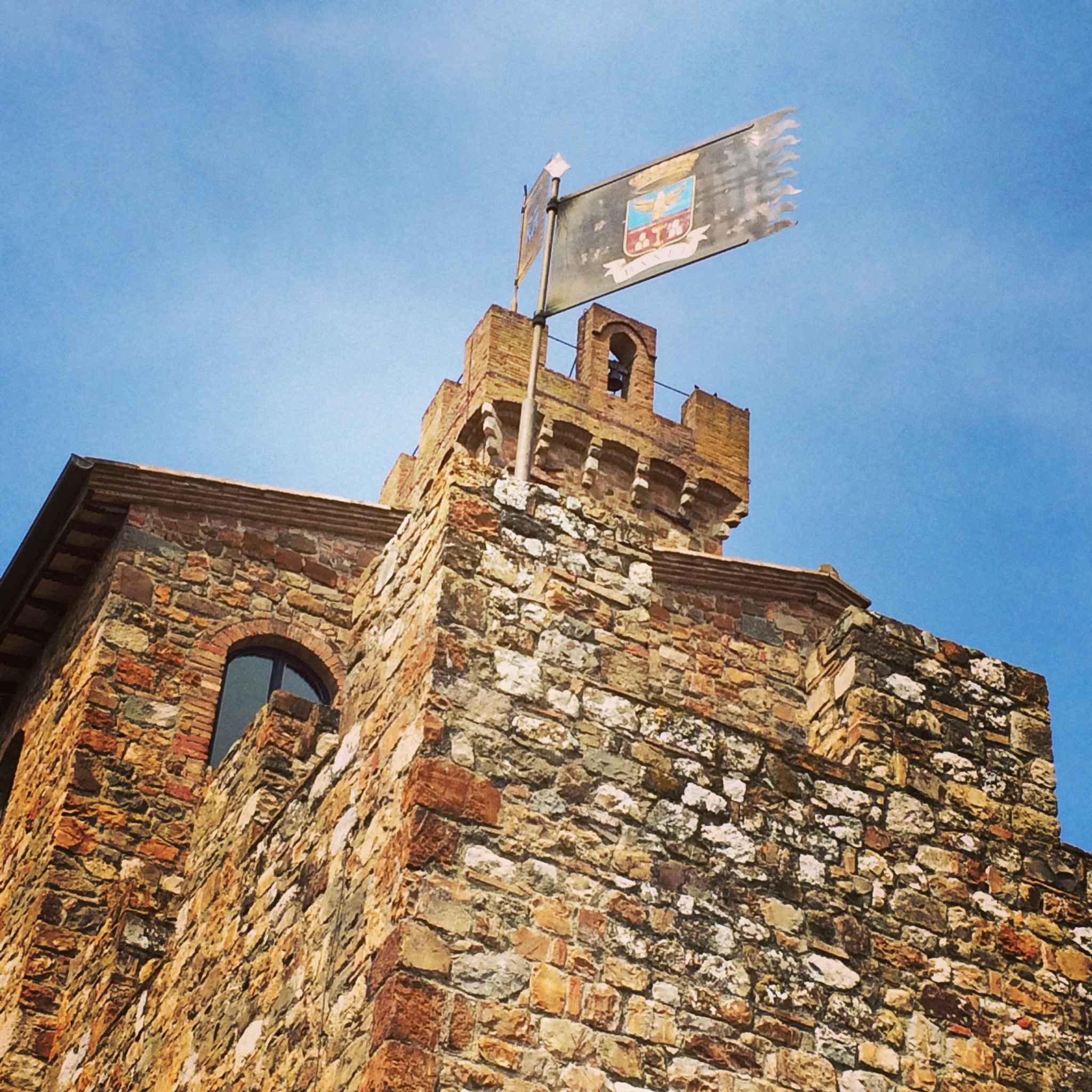
We had the pleasure of having a private tour and dinner with Dr. John F. Mariani Jr, Chairman Emeritus of Banfi Vintners, and his lovely wife, Pam, at their breathtaking property Castello Banfi, in Montalcino, Tuscany, on May 11th. I had met their daughter, Cristina Mariani-May Co-CEO, when she gave a staff training at Sherry-Lehmann a few months earlier. Cristina is an extremely impressive person if you have ever had the pleasure to hear her speak, and very generous like her parents; sending me a copy of their book, The Pursuit of Excellence, that shares a lot of their research. Once her father heard that I was interested in their research and I had read the book, he wanted to meet me, and hence, when Ken and I went to Tuscany while John and Pam were there, they welcomed us with open arms.

Banfi

The picture above is John showing us the winery and some of their research. I cannot do justice to all the advancements they have achieved and are still achieving in a short blog post (quick info for wine nerds who love quality control facts: Banfi became the first winery in 2006 to achieve the ISO 14001 accreditation). Their research spans the vineyard to winery including social responsibility (Castello Banfi estate has a ratio of forest to cultivate land equal to 1.5:1). –Also, I go into a small bit at the end of this blog about some of their research on clones.
John talked about how they were considered outsiders when they first came to Montalcino as Americans, even though that created some initial barriers, through time the Mariani’s family determination to raise the wine quality and perception of the region helped to eventually change local winery owners’ minds into joining forces to improve things for everyone. It was interesting, a friend of mine who had been to Montalcino recently talked to another much more smaller winery owner about Banfi, and he said, “Oh you know they are not really Italian, they are American.” But my friend said he followed it up with giving credit to the Mariani family for making the region the success it is today.

If it wasn’t already too kind of Dr. John F. Mariani Jr himself to give us a private tour, he and his wife invited us to dinner. The dinner lasted over four hours, and it remarkable to hear stories from a man who was a huge part of not only elevating Tuscan wines but also helping to create a wine culture in the United States. It’s one of those events where I kept saying to myself, “Is this really happening to me?” John and Pam could have not been more down to earth. Such warm, inviting people who were the living embodiment of a quote on their website by the co-CEO, their daughter Cristina, “We are selling not just wine, but a way of life. It’s about something slower, calmer, more in touch with family.”

Banfi

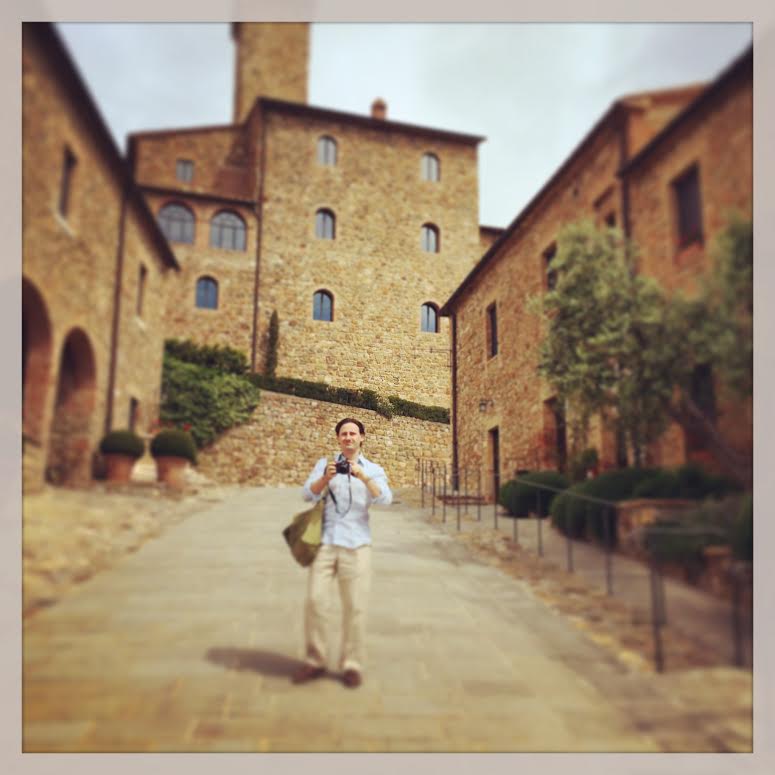
If you ever get a chance to visit Castello Banfi, please do. As you see from the picture above with Ken, it is the real version of what all of us dream about when we dream of Tuscany.

Banfi

And trust me, every staff member will greet you with a beautiful smile, and bring you delicious food and wine. And you will say to yourself, as I did, why is real life not like this way always.. well that’s okay, if you go to Castello Banfi, at least you get to experience it once in your life.

One of the many things I learned from Banfi is making the sweeping statement that all Brunello is made from the Sangiovese Grosso clone is not completely correct. There are many clones that are used for Brunello. There are over 600 clones of Sangiovese!!!

Here’s some quick info about a little bit of their research on Sangiovese clones.
And it is also important to note that Banfi has always made their research open and available to other wineries. As John said, “A rising tide lifts all boats”… their attitude to success is that lifting up others would help to lift them up as well; a philosophy that I share.

Research was conducted on Castello Banfi’s estate which monitored the quality and yield of three clones which were selected by the “weak selection method”. All of clones (BF 30, Janus 10, Janus 50, and Tin 50) were compared to the same reference clone, grafted on the same rootstock, were cultivated in the same soil and vineyard, trained to spurred cordon, and planted at the same density. These results helped to not only narrow down which clones ultimately would be ideal for their Brunello wines, but also helped to decide where to plant specific clones.

-Results in Extractable Color:
Clones BF 30 and Janus 50 showed more extractable coloring substances, which would appear earlier in the growing season. Janus 10 and the reference clone were slower but more regular with producing extractable coloring substances.

-Results in Climate Adaptability:
Clone Janus 10 had the greatest potential for adapting itself to climate changes during the four-year period, yielding consistent results. The other clones reacted more to climate conditions.

-Results in Aromatic Profile:
Janus 50 had the most intense aromatic profile.

Posted in Dame Wine | Tagged , , , | 2 Comments

Crus Beaujolais: Vintages back to 2005 & 2013 Preview

Beaujolais

Last Thursday, June 19th, there was a workshop and tasting at Bouley Test Kitchen that would help to further the education of those in the trade in regards to Crus Beaujolais and those wines made by Georges Duboeuf. The panel that was guiding us through the vertical tasting and workshop was Christy Canterbury Master of Wine, Franck Duboeuf,  and his father, Georges Duboeuf. Christy mainly led the way, giving the tasting and workshop a solid structure and inspiring narrative. If you ever get a chance to see her in person, all I have to say is that she is the real deal, and I have learned a tremendous amount from her. Typically with family businesses, the son or daughter shows respect by allowing their parent to address all questions, and Franck certainly kept to that precedent during this workshop.

Even though many wine consumers in the world know the Duboeuf wines as the quality standard for Beaujolais (mainly being introduced to Beaujolais Nouveau), there are some in the trade that scoff at the idea of Nouveau and hence, that Duboeuf is all about marketing. I must admit, many years ago, I was one of those people, and realized through time that I was talking from a sort of “I’m too cool and knowledgeable” snobbery. Through my wine education journey of going through the various WSET levels and currently awaiting exam results for the Master of Wine (hope to have passed theory!),  I have come to realize that I was coming from a place of immaturity and ignorance judging Nouveau and Beaujolais as a whole. There are all sorts of producers in this world, and if a producer is able to come up with a plan of action and style of wine that not only gives joy to many around the world, but also at the same time makes wine growing a viable profession for many in their region, then there is certainly something to be said for the producer who can achieve such success.

Well, enough of Nouveau talk – which is only 25% of what Duboeuf produces, this workshop/tasting was about the great Crus of Beaujolais. Before I go into a quick snapshot of my impressions of the wines, I have to note two special moments that I witness during this remarkable event surrounded by great minds.

The first special moment was the answer that Georges Duboeuf gave when asked about his relationships with his growers. I would have thought this would have been a very polished PR answer that had the main purpose to increase sales… but it was not at all. It was an answer by a man who had lived a long life, probably losing many close friends by this time. His  translator seemed to have issues translating exactly what he was saying since he faded off into the past talking about certain moments that he shared with the growers of his generation. My apologies that I did not catch the specifics of the stories or specific names of the growers, since it was difficult to hear. But I will never forget at one point he turned around to face the audience, and said something that seemed so heartfelt, and the translator said, “He has a lot of great memories with those growers, they were great friends, and he misses those times.” And I really felt no more needed to be said, especially looking at the expression of his face.

The second special moment came when the extraordinary chef David Bouley talked about his experience with Beaujolais wines. My husband and myself took classes at the Bouley Test Kitchen many years ago (and we have eaten his incredible food over the years that has such interesting layers of textures and flavors), and my experience is that David is simply a genius, who is also a pure soul. He has a true love and enthusiasm for learning and sharing information.

If you have not had the pleasure of talking with David, I would try. And he is more than happy to give hours of his time talking about the latest things he has learned. He actually gave an incredible impromptu talk about the role of bacteria in wine and food that day. He talked about a recent experience that he, his wife and a couple of their friends had with a Chinese tea Master. They were holding these tiny little cups with their fingers,  and hence, the Master pointed out that the same tea was transformed differently by the bacteria on their individual skin. I cannot even begin to understand how that would work, and perhaps it would take me 20 years to figure it out, or it is one of those things that I will never understand. But it is again the idea of having my preconceptions challenged, and expanding my mind beyond my own experiences.

Okay, before I get too far off the track, here are some quick impressions of some of the wines we tasted: (A side note, the 2013s were bottled just a few weeks before this tasting.)

Jean E. Descombes: Relationship goes back 50 years with Duboeuf.

-2013 Georges Duboeuf Morgon: Good structure with some grip (great with food), long maceration, almost 3 weeks. Bright brambly nose that opened up over time.

-2010 Georges Duboeuf Morgon: Lovely, lovely nose… great sense of earthy minerality and mouth-watering backbone of acidity.

-2009 Georges Duboeuf Morgon: Richer, riper and incredible structure that was firm but not unyielding.. one of those wines that is dangerous, you want to drink it now, but you know you should cellar it.

Chateau des Capitans: Single block of vines within a vineyard. 

-2010 Georges Duboeuf Julienas: Great aromas of black pepper. Literally when everyone in the room first smelled it, I could hear people making “yummy” sounds.

-2009 Georges Duboeuf Julienas: Fleshy body that you could easily drink on its own or with food.

-2007 Georges Duboeuf Julienas: Soft texture, restrained nose, but generous, delicious flavors of kirsch on the palate.

Domaine des Rosiers: Average vines are 50 years old. 

-2013 Georges Duboeuf Moulin-a-Vent: Complex nose of thyme and dried flowers with fresh acidity, more linear in shape than the others.

Domaine des Rosiers Cuvee Prestige: All vines selected are 50 years or older. Only made in the best vintages.

-2009 Georges Duboeuf Moulin-a-Vent: Spicy with more concentrated black cherry fruit.

-2005 Georges Duboeuf Moulin-a-Vent: Stunning. Orange peel on the nose with hints of granite, and decadently full body.

Posted in Dame Wine | Tagged , , | Leave a comment

2010 Nickel & Nickel Single Vineyard Wines

Nickel & Nickel

Nickel & Nickel Single Vineyard tasting at Sherry-Lehmann on June 10th, 2014.

Bruce Mooers, President of Nickel & Nickel, Far Niente, and EnRoute, presented us with a wonderful selection of these wineries, but as I am always trying to avoid rambling too much, I will focus this post entry on the Nickel & Nickel Cabernet Sauvignon Single Vineyards.

All the wines were 2010s. Many of you may already know this, but these wines are old school Napa wines that have had a loyal following for many years. Bruce talked about how the 2010 vintage was similar to the 2006s (lots of color, perfume, and extraction). He also spoke on the idea of Nickel & Nickel creating a true sense of place for Cabernet Sauvignon (all the wines being 100% of the varietal) with their Single Vineyard series. This is an interesting idea because Cabernet Sauvignon is such a distinctive variety, usually showing its characteristics in blends made across the world.

I must say, I certainly noticed that these wines were Cabernet Sauvignon first before anything else entered my mind, but after that point there were differences expressed in the wines that gave one a “sense of place”.

I know many factors contribute to the wine’s final characteristics, but this post will just focus on an aspect of the vineyard that Bruce brought to our attention, and what characteristics the wine is showing that is typical of that vineyard.

Quarry Vineyard: In the hills of Rutherford with chalky elements to the soil. This wine had a purity of fruit and noticeable acidity.

Tench Vineyard: Red, rocky soils of clay and volcanic rock. Lighter herbaceous notes of mint and flowers with a more linear body in comparison to the rest of the flight.

Kelham: Partial clay loam soil that is not as heavy as the Sullenger. Restraint on the nose, and deep, dark and dense on the palate.. will make great old bones.

Sullenger: More clay than Kelham. Lower earthy notes with a distinctive tobacco leaf aroma,  and lots of firm tannin. Bruce said Sullenger was a property that always produced more traditional Bordeaux-like wines.

Rock Cairn: Deep gravelly loam, across the street from Dominus. Forward red currant flavors and rounder tannins that make the wine accessible right out of the bottle.

It is an interesting idea of a “sense of place” for a single varietal Cabernet Sauvignon. It is not completely transformed as a malleable variety such as Chardonnay (of course wine making plays a large part in its transformation), but it is fascinating to experience wines of a “signature” variety from the same region that had such different expressions while keeping true to itself.


Posted in Dame Wine | Tagged , | Leave a comment