250 Wine Grape Growing Families In Austria Produce Excellence By Banding Together

Domäne Wachau Vineyards
Photo Credit: Domäne Wachau

As the sun shone down between the clouds, illuminating the medieval buildings and ancient abbeys, a little girl took a deep breath. Life was an enchanting dream in the Wachau Valley, Austria – tiny villages with steep hills planted with vines along the old dry-stone terraces that were constantly refreshed with the breezes from the Danube River. In her early childhood, this little girl took in the historic buildings of her village thinking of all the stories rooted in events thousands of years ago that told tales of love and loss. For a time there seemed to be no other place as magical as her home where she would run along the river during the summer while the smell of ripe apricots in the air indicated that it was time to harvest this delectable stone fruit. But as she grew into adolescence she could not help but yearn for something more than what went on in her old-world town and her never-ending chores of helping out her family in their vineyards which was once thrilling as a child but had become a burdensome servitude that only created a stronger desire to escape.

That young woman would travel the world and experience things that were beyond her wildest dreams eventually finding a fast-paced, extremely competitive career in a major city until she got to the time when it all became too much. She would have random panic attacks, find joy in very little, feel each day filled with dread until she walked away from it all, not knowing what she would do next, but she just needed to go back home to her Danube River so she could deeply breath again. There, she walked through the steep vineyards as she had done many times in the past, feeling a wave of peace come over her that she hadn’t felt in a long time and she knew that she needed to come back home and leave the rat race behind, but there was one deep regret; in that moment she would have done anything to change places with that young adolescent to make sure she stayed on the path of helping to run her family’s vineyards or to at least come back sooner… because after a time it had become too difficult for her grandparents to work their labor-intensive vineyards and they sold them off.  The vineyards that had become part of her soul as a child were no longer owned by her family.

Domäne Wachau
Photo Credit: Domäne Wachau

Some wine producers become lucky as either they make a name for themselves during the right time or they ride the tidal wave of the success of a wine region that becomes extremely popular around the world, but for many, it is a constant struggle as the overall cost of living and cost of land taxes combined with an uncertain future for a place on the market for one’s wines takes its toll. After World War II, for many European wine regions, the idea of a wine cooperative – a group of vineyard owners working together to create and sell wine – became very popular as a means of survival as it divides the costs among many instead of just one but even cooperatives have faced recent challenging times.

In general, cooperatives can have a reputation for making tons of entry level wine that many times are seen in supermarkets across Europe and during a time when overall consumption of cheap wine has decreased and more wine from around the globe enters the world market, cooperatives are “doomed to fail,” according to Master of Wine Roman Horvath. And Roman would know as he was a wine buyer for Austria’s leading wine retailer Wein & Co but what is interesting is that since 2004 he has been the winery director of a cooperative called Domäne Wachau in the wine area of Wachau (pronounced: va COW) and it seems an odd choice for a man who knows all the issues with such an operation.

Wachau, Austria

It may seem odd to those hardcore Austrian fine wine drinkers that Wachau was only just recently awarded Austria’s version of a quality wine designation, DAC, especially in New York City, as the Grüner Veltliner and Riesling single vineyards from Wachau were highlighted on the wine list of the celebrated Austrian fine dining restaurant Wallsé for over 20 years; and although many of the wonderful wine regions of Austria are today represented on the Wallsé wine list, there is still a special place for the back-vintage Wachau wines that give proof to the ageability of the Riesling and Grüner Veltliner grape varieties. Twenty years ago New York fine wine drinkers may have known very few wine regions in Austria but the one area they did know was Wachau.

Roman said that part of Wachau’s success lies in it being a popular tourist destination since the 1950s as it is only a one hour drive along the Danube River (via car, train or boat) from Austria’s stunning capital city Vienna as well as it being an enchanting landscape on its own. And so there was a significant amount of investment in the vineyards of Wachau and today they still have many of those 50 to 60 year old Grüner Veltliner and Riesling vines. Wachau has had a couple of rock star winemakers that would make a splash as far back as the 1960s and ‘70s but for most in this small wine region, becoming a rock star seemed impossible because of lack of funds, knowledge and making wines that weren’t on the radar for the masses. And so one-third of the small Wachau wine region (only 3,200 acres in total compared to Napa’s 43,000 acres of vineyards) is overseen by a cooperative calledDomäne Wachau – owned by 250 families who have been in Wachau for generations.

Domäne Wachau 

It may have seemed that most cooperatives were doomed in Roman’s opinion, especially during the time when he was a wine buyer, but he does note that there are a few in Europe that are the rare successes producing excellent quality wine and being equally recognized for it such as Produttori del Barbaresco in Barbaresco, Piedmont. So when Roman came to Domäne Wachau he knew it had all the key factors for a potentially successful cooperative: small wine region, great terroir and well-established quality vineyards. But there was no vision or overall structure that would be able to juggle several different bottlings of all the single vineyard wines, marketing and selling them, as well as invest even more into sustainable and quality driven management practices in the vineyards.

Roman Horvath and Heinz Frischengruber Photo Credit Domäne Wachau
Roman Horvath and Heinz Frischengruber
Photo Credit: Domäne Wachau

The “slow evolution” of Domäne Wachau to a more ultra-premium level organization has been a mammoth task that couldn’t have been possible without Roman’s partnership with its cellar master Heinz Frischengruber as he was able to really zero in on all the top quality, fiercely challenging steep vineyards and channel each individual expression into its own bottling; also making all the vineyards certified sustainable and now working on converting them to organic has been a mountain to climb within itself. It has been one tiny step after another in regards to getting the 250 growers/owners of Domäne Wachau to trust that their wines would be well-received beyond the prejudices that come with the label of being a cooperative and garner the praise as well as a higher price point that they would need to cover the extra expenses of trying to compete in the fine wine world.

Egg Shape Concrete Tank and Amphora Vessels Photo Credit: Domäne Wachau

Roman said it took a while before the growers were comfortable putting more resources and money into taking this leap and he completely understood because they are gambling their livelihoods on it. But now, as they have seen top wine critics giving them praise and their wines being requested by wine buyers around the world, the growers are pushing Roman to take Domäne Wachau to the next level instead of it being the other way around.

Easy to Make the Right Choices When There is Hope

Domäne Wachau
Photo Credit Domäne Wachau

Domäne Wachau is located where the climate is marginal in terms of ripening wine grapes and although there will be warmer vintages nowadays compared to the past, Wachau will still get cooler vintages that can also be wetter which is a battle in the vineyards to achieve premium grapes in steep vineyards that can only be managed 100% by hand. And Roman said that it is only possible to do what they do because they have 250 growers with small lots and the growers have a “strong bond” with their vines and land and they can react quickly as they live and breathe their vineyards every day.

There are so many Wachau families that have their lives intertwined with the success of Domäne Wachau with each having their own distinctive story while also having a common purpose. One such family is led by Nina Preisberger who has had her 3.7 acres of the single vineyard ‘Ried Bruck’ in her family for several generations and today she is a full-time vintner and full-time mother managing the vines with her grandfather, her small children learning at a very young age the importance of generations working side by side to preserve their land.

That story of the young girl leaving Wachau to live a seemingly more adventurous life who realizes when it is too late that she was happiest when she was in her family’s vineyard never happened. But that scenario has been a road that many others around the world have gone down because there was never any hope that one could keep the family business going as the world changed around her and her family’s legacy had become obsolete. Yet what Roman Horvath and Heinz Frischengruber have done with Domäne Wachau is show the growers that they can move with the times and become part of the fine wine world not only bringing in more money that will help with generational survival but also give people the pride and fulfillment of being part of something special.

Nina could have been that girl who left but instead she is a partner in a successful wine company that is run by herself and her neighbors while never having to sacrifice establishing those same precious memories for her kids that she formed as a child playing in the same vineyard with her family.

***This article was originally published in Forbes: https://www.forbes.com/sites/cathrinetodd/2021/08/15/250-wine-grape-growing-families-in-austria-produce-excellence-by-banding-together/?sh=65a1fbe66b09

2019 and 1996 Domäne Wachau, Riesling Smaragd ‘Ried Achleiten’
Photo Credit: Cathrine Todd

A couple of points that are important to understanding the labeling of the wines below: anytime there is the word ‘Ried’ before a name, that indicates a single vineyard as opposed to just a brand name that refers to a wine that comes from grapes throughout Wachau, such as the ‘Terrassen’ wine below that contains grapes from various terraced vineyards on steep hills in Wachau.

Also, Federspiel is a style that is a tier above the entry level Steinfeder (typically only seen in Austria) as it is picked from high quality vineyards later and gives a wonderful sense of varietal characteristics of grape varieties such as Grüner Veltliner and Riesling as well as a stronger sense of place; the Smaragd style is the highest level and picked even later than Federspiel and sourced from some of the best vineyards and these styles are known for more concentration, intensity and an ability to age for decades.

2020 Domäne Wachau, Grüner Veltliner Federspiel ‘Terrassen’
Photo Credit: Cathrine Todd

2020 Domäne Wachau, Grüner Veltliner Federspiel ‘Terrassen’, Wachau, Austria: 100% Grüner Veltliner. White pepper and peach flavors with round texture and creamy body with a lot of mouthwatering acidity that finishes with lemon confit. Roman noted that 2020 was a cooler year so it was displaying “pronounced acidity” that he said would balance out in a year and a half as it was just bottled.

2018 Domäne Wachau, Riesling Federspiel ‘Ried Bruck’
Photo Credit: Cathrine Todd

2018 Domäne Wachau, Riesling Federspiel, ‘Ried Bruck’, Wachau, Austria: 100% Riesling. Flinty minerality and a multi-layered expression of lime with lime sorbet, lime zest and lime blossom that had an exotic green mango and green papaya note with a fun combination of juiciness and sharp edged acidity. 2018 was one of the warmest years they had in the Wachau, Roman noted, but since the Bruck vineyard is one of their coolest climate plots in the Wachau, even in warm years the “firm acidity” and “raciness” is still present.
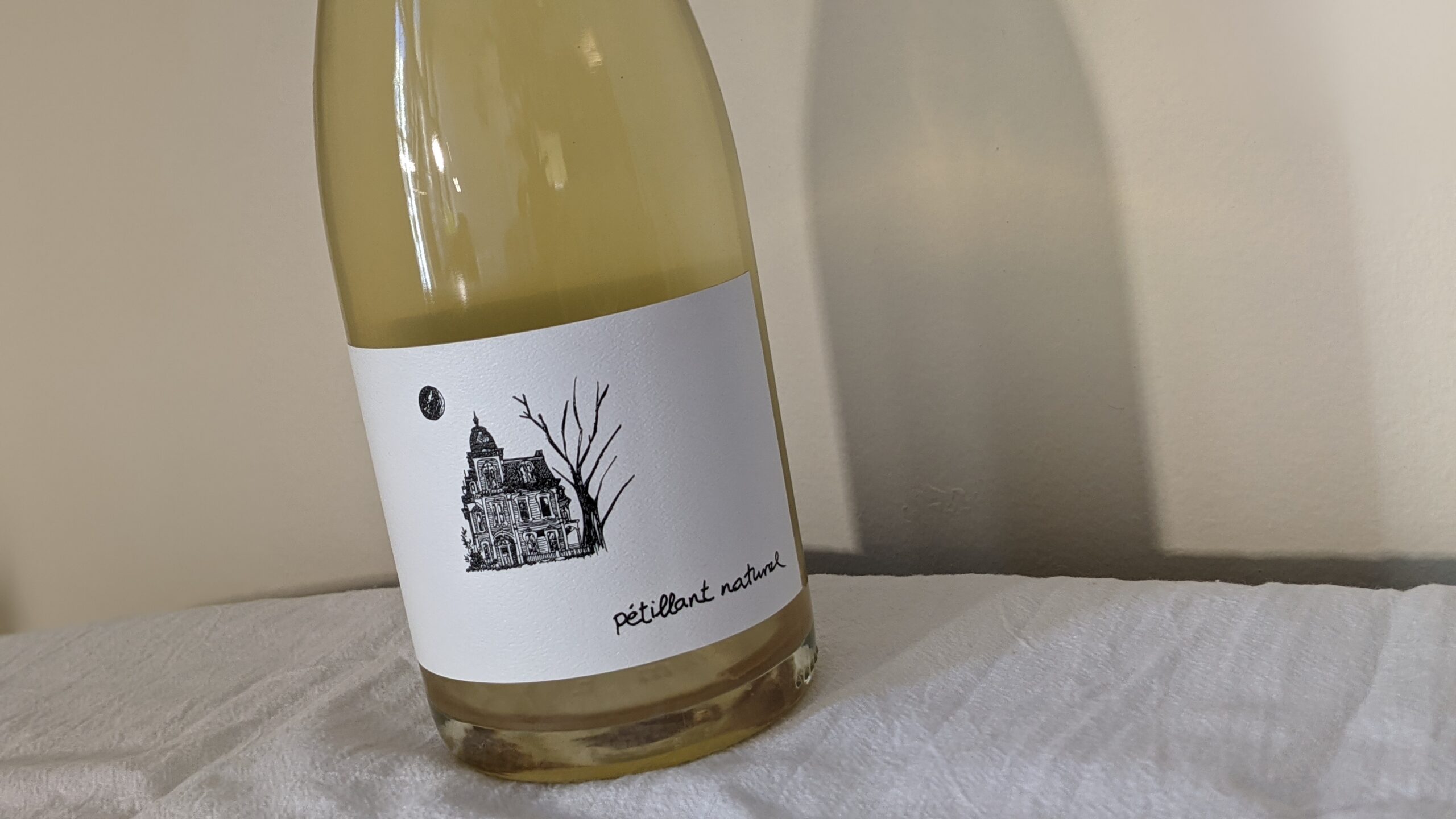
2019 Domäne Wachau, Grüner Veltliner Smaragd ‘Ried Achleiten’
Photo Credit: Cathrine Todd

2019 Domäne Wachau, Grüner Veltliner, Smaragd, ‘Ried Achleiten’, Wachau, Austria: 100% Grüner Veltliner. More earthy spices such as turmeric rather than white pepper and a subtle nuttiness (that comes from the variety Grüner Veltliner, according to Roman) with almond slivers that had a tart edge on the palate balanced by a hint of poached pears in rich syrup. 2019 was a warm, dry vintage without any extreme weather events.

2019 and 1996 Domäne Wachau, Riesling Smaragd ‘Ried Achleiten’
2019 and 1996 Domäne Wachau, Riesling Smaragd ‘Ried Achleiten
Photo Credit: Cathrine Todd

2019 Domäne Wachau, Riesling, Smaragd, ‘Ried Achleiten’, Wachau, Austria: 100% Riesling. Smoky minerality with laser-like acidity, pristine stone fruit and a fierce saline finish that was absolutely captivating; an electric Riesling that is quite a beauty with a long life in front of it.

1996 Domäne Wachau, Riesling, Smaragd, ‘Ried Achleiten’, Wachau, Austria: 100% Riesling. There was more of a trend for concentrated, richer wines in the ‘90s and so it was common for Wachau producers to add 5% to 10% of noble rot grapes (botrytis) during those times and hence this wine shows those spicy, marmalade and toffee notes quite well, especially considering that it was seen as a lesser vintage because it was a cool, wet year in ‘96 as opposed to the great ‘95 and ‘97. But this delicious 25 year old Riesling is still a wonderful example of how amazing it can be with age when it comes to these top sites and among the decadent notes there was still plenty of marked acidity and fresh tangerine and saline minerality to balance it all out. Roman said that the practice of adding botrytis has fallen out of favor, although there are still a couple of producers who do it well, and that Domäne Wachau doesn’t add any today in their dry wines as they want pure, fresh wines.

Posted in Dame Wine | Leave a comment

Women Making Changes In Their Family Wine Estates In Alsace, France

Photo Credit: Cathrine Todd

In a little village within the wine region of Alsace in northeastern France, five three-year-old children gathered together for pre-school among a community of wine grape growers. The children were asked to draw pictures that represented what they wanted to be when they grew up and so four of the kids, all boys, drew tractors and vines as they wanted to be grape growers and winemakers like their fathers but the one little girl didn’t have winemaking parents and so she was curious about these pictures that the boys drew as well as their enthusiastic descriptions of their fathers’ job. “I want to work in the vineyards too!” the girl exclaimed but everyone else was dumbfounded by such a statement from a little girl as it was known during those times that it was the men who worked in the vineyards and winery.

Agathe Bursin
Photo Credit: Agathe Bursin

Four decades have passed and that little girl, Agathe Bursin, grew into an accomplished winemaker who has some of her vines in the most coveted vineyard in her small village of Westhalten with only around 15 small wine producers that work outside of the large co-op wineries1 that is 12 miles from Colmar – known as the “Little Venice” of France. Agathe’s maternal grandparents were vineyard owners who were part of one of the local wine co-ops who had four children, two boys and two girls, and it was commonplace to leave vineyards to the male children. But Agathe said her grandparents were ahead of their time and they said, “Four children four parts” when it came to the inheritance of their vineyards. Agathe’s mother had no interest in maintaining vineyards so she allowed one of her brother’s to work her plots until Agathe told her that she wanted to become a winemaker and so her mother gave her the plots, seven acres in 2000 and eventually she would grow it to 17 acres – all farmed organically and some vineyards being quite steep.

After studying winemaking in Burgundy and refining her white winemaking skills while working for a producer in Chablis and then improving her ability to work with steep vineyards and various micro-plots by working with a producer in the Rhône Valley, she came back with a fierce determination to express the many different nuances in her vineyards that included the famous Zinnkoepflé Grand Cru vineyards in Westhalten.

Changes Implemented by the Women of Alsace

The very fact that Agathe went against the grain by not only saying that she wanted to become a winemaker over 20 years ago but that she also wasn’t going to just be part of a co-op as she would make her own wines under her own label Agathe Bursin makes her a positive force for change.

Lydie and Marine Sohler
Photo Credit: Domaine Sohler Philippe

Yet she is not the only woman making changes as 34-year-old Lydie and 29-year-old Marine Sohler completely took over their family winery, Domaine Sohler Philippe, in 2016. These sisters divide duties by having Lydie in the winery as the winemaker and Marine looking over the vineyards as vineyard manager in their small town of Nothalten, Alsace. Lydie’s winemaking philosophy mainly focuses on allowing their white wines to age on their fine lees (sediment after fermentation) in the neutral stainless steel vessels for several weeks, as she believes the aromatics become more complex, with the exception of their Clos Rebberg Pinot Gris and their red wine, Pinot Noir Mateo, as they both age in barrel for 12 to 18 months. They also ferment each plot in its own tank whether it is from a Grand Cru vineyard or a lieu-dit (a plot with a traditional name although not officially classified). One of the biggest changes is their first attempt at an orange wine, a white wine that is fermented on the skins, that is a blend that includes the skin and juice of the Riesling and Sylvaner grapes but only the juice of the Pinot Gris grapes. Lydie and Marine “love” orange wines but their father and mother are not so sure that it is a good idea and so their 2020 vintage of their orange wine will be a true test to show their parents that they can make a “good orange wine” and Lydie expressed that it has been her favorite project as both herself and Marine have worked together in the cellar making it and typically that doesn’t happen.

Mélanie Pfister
Photo Credit: Domaine Mélanie Pfister

An orange wine is also made by Mélanie Pfister at her family’s newly renamed estate called Domaine Mélanie Pfister in Dahlenheim, Alsace and her orange wine is a Pinot Gris that receives two weeks of skin contact that is called ‘Macération’ and it had its first vintage in 2018. But that is not the only change that Mélanie has made as she has had the great fortune to be able to do internships at some of the top wine estates in the world such as Méo-Camuzet in Burgundy, Cheval Blanc in Bordeaux and Zind-Humbrecht in Alsace just to name a few. Some of her takeaways from these internships include learning biodynamic practices from Zind-Humbrecht, and Mélanie is currently converting her vineyards over to biodynamic after she has been organic for many years and she will be certified organic starting with the 2021 vintage, as well as the importance of blending which she learned from Cheval Blanc leading to her creation of ‘Mel’ (representing her name Mélanie and the French word mélange meaning mixture) that is a white blend of Riesling, Pinot Gris, Gewürztraminer and Muscat.

Although Alsace is known for their white wines, they also make red wines from Pinot Noir as well and since Mélanie studied at Méo-Camuzet, known for making some of the top Pinot Noir wines such as their Grand Cru ‘Clos de Vougeot’, she decided once she came back to her family estate that her first task would be to make the Pinot Noir. “Okay papa I will take charge of the Pinot Noir”, Mélanie announced to her father. But her father said instead they would split the Pinot Noir plot and he would make his wine and she would make her wine and then they would compare and decide which one was better. Since Mélanie felt that Pinot Noir was more about “delicacy and subtlety” she would use a cooler temperature while fermenting and less extraction and her father agreed that her Pinot was better and she would take over the winemaking completely in 2008. Today she continues that relationship with Méo-Camuzet by buying used barrels from them which she uses for her Pinot Noir.

Mélanie is the first women to take over her family vineyards in eight generations and Muriel Gueth is also eighth generation and the first women to take over at her family estate Domaine Gueth which is located in Gueberschwihr, Alsace.

Muriel Gueth
Photo Credit: Domaine Gueth

Muriel worked for a German wine producer who was organic back in the mid-90s and so when she came back to her family’s estate, working organically was a priority and today her estate is certified with the HEV (High Environmental Value) organization which allows a bit more freedom than being fully organic certified. Muriel is 100% organic but she has small plots that are surrounded by her neighbors’ plots who are not organic so she feels it would not be completely honest to become certified organic until her neighbors are also organic but she is hopeful that she will be certified in the future as many of her neighbors have started sustainable practices. When Muriel completely took over the winemaking in 1996, she still wanted to be respectful to her father and so she kept her father’s name Jean-Claude Gueth on the label as well as his traditional ways of blending different terroirs together for most of the wines. But finally in 2020 she started placing her own name on the single plot bottlings she has been working on for many years as her own personal project as she has found some of her vines, especially the old vines, have a distinctive expression that needs to be isolated so that specific plot can be expressed in the wine.

Changes Implemented by the Older Generation

But it wouldn’t be fair to talk about these changes without recognizing those that were initially implemented by the older generation. Certainly Agathe Bursin’s maternal grandparents were ahead of their time when they divided up their vineyard between their two boys and two girls making it possible for Agathe to have her own vineyards. Lydie and Marine Sohler credit their father for always having mostly organic practices and so for them it was a “small leap” to start the certification process.

Mélanie Pfister’s father also made it an easy leap for organics as well as he was a real pioneer by stopping the use of herbicides in the 1980s and it was her parents’ idea for her to change the name of their family estate to Mélanie Pfister as there was another Domaine Pfister that was started a while back and it created confusion on local restaurant lists. It was much harder for Mélanie to make this name change for the estate as she didn’t know if it was the right thing to do but her parents looked at it in a practical way and knew this was the best thing for the survival of their family estate. Muriel Gueth was always thankful that her parents had bought modern stainless steel tanks and a pneumatic wine press decades ago as it really helped her from the very beginning to make quality wine but most of all she appreciates how open-minded they were in trusting her so early on to take over the winemaking.

Agathe Bursin has a very strict philosophy of bottling one variety from a specific soil and never mixing, for example, one Riesling plot with another Riesling plot with different soil types. She very much believes in the idea of terroir as being ideally expressed by one grape from one soil. Yet back in 2001, she received a call from a friend who inherited an old vineyard, around 75 years old, but her friend didn’t know what to do with it because she worked in a hospital and she had no desire to manage a vineyard. Agathe said she would buy it but her friend quickly warned her that she would have to replant the vineyard as it was a mess with various varieties all mixed in with each other. Although Agathe already had her own firm opinions of how vineyards should be planted, she was curious and decided to make wine from the vineyard before replanting. The vineyard is a composite of five Muscat vines, 15 Pinot Gris, 20 Riesling, 20 Gewürztraminer, 20 Sylvaner, 20 Pinot Blanc and two vines of Pinot Noir and to Agathe’s amazement all of the vines ripened at the same time which is shocking as outside of this vineyard these different varieties ripen at various times. She even says there is a Muscat vineyard right next to this co-plantation vineyard (field blend) planted at the same time that ripens at a different time as the Muscat does in the co-plantation vineyard.

It is a complete mystery to Agathe how it is possible that all of the varieties in this co-plantation vineyard ripen at the same time yet the one thing she does know is that she loves how all these varieties are expressed in one wine and she is so happy that she decided to wait until she made wine from it before she pulled out the vines. And it is a wonderful lesson that one should not just change for the sake of change as progress and evolution should ideally be creating a better situation for all involved such as the progress of all of these family estates that are now run by women; women who just happened to be the ideal choices to take on the responsibility of their families’ vineyards as well as being very mindful and thankful of the gifts that were passed down from the generations that preceded them.

***Originally published in Forbes: https://www.forbes.com/sites/cathrinetodd/2021/08/07/women-making-changes-in-their-family-wine-estates-in-alsace-france/?sh=779c63675c3b

Wines Samples from Agathe Bursin, Domaine Sohler Philippe and Domaine Gueth
Wines samples from Agathe Bursin, Domaine Sohler Philippe and Domaine Gueth

Photo Credit: Cathrine Todd

Agathe Bursin Wines

2019 Agathe Bursin, Riesling ‘Bollenberg’, Vin d’Alsace: Wet stones, saline minerality and grapefruit on the palate with mouth watering acidity.
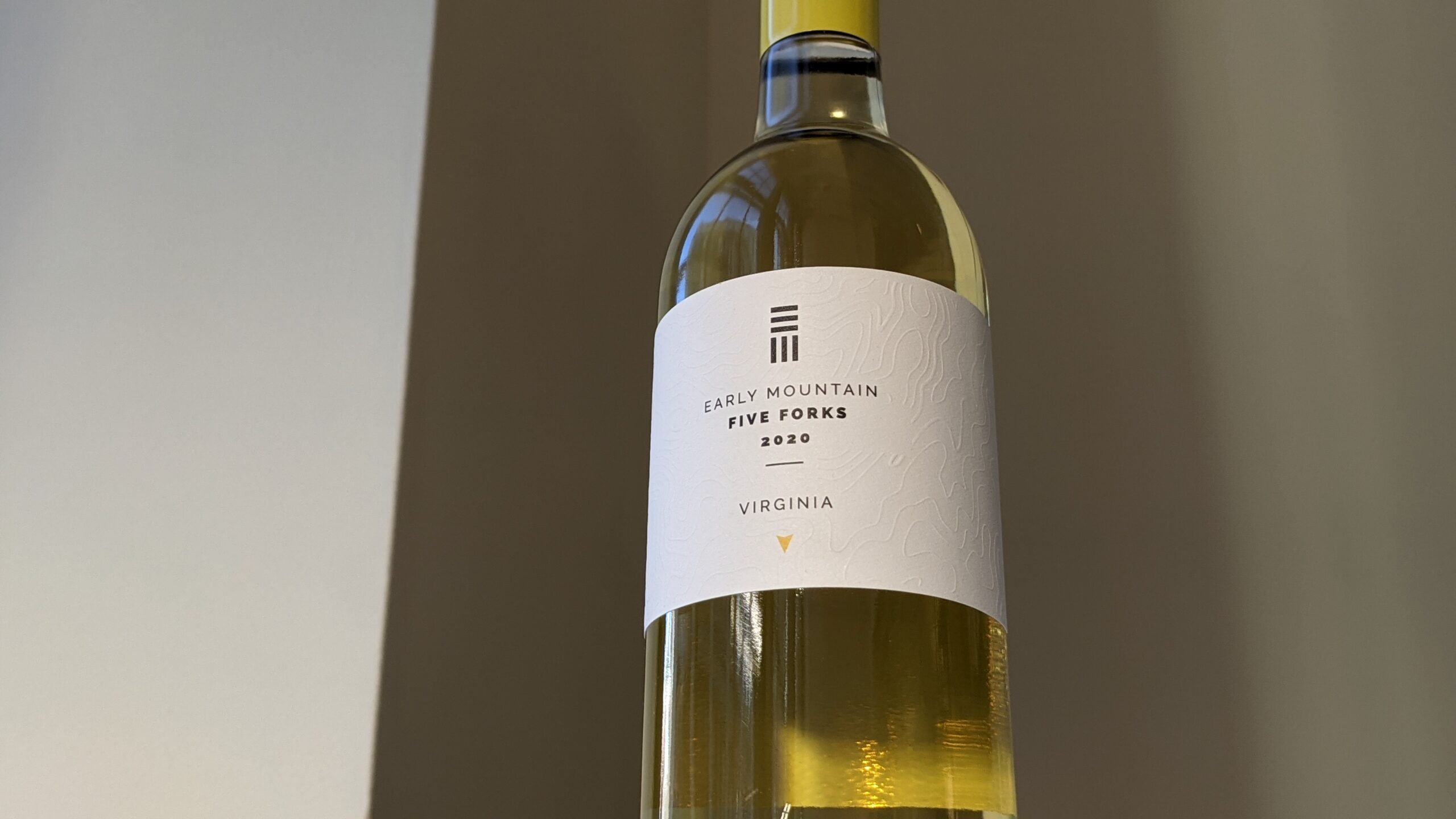
2019 Agathe Bursin, Zinnkoepflé Grand Cru Riesling: Floral, salted lemon rind with juicy peach mid-palate that had good weight and a long finish with fierce acidity.
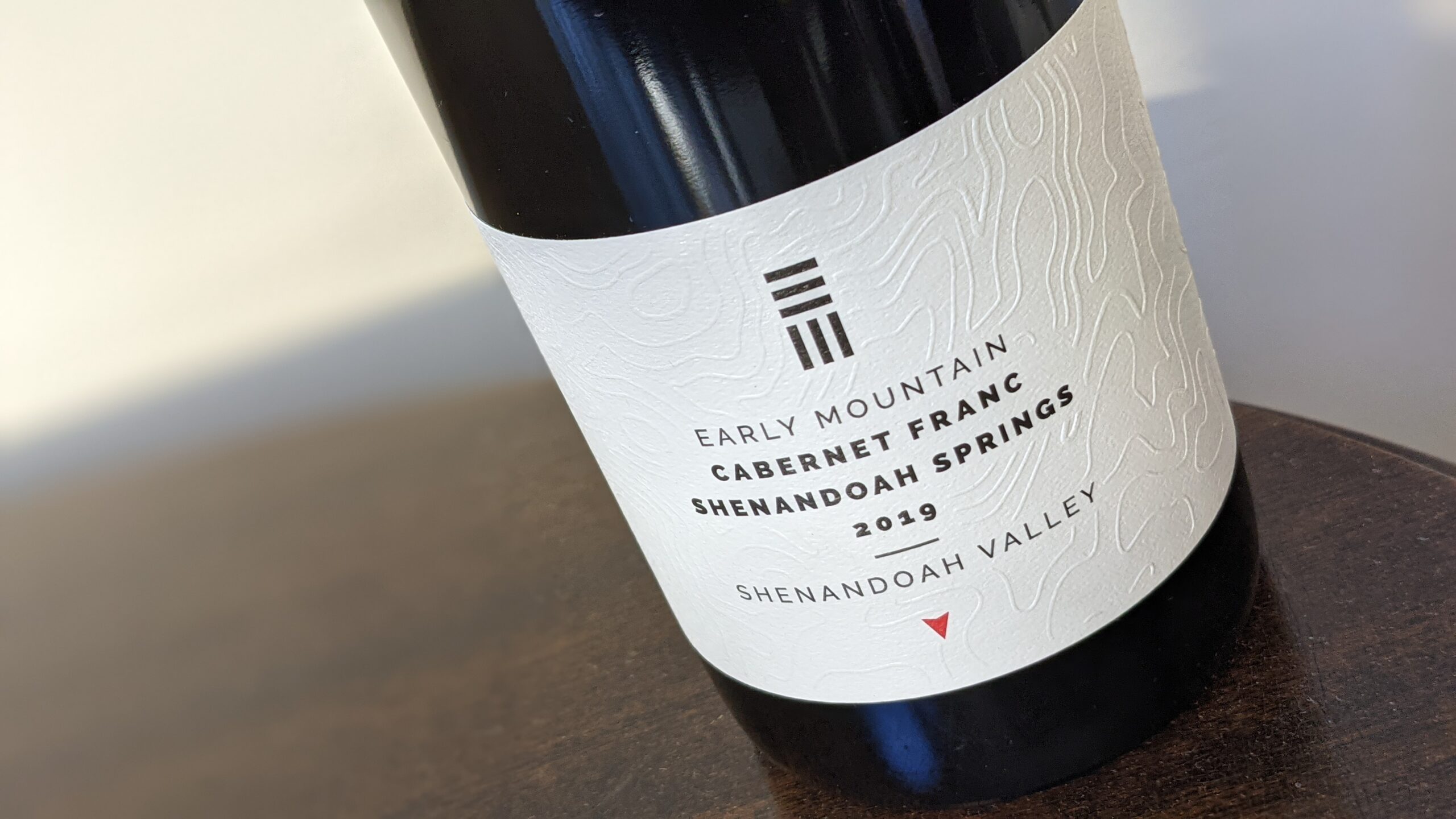
 2018 Agathe Bursin, Zinnkoepflé Grand Cru Gewürztraminer, Vendages Tardives: Rose oil, lychee syrup, nice amount of sweetness with some Turkish delight and apple strudel notes and a lush texture. 95 g/l residual sugar.

2018 Agathe Bursin, Pinot Noir ‘Strangenberg’, Vin d’Alsace: Earthy with rich fruit of blackberry and tea leaves finishing with a note of smoldering embers.

Domaine Sohler Philippe Wines

2017 Domaine Sohler Philippe, Alsace Grand Cru ‘Muenchberg’ Riesling: Intense peach aromas and ripe stone fruit flavors on the nose with some flinty minerality with good weight, vivid fruit (nectarine and peach) and racy acidity.
2018 Domaine Sohler Philippe, ‘Heissenberg’ Riesling: White flowers and star anise with lots of wet stones and a flintiness on the palate; lean with sharp acidity and notes of lemon zest.

2017 Domaine Sohler Philippe, Gaïa White Blend: 60% Riesling from a mixture of volcanic and sandstone soil, 20% Muscat from sandstone soil and 20% Pinot Gris from marly sandstone soil. Three different grape varieties from three different soils; a mix of floral, white pepper and golden apples that had a lean palate – linear.

2017 Domaine Sohler Philippe, Pinot Noir: Earthy and dark fruit on the nose with bright acidity, black cherries and dried herbs on the palate with a light body and fine tannins with hints of forest floor.

Domaine Gueth Wines

2017 Domaine Gueth, Riesling, ‘Original’sace’: Stony nose with lime juice and citrus blossom with smoky minerality.

2017 Domaine Gueth, Riesling, Vieilles Vignes (Old Vines): Richer flavors with lemon meringue, white flowers and electric acidity with plenty of fleshy peach flavors on the palate to balance it out.

2018 Domaine Gueth, Les Grès Roses: A white blend of Pinot Blanc and Auxerrois from ‘Ruescht’ plot and Pinot Gris from ‘Aschqeg’ plot that both are a mixture of clay marl and sandstone soils – the pure pink sandstone terroir of the Vosges. Round body, floral with white strawberries and a saline finish. 

2017 Domaine Gueth, Sylvaner, Vieilles Vignes (Old Vines): Broad body with hints of almond, toasted spices with broken limestones giving it minerality.

***Wasn’t able to sample recent vintage of Domaine Mélanie Pfister wines but I have had her wines many times in the past and they have always been extremely impressive.

Footnote:
1A winemaking co-op is typically a group of vineyard owners working together to create and sell wine.

Posted in Dame Wine | Leave a comment

A Burgundy Wine Producer: Surviving Tariffs, Covid And 40% Loss Of Yields

Photo Credit: Cathrine Todd

The past year and a half has been a challenging one for many across the world with waves of the tide of coronavirus shutdowns, illnesses and deaths coming and going with intervals of brief breaks that would hint at normalcy here and there. No one can argue with the idea that this pandemic has been a devastating tragedy on many levels that has had a big impact on loss of life, on long-term health and the decimation of employment for many as well as livelihoods that were intrinsically part of business owners’ sense of self and main purpose in life. Everyone at a certain point has to deal with their lives in some form being shattered into a thousand pieces and each person will need to find a way to go on once they face that moment in their lives. This time, the world has to do just this at the same time… and for some they are actually finding a way to renew their work and personal lives with a different perspective that is energetic in ways that many haven’t felt in years.

The legendary wine producer Bouchard Père & Fils in Burgundy, France, has had many obstacles over the last couple of years that started in October 2019 with the U.S. imposing tariffs on French products, as well as other European goods, that hit the wine sector hard. Wine is a low-margin business and so any dents in profits can be devastating especially when it comes in a marketplace that an export country greatly depends on, such as the U.S., not to mention that France has spent much of its resources and money establishing a good trading relationship with America. A few months ago these tariffs were suspended and so now Bouchard is getting ready to release their 2019 Burgundy 1er Cru, Grand Cru and lieux-dits (vineyards with historical importance) after riding out some tough waves.

When Mother Nature and the Market are Both in Turmoil

After a very intense and stressful 2019 vintage in the vineyards Bouchard Père & Fils cellar master, Frédéric Weber, looked forward to his annual exciting trip to the U.S. giving him a brief break to talk to sommeliers, wine buyers and media people who loved Burgundy and always greatly looked forward to tasting their 1er Cru and Grand Cru wines as a preview; for Frédéric it is always a thrill to go to varying U.S. cities where the surroundings are very different from the agricultural villages of Côte d’Or, Burgundy. It is a true gift for Frédéric to travel to a city like New York and he could have never imagined such trips while growing up in his small town in Alsace, in northeastern France.

Frédéric Weber Visit to NYC in March of 2020
Photo Credit: Cathrine Todd

But when he came to New York City on March 9th in 2020, it was a visit unlike any before as it was just the time that the positive Covid cases in NYC started escalating exponentially and by March 16th and 17th schools and non-essential businesses were closed respectively. This visit would be one filled with confusion of how such a thing of finding oneself in the middle of a pandemic could ever happen that was only made more stressful with 25% tariffs on one’s wines that was being threatened to increase to 100% at any time; 2019 and 2020 will go down as two of the most difficult years that could happen side by side for Frédéric as cellar master for Bouchard Père & Fils.

2019 Vintage

Traditionally, a difficult Burgundy wine vintage would mean wet weather (that could cause mildew) or frost as well as cool temperatures that would make achieving ripeness for the grapes difficult, but things have changed. Burgundy can certainly still have wet, cool weather but over the past couple of decades they have found themselves with warmer vintages and it has been a blessing of sorts as ripeness is no longer a consistent issue but warmer, dried weather can have its own potential negatives. The 2019 vintage had issues with both cold, wet weather and dry, warm weather that would sometimes be erratic in its timing and overall would cause a yield loss of 40%1 for Bouchard Père & Fils wines.

Frédéric talked about the milder temperatures in February and March in 2019 that made bud burst come early, “two weeks earlier than 2018” but frost hit in April which caused “mixed damage”. Then the rest of spring was “much cooler than usual” and so the flowering was delayed until early June which overall caused millerandage – a.k.a hens and chicks – irregular fruit set in which the berries on a grape cluster are not uniform in size – that affected some of the Pinot Noir bunches but mainly the Chardonnay grapes.

But the Pinot Noir was more affected by the combination of “hot temperatures, wind and drought” that took place a few days before harvest causing more concentration in the grapes as the water evaporated out of them. 2019 was a vintage that was all over the place and Frédéric was thankful that, at Bouchard, they have vineyard workers who have been working the same section of a vineyard “all his life”; and so even in a vintage that cannot be compared to another in how the life cycle progressed, the workers know the vines so well that they can intuitively adapt vineyard management to what the vines need.

The Things that Stand the Test of Time

Photo Credit: Cathrine Todd

At the time of getting crushed by them, challenges can seem like a nightmare that is difficult to process physically and mentally but sometimes they can eventually bring out the best in a person, or a wine for that matter. There is no doubt that Frédéric and Bouchard Père & Fils have been relentlessly challenged and only recently getting a chance to catch a breath but in a wonderful turn of events, Frédéric hasn’t felt this excited about tasting Bouchard reds since that time he went to their cellar and tasted a 1949 Beaune Grèves ‘Vigne de L’Enfant Jésus’ as there is a unique combination of richness with “very round tannins” that still has lots of acidity and layered aromatics in the 2019s – it is a vintage that has reignited the magic of it all for Frédéric.

Frédéric is always very careful of how many whole clusters he will use in fermenting Pinot Noir bunches, as although it depends on the vineyard and vintage, he typical errs on the side of caution and uses only a small percentage of whole cluster. But in general, the seeds of the Pinot Noir grapes had a “beautiful coffee and mocha” note and so he increased whole cluster fermentation from 25% to 40% for the Côte de Beaune wines and to over 50% for the Côte de Nuits wines. Of course not all winemakers agree when to use more or less whole clusters but Frédéric is firmly on the side of making the quality of the stems and seeds the most important factor.

There are many things over the years that have overwhelmed the humble Frédéric Weber with exhilarating joyous moments that includes working for one of Burgundy’s oldest wine merchants and largest landowners in the Côte d’Or, or traveling to exciting places far and wide, or being able to drink the most exquisite liquid that was made while France was recovering from World War II…  it would seem that Frédéric already had enough thrills in life with his almost two decades with Bouchard that it was time to settle in and live off of the thrills of the past yet Bouchard’s iconic 1er Cru and Grand Cru vineyards continue to astonish him with new challenges that come with unlocking more nuanced complexity and concentration. And just like how Bouchard was able to make great 1949 wines that still live on today, after so much loss and pain they have done it again with the numerous set of challenges of 2019 and 2020. Frédéric says that he always takes comfort that Bouchard has been around for close to 300 years, and just like the French spirit, it cannot be so easily defeated.   

This article was originally published in Forbes: https://www.forbes.com/sites/cathrinetodd/2021/07/29/a-burgundy-wine-producer-surviving-tariffs-covid-and-40-loss-of-yields/?sh=3b01790ccefa

Bouchard Père & Fils has a total of over 320 acres (130 hectares) and they will all become certified organic in 2024. 

Bouchard Père & Fils tastes the reds before the whites and hence the tasting order below.

Reds

2018 Bouchard Père & Fils, Premier Cru, Beaune du Château, Côte de Beaune: Yes, that is correct, this is the 2018 and the only 2018 in the lineup as it was just recently released into the market – it is a richer vintage as well with less acidity than 2019 so interesting to compare; aromas of loamy earth, ash and smoldering cedar with brooding fruit on the nose with lush blackberry on the palate that had added notes of forest floor and cocoa powder.

2019 Bouchard Père& Fils, Premier Cru, Beaune Clos de la Mousse, Côte de Beaune (Domaine/Monopole): Fresher on the nose than the 2018 Beaune du Château with pretty floral notes such as dried flowers, fresh sage and espresso hints with layers of warming black fruit and lush tannins and a touch of sandalwood on the finish. This is one of Frédéric’s favorite vineyards as it is very old and it has had vines growing there since the 12th century.

2019 Bouchard Père & Fils, Premier Cru, Beaune Grèves ‘Vigne de L’Enfant Jésus’, Côte de Beaune (Domaine/Exclusivity): Cappuccino aromas with wild truffles and blackcurrant jam with round texture and juicy cassis flavors with good weight on the mid-palate that had vivid fruit and crisp acidity on the finish.

2019 Bouchard Père & Fils, Premier Cru, Volnay Les Caillerets, Côte de Beaune (Domaine): A spicy wine – baking spice, cinnamon bark, pretty cherry blossom notes and a plush body, finishing with crumbly earth aromas. This was the first vineyard that was purchased by Bouchard Père & Fils in 1775 who became wine merchants in 1731.

2019 Bouchard Père & Fils, Grand Cru, Le Corton, Côte de Beaune (Domaine): Really lifted with star anise and jasmine tea. It had the most weight and overall plush quality in this lineup with a continued floral lift on the finish.

Whites

Frédéric noted that making the white “was a little bit more challenging” for the 2019 vintage as it needed more time in his opinion. The whites were a little too “opulent and rich” for his taste but they still have high acidity due to the millerandage (a few underripe acidic berries with riper ones) and so he has given the white wines more time to age in barrels until they become more “focused” and he can sense more of the terroir and hence why the wines are being released later this year compared to previous years; many of the Grand Cru whites are actually still aging in large, neutral barrels.

2019 Bouchard Père & Fils, Meursault ‘Les Clous’, Côte de Beaune (Domaine): This lieu-dit (historically named vineyard) is an atypical Meursault as it is usually linear instead of rich like other Meursault wines and in 2019 it has electric acidity as one would expect but also has ripe golden apple and pear cobbler flavors with a touch of almond paste. So this year it is rich yet still electric.

2019 Bouchard Père & Fils, Premier Cru, Beaune Clos Saint-Landry, Côte de Beaune (Domaine/Monopole): Toasted coconut shavings and grilled pineapple with green mango zing on the palate and sesame oil lingering on the finish.

Posted in Dame Wine | Tagged , , , , , , , | Leave a comment

One Of The Oldest Wine Producing Countries Growing Grapes In Conflict Zones—The Reemergence Of Armenia

Vahe and Aimee Keushguerian
Photo Credit: Tigran Hayrapetyan

For many wine producers, harvesting the grapes is the most stressful time period as it can make or break the future of potential wines. Some harvests are easier than others with enough time to gather the grapes with the days and nights going exactly as planned and making it a truly wonderful celebation of gathering ideally ripened fruit under easy circumstances. Yet there are other harvests where each step is trying, terrifying and at times exhausting as Mother Nature paints the skies grey with the gloom and doom of either too much rain or devastating hail. Neither an easy nor tough harvest is an absolute guarantee that the wine will be great as sometimes the cruelest vintages, with regards to weather, can produce incredible wines but those same wines will still send a chill up the spine of the winemaker as the memories of relentless stress are conjured by the very smell and taste of it.

The stresses and pressures that are faced during harvest can be very different in certain wine regions in Armenia and in their bordering conflict zones — dodging bullets while carrying small boxes full of wine grapes to the car and some being forced to use their tiniest vehicle to harvest the grapes so they are not noticed by military forces across the border between Armenia and Azerbaijan. Many of these wine grape growers have survived so much; from the repression of the Soviet Union to being placed into an unknown limbo after its dissolution in 1991 and now in a conflict zone where each harvest can become a literal life or death situation, especially in the Berdavan community in the North East province of Tavush. But remarkably, people somehow are able to give a lot of attention to their vines to grow grapes for quality wine as there has been an escalating interest in quality wines from Armenia.

In 2010, archaeologists “unearthed a wine press for stomping grapes, fermentation and storage vessels, drinking cups, and withered grape vines, skins, and seeds” which all together are “evidence of the world’s oldest known winery” in the Areni village in the famous Vayots Dzor wine province located in the southeastern part of Armenia. These discoveries are traced back at least 6,100 years and they were located in a cave now known as Areni-1 which proves humans produced wine “systematically” 1,000 years earlier than what had been previously noted. Armenia is home to over 400 native grape varieties and one can imagine since systematic winemaking had been there for so long with a wealth of grapes as well as a range of varying terroirs that it was on its way to becoming a well-established winemaking country until everything came to a screeching halt when the Soviet Union took it over in 1922.

Armenia made brandy for the Soviets and its neighboring country Georgia made wine and so many of the vineyards were managed for quantity, mixing all of the grapes without any concern for expression of grape variety or vineyard site as well as being removed from the world of wine with no reference point except for what the Soviet Union demanded.

It makes sense that the world discovered the ancient winemaking from Georgia sooner since their wine production never stopped as opposed to Armenia which has stayed longer as a hidden gem of an ancient winemaking land. But there would have had to be a pioneer that would be able to teach the people of Armenia how to manage vineyards, how to make wine that would be at the level of international high-quality standards, who knew people from the outside who could bring interest from the rest of the world; since many parts of Armenia are still a conflict zone surely it would take a warrior to set up such infrastructures within such a tumultuous place. But, no, the man who is pioneering the reemergence of Armenia is a lover not a fight, a man who through it all has never stopped dreaming the romantic dreams of walking on the wine path.

Vahe Keushguerian

Vahe Keushguerian
Vahe Keushguerian
Photo Credit: Antoine Bordier

Vahe Keushguerian is one such man who admits to winemaking not being a “rational business” but he is a man who has lived his life based on the beauty of connecting to people and having experiences that feed the heart and soul with love, excitement and fun. Although he was raised in the Armenian culture he has been a wandering soul from an early age with his family first moving from the western part of Mount Ararat, once Armenia but today Turkey, to Syria and then from Syria to Lebanon, growing up in Lebanon and going from Italy to various cities in the U.S. to eventually back to Italy and then to Armenia.

He initially got into the wine business in 1985 when he started a restaurant in Berkeley, California, and he has thought recently of those times again as one of his regular customers, Jim Clendenen, winemaker and owner of Au Bon Climat and famous original founding member of the “Rhône Rangers”, passed away a little over a month ago. Vahe can remember how fascinating it was to hear many of the Rhône Rangers’ founders come in and talk about their wines, as many times he would set up special menus with them. As Vahe’s obsession and reverence for fine wine grew, in 1994 he started a wine import company in California bringing in wines from Italy and France. Four year later he and his family moved to Tuscany as he said during that time it was an economically depressed area and so he was able to buy 87 acres “almost for free” and that is where he took a very romantic approach to learning how to become a winemaker as he knew what great wine tasted like; through trial and error he would eventually start making wines that he had loved to drink for years.

“It was really risky,” Vahe noted about jumping into winemaking in Tuscany but he is a man that leads with his heart and luckily he said that the demand for Tuscan grapes went up the following year after he purchased the vineyards. Then in ‘97 his life took an unexpected turn that would even surprise a free spirit like Vahe as that year he met a friend in Paris for a fun trip that ended up taking a detour to Armenia. Vahe was shocked to learn how long wine was made in Armenia and as he spoke to winemakers in the area, as well as visiting some of the top vineyard sites, he realized that Armenia was a special winemaking place to be discovered by the world.

Vahe said with a big laugh, “If I had to write it 20 years ago I would have still been making wine in Tuscany, end of story, and living happily ever after but over 15 years later I am making wine in Artsakh” – the Armenians refer to this area as the Republic of Artsakh, and it is a territory that sits between Armenia and Azerbaijan, but currently it is officially known outside of Armenia as Nagorno-Karabakh, a conflict zone with an Armenian ethnic majority, that is recognized by the U.N. as a part of Azerbaijan by a recorded vote of 39 in favor to seven against (Angola, Armenia, France, India, Russian Federation, United States, Vanuatu), with 100 abstentions.

At first, Vahe flew back and forth to Armenia helping to lay a foundation of improving the wine industry and then in 2009 he decided to move with his family – wife and two kids, to live in Armenia for a “gap year” as his children were going to high school in Maine. He would eventually live in the western area of Armenia, bordering Turkey, in the Armavir province and he has been there for the last 12 years and his daughter, Aimee, moved there full-time six years ago with 2015 being her first Armenian harvest.

Aimee founded Zulal in 2017, introducing the 2015 Zulal Areni Reserve and 2017 Zulal Voskehat wines with the red grape Areni and white grape Voskehat being two well-respected native grapes from Armenia and representing her mission of expressing these grapes and terroirs in single varietal wines – she has, since Zulal’s inception, started working with other native varieties as well.

Aimee discussed how the wine culture is exploding in Armenia as within a short amount of time, the first wine bar, In Vino, opened in 2015 and two years later the first wine focused restaurant opened, Wine Republic, and that each year she can see people getting more comfortable, especially women, drinking wine in communal settings as the old ways of the Soviet Union of drinking vodka or brandy in private rooms is fading.

This change in lifestyle was observed by Zack Armen, co-founder and president of Storica Wines — a U.S. import company bringing in Armenian wines, when he visited Armenia in 2017. Born and raised in the U.S., Zack who is 100% ethically Armenian, went back and forth to Armenia with his family every year as they were very involved in helping the Armenian community with his father’s charity, Children of Armenia Fund (COAF). “For some reason that year seemed to be an inflection point where all of a sudden we were drinking a lot of wine,” noted Zack and he continued, “as we either drank a lot of Russian vodka or Armenia brandy in the past but wine was never part of the things we would order” and he was also surprised that there wasn’t just lots of wine but good wine and wine bars and wine stores popping up all over the place. Zack was already involved in a venture fund where they were investing in agricultural technology and he had been already applying the knowledge to help Armenian vegetable farmers to work in a more sustainable way with his father’s charity but he never thought about wine until that visit in 2017.

Vahe was a friend of his father and they had partnered in different aspects of helping the COAF and once Zack spoke to Vahe and Aimee, learned more about the vineyards and tasted more wines, he knew that he had to find a way to start importing these wines into the U.S. and so he started with Aimee’s Zulal wines and Vahe’s Keush wines which are an expression of Vahe’s love for Champagne.  

Second Generation of Pioneers

Old Vines in the Vayots Dzor of Armenia
Photo Credit: Tigran Hayrapetyan

Vahe spoke of his excitement for his daughter and her generation when it comes to building the future for Armenian wines. Vahe started a custom crush facility called WineWorks that Aimee now helps to run that initially was to make it possible for him to produce his sparkling wines made in the Champagne-method (Méthode Champenoise) from vines that are over 100 years old that sit at an elevation around 5,800 feet in the famous Vayots Dzor wine region – making them some of the highest vineyards in the Northern Hemisphere – as well as making Aimee’s single varietal Zulal still wines. But over time WineWorks has also launched many Armenian wine producers as they help to get their feet off the ground during their first few years as well as being able to break barriers with placing indigenous variety names on the label such as the first time a grape variety was placed on an Armenian wine label with the Voskehat white variety on the 2013 inaugural vintage of Keush; today Voskehat is considered the white grape with the most potential for fine wine.

Then there is also their vineyard management company helping grape growers to produce more quality grapes leaving behind the Soviet practices of growing for quantity and their fight to establish legislation to help safeguard the future for quality wines in Armenia. And as if that isn’t enough, the EVN Wine Academy where Vahe is the co-founder is helping to give a formal winemaking education to the Armenian youth as well as give them opportunities to do internships in other countries so they can come back with that knowledge and experience to share with their community.

So there are many levels of how Vahe and Aimee are working to grow the Armenian wine industry to live up to its ancient winemaking heritage that ranges from the vineyards to the winery to branding and marketing showing the farmers and their children that there is a bright future for Armenian wines. Aimee was even part of a group that visited the Riedel wine glass factory in Kufstein, Austria, to design a glass for the Armenian native variety Areni; today the Riedel ‘Performance Pinot Noir’ glass lists Areni as one of the grape varieties that it is made for. And she has even connected to U.S. female winemakers through the Bâtonnage forum which brings women in the wine industry together to ask for advice when it comes to winemaking. It has been a tremendous amount of work and their wines show not only the solid infrastructure they have created but the incredible potential as the Keush and Zulal wines express something very distinctive and unique yet they are classic and stunning in their elegance and beauty.  

But even though Aimee is an impressive 28-year-old who has really had to take over and learn every aspect of the wine business, she credits her father Vahe as making any of what they are doing with wine in Armenia possible. Her hope is to take what her father has already built and through time bring in organic and biodynamic practices and design the vineyards with a mindset towards quality which is challenging because each acre is broken up between several farmers where each owns two rows of the vineyard; but even with their Soviet Union designed vineyards they are already producing impressive wines so that is a great sign for the future of Armenian wines.

The wine regions of Armenia have challenges like few other in the world and they needed someone desperately from the outside who was deeply emotionally invested in Armenia to come and discover what it had to offer and be willing to make that commitment, and that man is Vahe Keushguerian.

It was interesting to learn that the reason Vahe was moving to Nagorno-Karabakh (Artsakh) is because, according to Aimee Keushguerian, Armenians have recently lost 70% of their land there to a war last fall with Azerbaijan which included the loss of three incredibly important Armenian wineries, vineyards and forests that they used for Caucasian oak. And so Vahe, a man that has lived his life following his heart into wine, has gotten into politics and he has been appointed advisor to the Armenian Prime Minister on economic development. He is coordinating with all the international development companies, the donors and the fundraisers to focus help towards those in Nagorno-Karabakh (Artsakh) and to try to protect what they have left of their vineyards and build a wine cooperative.

“Our wine industry is so important,” Aimee exclaimed, “as our grapes will give us a reason to stay and defend our land as we can’t and we won’t lose our vineyards!” And it just took an ethnically Armenian man, who like many immigrants belonged everywhere and nowhere, basing his life on the romantic visions of his wine dreams; he was supposed to live out his wine fantasy in Tuscany until he discovered to his surprise that in his own blood there was thousands of years of wine culture. 

***This article originally appeared in Forbes: https://www.forbes.com/sites/cathrinetodd/2021/07/23/one-of-the-oldest-wine-producing-countries-growing-grapes-in-conflict-zones-the-reemergence-of-armenia/

NV Keush 'Origins', Méthode Traditionnelle Brut
NV Keush ‘Origins’, Méthode Traditionnelle Brut Photo Credit: Cathrine Todd

The wines below are from the famous Vayots Dzor wine province that has proof that wine has been made there for at least 6,000 years if not much longer. The vineyards are many times up high in the mountains, over 4,000 feet, and are planted with ancient indigenous varieties such as the white grape variety Voskehat and the red grape Areni that has vines averaging around 40 to 50 years old that reach up to over 100 years of age. Many of these vines were used for local homemade wine as the vines were not capable of producing large quantities for the Soviet Union and so the winemaking culture has never stopped in this area of Armenia

2019 Zulal, Voskehat
Photo Credit: Cathrine Todd

NV Keush ‘Origins’, Méthode Traditionnelle Brut, Vayots Dzor, Armenia: 60% Voskehat and 40% Katouni coming from high-elevated (4,920-5,577 feet) volcanic and limestone soils with minimum 22 months lees aging. Lightly toasted bread notes with intense minerality and hint of lemon blossom and white flowers on the nose with marked acidity, lots of energy and finely creamy textured bubbled on the palate. Really impressively elegant all around! $26.

2019 Zulal, Voskehat, Vayots Dzor, Armenia: 100% Voskehat. White flowers and stony minerality makes me think that the indigenous variety Voskehat from Armenia typically has these qualities as the above sparkling had the same notes. Tangy and flavorful with green mango and juicy peach on the palate with crisp acidity and a lifted expressive finish. $20.

2018 Zulal, Areni 'Reserve'
2018 Zulal, Areni ‘Reserve’ Photo Credit: Cathrine Todd

2018 Zulal, Areni ‘Reserve’, Vayots Dzor, Armenia: Uniquely pretty nose with spiced pickled cherries, cinnamon bark and lily of the valley wafting in and out with mouth watering acidity, soft tannins with bright red cherries and floral lift continuing on the finish. Wow! So unique yet also perfectly balanced – typically the two don’t go together. $22.

Posted in Dame Wine | Tagged , , , , | Leave a comment

Co-Founder of Kosta Browne Wine: A Deep Crack In A Child’s Foundation Leads To A Life In The Circus, Restaurant Business And Wine World

Photo Credit: CIRQ.

When I heard about just a little bit of the story of Michael Browne, winemaker and co-founder of the iconic, award-winning Kosta Browne winery, who had been in the circus earlier in life, I had to jump at the chance to be given a digital copy of his Pinot Rocks book as I wanted to know how that journey happened. Well, I got a lot more than I bargained for as the book gripped me with its raw honesty of an unconventional childhood that is initially rooted in the stress and fear that surrounded his mentally-ill mother. He does not go into the details of her condition but he writes about having to deal with her irrational paranoia, like when she asked a young Michael, who had been in the house making a mess in his room, and when he couldn’t tell her who had been in the house, as it was just him making the mess in his room, she would do unsettling things like pour a bowl of milk over his head as she was sure he was lying to her. His early childhood had been very lonely because he unknowingly at the time isolated himself as he didn’t want others to meet his mother because he didn’t know how to explain her behavior and words; even though desperate for a connection with other people, the deep-seated fear in his unconscious mind kept him from getting into his school’s extracurricular activities as his parents never showed up to his school and it was just too hard to keep explaining why they were never around.

As I first started to read about Michael’s unexpected childhood, I started to think about my own as there were a few similarities. I too had a mother with a lot of issues, although drugs played a part with her issues but maybe she was mentally ill before the drugs – I will never know. My mother had very little to do with my life, actually she didn’t speak that much to me as she was more concerned with just getting money from people to continue her “lifestyle” and that very much is her relationship with anyone – either she gets money from you, or uses you to get money out of others; if neither is possible then she wants nothing to do with you. My stepfather met my mother while going through a mid-life crisis while partying and he immediately was sucked in by her but through time he just went into a deep dark hole of depression as he didn’t want to realize that he had married someone who was just out to use him; and so I spent all of my childhood taking care of myself, living in a home where no one spoke to each other and having great difficulty finding a way to connect to other children.

Of course there are many differences between our situations as Michael’s mother’s issues were mainly linked to mental illness which now has a lot less of a stigma than it had in the past. When he was ten she left to live with her mother as it was probably too much for her to be a mother or a wife. His father and mother met when they were young and Michael remembers his mother being a brilliant woman who obviously had issues navigating some parts of life. Once his mother left, his father became very depressed, as anyone would expect, and Michael very much appreciates his father trying to battle his depression while working and being a single parent.

Many of us think about the traumatic events that shape us when we are a teenager but often times we are only left with shards of images from our really young adolescence, even though some experts will talk about how stress and fear can be hardwired into us at an age that we can’t even remember – Michael’s childhood, especially when his mother lived with them, was filled with a constant state of living in a stressful environment that often had his parents fighting and his mother making disturbing comments based on her intense paranoia. Despite the differences in our backgrounds, I know that feeling of being a kid that is always in stress and fear mode and although such issues become even more intense in isolation, one feels trapped as how could you ever explain your home life when you yourself can’t even make sense of it?

It is quite powerful how Michael starts the book as it allows the reader to understand how he was shaped as a kid that eventually explains what really drove him in life. Ultimately, he was seeking a place that felt like home, a family and an ability to effortlessly connect with those around him.

Michael Browne
Photo Credit: Eric Wolfinger Photography

But writing this book was anything but easy as he said he had never really talked about his childhood so openly but his editor said he needed to open up about his life and it took him four and a half years to finally take that leap of faith. He didn’t want to paint anyone in a bad light as he realized that his mother had her issues and his father was a good dad placed in a difficult position. But Michael explained that something that took so long to put down on paper became “freeing” for him as not only has he gotten a lot of great feedback from other people who appreciate his honesty but it lifted a weight from him.

Circus Lessons

It may seem odd that a co-founder of such a famous winery in Sonoma County, California, would directly relate the lessons he learned while being in a circus growing up in Wenatchee, Washington State, to his success in the wine business but as I got through the story, it made sense because getting to a place of having your own winery when you have no money requires an unorthodox journey. There are a lot of devastating hits that will most certainly come your way in the wine business, whether you are in debt up to your elbows and ready to lose your house or in Michael’s case, dealing with the blow backs and complications of having a very successful winery gaining numerous high scores and accolades and learning to navigate something that becomes bigger than one can dream.

Michael was only 12 years old when he joined his town’s local circus as one of his buddies talked him into it as a cool thing to do and they could just move mats around. But then he wanted to learn how to ride the unicycle and soon he was on the unicycle team and then he wanted to eat fire so the fire eaters taught him and then he was on the fire eating team but there was “no way” he could do the high-wire act or be on the trapeze… well the next thing he knew he was hanging upside down on the trapeze catching people flying through the air as well as riding a bicycle on the wire 25 feet up in the air. It was a great lesson over and over again that although Michael felt he didn’t have what it took to gain any of these skills, it was just a matter of practice and making mistakes over and over again and each time getting back up to do it with the intention of learning the lesson that the mistake will teach you.  

Some of those mistakes were quite terrifying, like having his head “engulfed” in flames when it was a windy day while attempting the fire eating act and even more horrifying is when he was performing the high-wire act and it collapsed and the guy who went on it right before him fell into the net so hard he bounded out, hit the ground and was knocked unconscious. Of course the high-wire incident put him off of wanting to do it again but the leader of the circus, Paul Pugh, who was also Michael’s junior high school principal, approached him after he finished the physically exhausting work of catching people during the trapeze to get him to do the high-wire act again; Michael exclaimed, “I can’t, I’m freaked out and I’m burned out physically” and Paul Pugh simply replied with, “Get up there” and they did it. Michael learned many things from the circus such as the joy of entertaining people and working as a team but no greater lesson than “making mistakes are a good thing” since if you make them enough and get up and try harder each time, you will eventually be able to accomplish things beyond your imagination, even in what seems the worst of times.

The Inklings of a Legendary Winery

Michael knew nothing about the wine business when he first got into it but just like the circus it was a step by step process with first being a bartender, then a waiter, then sommelier and then eventually taking on internships at wineries while supporting himself with restaurant work. Fate would land Michael at John Ash & Co., a high-end Sonoma restaurant that was one of the first that worked with seasonal, local ingredients as well as wines from the region. And it would not only introduce him to great Sonoma wines but that is where he met his future wine partner, Dan Kosta. At one point, Michael interrupted his early work experience in Sonoma County by flying back to his home Washington State, working in a couple of “cool” restaurants in Seattle and then ultimately he got a job at a large wine distribution company as a salesman as he wanted to be in the wine business. Well the job didn’t last long as it really was just about being a salesman and not really about talking about the wines themselves but he did meet a young lady who worked for the company during his first interview and that seemed to be the best thing that came out of working in distribution.

Soon Michael missed Sonoma, as well as all the great wine producers and growers who came into John Ash & Co. and so he asked for his job back from Dan Kosta, who was managing the place, and the plan was that he would also volunteer at a winery called Deerfield Ranch while crashing at a friend’s place. After just a couple of months of dating, he asked that young lady from the distribution company to move to Sonoma with him and to his surprise she said yes. It was a tough time as he and his girlfriend never saw each other and she was out of her element and away from her tight-knit family and so she questioned whether moving to Sonoma was a good idea but Michael painted a picture of them living in a “little bungalow” and making enough to cover their family’s expenses while eating “good food,” having “good friends” and certainly drinking delicious wines but it would probably take ten years; Michael had no reason to think that it would end up that way but he had a feeling.

He ended up working at Deerfield for eight years and learned so much from the owner and winemaker, Robert Rex, who basically taught him by “trial and error” how to do everything in a winery. Michael explains in detail the many “mistakes” that very much drove the point that although a task may seem easy when first described to you, many times it is quite intricate in regards to the right way to do it and considering that Michael found himself overworked with balancing working for a few wineries while trying to start his own brand, there were a few times that he lost thousands of dollars in wine as barrels exploded from too much pressure or when wine was shooting into his face like a fire hose. But just like working in the circus, there was no time to waste, no matter how devastating the failure as there are other things that are much more important than you – the show must go on as many depend on it.

Kosta Browne Wine

As all of us know now, Kosta Browne became a huge success but there was certainly a lot of bad luck, mistakes and obstacles along the way that could have easily pushed it into its demise – a few included almost having the financial rug pulled out from under them by not selling their unfiltered flagship Pinot Noir wine in its second vintage because of a spoilage yeast, Brettanomyces, making the wine undrinkable.

Kosta Browne was started by Michael Browne, Dan Kosta and eventually Chris Costello joined bringing incredible resources from his father and other partners and many investors; it was a “wild ride, a 20 year wild ride,” noted Michael. Dan and Michael used their many years in the restaurant business to help guide them as throughout the years they talked to hardcore Pinot Noir wine connoisseurs before the grape even became popular in the U.S. and they got an idea of what they liked and didn’t like to get an idea of what worked. Also, the idea of giving the customers a great experience was an essential component to both of them and that harkened back as well to Michael’s desire to connect with people and to give them an experience they would never forget. He said most wineries wanted to sell people the minute they walked through the door but he was happy to talk to these visitors for a couple of hours, eat a couple of snacks, drink some wine and find out a little bit about their life’s story and he was happy to work out how to sell them wine later.

He would then extend these small customer visits to inside the winery itself to taste them on a bunch of barrels, which was not as common 20 years ago as it is now, and he would see how blown away they were and it would be a way to get people to open up and share their life as in a sense they felt like you invited them into your home – a home free of judgment because it was all about building relationships with those people who understood and respected your passion. Michael was against large groups coming and going as that was a quick way to move bottles but those situations would never lead to long-term loyalty, let alone a relationship that led to truly knowing one’s customers. Something that was so difficult to Michael when he was younger, connecting to people, seemed to happen with ease once he started working in restaurants and wineries – it was the magical formula of creating an inviting atmosphere that made such connections possible.

Early on Michael said he made big Kosta Browne Pinot Noir wines with higher alcohol by accident as he couldn’t get ahead of the picking schedule and so he was harvesting later than he meant and so he was nervous when “high-end tasters” barrel sampled the wines as he felt it was something that they were not used to tasting. But they liked it because it was elegant yet intense and so he came up with the term “elegant intensity”.

In 2005, their ‘03s were awarded the best lineup of scores for an American Pinot Noir at that time and then things exploded as all of a sudden, all of their wines were sold, and over-sold in some cases, overnight as Kosta Browne had become much bigger than the three men running it. Everyone started writing about them, whether it was professional wine writers or bloggers, some of it was praise and some of it just nasty snark. “I felt like I was in the middle of a stadium, and the stadium lights had been turned on, and they were all pointed directly at us. But when the lights are on you, you can’t see anyone in the audience,” explained Michael in his book. It was certainly too much, too soon as he was still making wine in three different locations: Deerfield’s small winery in Kenwood, a custom crush facility in Santa Rosa and Kosta Browne in Sebastopol as well as Michael having to still make wine for Deerfield as he had to make a living and he was not making enough from Kosta Browne.

Photo Credit: CIRQ.

Michael loved the challenges of Pinot Noir and through time he moved towards finding balance, elegance and more consistency while making the wine delicious and whether it translates into lower or higher alcohol it doesn’t matter – it is the end result. But what is nice about the book is that he doesn’t try to constantly make himself look good as he is very honest about the reality of the various situations he was put in and at the end of the day he is human like everyone else who was learning as he went as he didn’t have any formal training. As time went on with Kosta Browne, he found himself spending more time in the office and less in the winery and connecting with customers and so around ten years ago it was time to move onto another phase – they sold Kosta Browne. But he wanted to get back to having a small, boutique winery and so as homage to his circus days, he started a winery called CIRQ. that focuses on his main wine love – Russian River Valley Pinot Noir. It is a long story but the partners he brought in to start CIRQ. ended up buying Kosta Browne and CIRQ. got put under Kosta Browne’s umbrella and he decided that he just needed to own CIRQ. directly, and it took him three years, but he was able to buy CIRQ. back and he has slowly been able to build an estate winery and acquire land where they are planting a vineyard. For the immediate future he will work with “spectacular growers” that he has gotten to know over years and he is in “no hurry” as he is happy to make the wine when it is right and to keep being part of the Sonoma wine community. He is just looking forward to connecting with people from all over the world once they are able to travel again and come out to visit him.

A Guaranteed Happy Ending

Michael is happy to encourage young people to shoot for owning a winery of their own if they are willing to put in the hard time of learning with other producers and juggling a lot of jobs just to survive. Looking back, it is quite amazing to think of him and Dan Kosta putting ten dollars of their tip money in a jar at the end of their shifts at John Ash & Co. until they had enough to buy some grapes so they could make wine – it was a long hard road and still many bumps even after they were deemed “successful” but they were in it for the right reason. Michael knew they would never become rich, actually Michael felt lucky when he could support himself and his family with only one job, but the wine world was the only world for him – once he first started to meet wine producers and growers he knew these were his people; and for Michael to finally find his people was a big deal.

Browne Family Photo Credit: CIRQ.

There are some people who have such a major influence on kids, especially when they need guidance, and Michael thinks back to the leader of the circus, Paul Pugh, as giving him the foundation to survive everything that was thrown at him. He was such a cherished figure in his hometown of Wenatchee, Washington State, that after Paul Pugh passed, the town erected a bronze statue of him. Through time Michael was able to establish a close relationship with his father who actually lives only ten minutes away and Michael warmly expresses that he has “a wonderful life” as he has “great friends and a great family.”

Additionally, that young lady 20 years ago who took a chance on a guy she only dated for a couple of months to move to Sonoma County, just to crash on someone else’s couch with no guarantees of the future, ended up marrying Michael. “She is downstairs right now and we have three kids and two dogs and she is a wonderful woman,” exclaimed Michael. He finished our conversation by simply saying, “My profession and what I do means a lot to me but it is the personal connections that mean the most to me whether it is friends or family…” he then stopped and let out a laugh thinking back 20 years ago when he decided to ask his future wife to begin this wild journey with him, “but I still can’t believe she said yes.”

In the end it doesn’t matter what happened to Kosta Browne in regards to what Michael deeply desired as he just wanted to belong among people who loved to share great wine with great company… and maybe that is part of the reason it became so successful, because he was willing to make a lot of sacrifices, juggle many jobs and put it all on the line when it came to delivering something that he thought was exciting.

It is a sign that there is justice in the world when looking back at that scared little boy who had a tumultuous home life, desperately wanting to be part of the world, in time becoming a man with a loving family and generous community of growers and producers. And Michael’s second wine journey is just beginning so he can get back to the heart of his passion – small production that connects directly to the consumer. It is a full circle moment, as although he is not going back home, he is going back to the home he had always imagined.

Posted in Dame Wine | Leave a comment

America Showing What It Does Best

As the multitude of varied, accent-laced voices filled the air, the smell of an earthy, traditional red European wine wafted past my nose creating a sense of comfort and belonging that enveloped me like a big, worn, quilted blanket. For the first time I felt at ease in an atmosphere that one would think would elicit opposite feelings – a dirty, hole-in-the-wall restaurant with roaches that crawled by the tables with unsavory characters popping in and out while shouting nonsensical ramblings and the veil of night signaling that people needed to be on their guard when walking home. There was barely enough food to fill our bellies, and we brought in our own bottle of wine as money was extremely tight and it was always a group effort to pool it to be able to afford even the cheapest place in the neighborhood to eat. But that moment stands out as when a life of hope began.

Moment of Belonging

The moment I speak so fondly of happened around my first month in New York City in the fall of 1993. I was still living at the YMCA because in the pre-internet days, where else does an 18 year old girl stay when she knows no one and knows nothing about the city? I had connected with a group of theater people who came from around the world to experience New York City and who transplanted themselves in the East Village, a place where burgeoning artists, poor laborers (many times the artists and laborers were one in the same) and criminals would live together in a mixture of electric energy, raw talent and stressful anxiety. By the end of that year I moved in with roommates in the gritty area of Alphabet City in the East Village and picked up an array of jobs that ranged anywhere from housecleaning to legal proofreading… I didn’t care as long as it was honest work and I could continue to live in the only place that has felt like home and learn as much as I could about a plethora of subjects from the people who had varying backgrounds.

When I was young, I was one of those people who did not fit within a box as my home life was bleak with a drug addicted mother and a removed stepfather who fell into a deep depression and so there was no communication. It was as if I didn’t exist, and sometimes I felt so invisible I constantly questioned my existence; I would desperately try to reach out, not knowing why these supposed guardians would not speak back when I tried to engage. At the time, I didn’t understand that one was a removed drug addict and the other was someone who was buried by his own denial of reality; the rest of my family I did not know, and much later, when I did try to reach out, I got a reality check of why my biological father and mother were so messed up. Statistically, I guess I was supposed to go down a path of drugs and alcohol but it never happened – maybe in part because they had nothing to do with me and I was forced to find my own foundation in life. Eventually I faced my own reality which was painfully clear to all of the people around me, that my biological family did not want a relationship, especially if I wanted a relationship based on the truth.

Finding people who did not belong anywhere else, because they were biracial, gay, or came from a dysfunctional background, seemed miraculous to me because I didn’t know such a community existed. Somewhere where you weren’t judged by your lineage or background but it was just a matter of how hard you worked and if you were supportive of the community as well as willing to live under tough conditions; it was the first time in my life where that fear of being judged for having no roots to speak of melted away and I was free to be myself.

I have never lost sight that there are many kids and people out there struggling with so many different types of challenges that have a potential that rise beyond their “problems”. Perhaps they are even being accepted in their homeland as many times a person can be restricted even when she is embraced for her superficial factors yet ignored for the truth in her heart. Sometimes the qualities of some people, as well as some grape varieties, are never known as they just haven’t found a platform to allow them to be heard or tasted. And sometimes, an unlikely match like a bookworm like me and the dangerous East Village of the 90s come together to build a symbiotic relationship.

Virginia & Petit Manseng

I actually tasted the white French grape variety Petit Manseng over a decade ago but it was a half bottle of sweet wine from Jurançon, in South West France – 135 miles south of Bordeaux City – a wine appellation that is said to have been around since the 14th century. But most of the world has never heard of such a grape, even some of the most ardent Francophiles – as some rightfully confuse the much trendier Jura wine region in eastern France located between Burgundy and Switzerland with Jurançon in the South West. Petit Manseng is the noble grape in Jurançon that has small, thick skinned berries with high acidity that will typically yield a small amount of liquid so making high quality sweet wines at varying degrees of sweetness, produced by either late harvest or allowing grapes to shrivel on the vines, is common place.

Petit Manseng’s sibling, Gros Manseng, will many times make the dry wines of Jurançon. As you can tell by the name it is bigger and produces larger yields and not as difficult to grow and hence makes it a more logical choice for a larger amount of plantings. I never bothered to look for dry Petit Manseng dominated wines in France, let alone in other countries, as not only are the sweet wines so wonderful but I simply didn’t think they existed. 

While I have been dipping my toe in the wines of Virginia I was shocked to find that they have embraced this variety to such a point that not only do producers make half bottle sweet wines but they make dry wines from this difficult yet highly elegant variety as well. Actually, Virginia produces a wide range of grape varieties which seems appropriate for an area that helped to establish the United States of America, a country that now takes new meaning as one of the most diverse countries in the world.

Whether it is a little bit of Petit Manseng in a fun Pét-Nat, adding some zing in Viognier, oak fermented varietal wine or a sweet wine made from air-dried grapes, Virginia producers are not only displaying the many beautiful facets of this lesser known variety but even during the Virginia Wineries Association 2019 Governor’s Cup, from which I was happily sent some bottles of the top winners, Petit Manseng reigned in the white wine category and so they are placing their energies into placing this grape at the forefront of their wine region.

Where Do You Belong?

I think it is difficult to know where the best place to live is, as many have asked me over the years, thinking they would like to live in New York City. It is certainly not for everyone and I don’t blame those that leave as it can be relentless in the continual battle to survive here but of course there are many who find a way to do so with sacrifice – it is not hard to sacrifice when you can’t imagine home to be anywhere else in the world – so if you can imagine your home being somewhere else than NYC, maybe it is not for you. But there is no other place that can compare to one where you are understood, loved and celebrated and I have seen many people throughout almost 30 years of living here go back to a home that gave them all of that and more. To me there is not a “best place to live” but the “best place to live for you”. 

But just like Petit Manseng, some people travel a road early in life that doesn’t allow for a wider acceptance, as France certainly has other appellations and grapes that dominate, even in the sweet wine category, and there seems to be very little room for this exquisitely elegant grape to shine, although it does have its small following. And Virginia takes pride in adopting “secondary characters” from the Old World such as Petit Manseng since they note that they are halfway between Europe and California and so they are the bridge to introduce the U.S. to those promising varieties that fall through the cracks of what is popular to plant, making lush yet structured wines that have the “subtlety of the Old World with the boldness of the new”.

When I found myself with my husband in one of our parks in the East Village last weekend listening to an impromptu amplified concert of a band that had a mixture of a bunch of musical influences while being surrounded by a true melting pot of people from various walks of life, I thought to myself how nice it is to be able to spend a lot more time “at home” because you get to forget that other places put you in a box – and many times the wrong box. Sometimes the harsh reality of assumptions from a world that has a need to immediately categorize you, whether they are being kind or unkind, is exhausting.

As I looked around at some children running around listening to the music in the park, I thought to myself what the world might look like when they become adults… maybe not looking a certain way, or having an unorthodox upbringing, or not having a clear race or gender will not be such an issue among the wider world as it was when I was young. We will treat each other according to how we act and what we say – love or hate, community or competition, acceptance or judgment – and we will form groups based on our most inner values instead of some shared superficial label that does not necessarily speak to a shared character. And maybe, just maybe, one day Virginia will become the next up and coming American wine region and will put Petit Manseng on the map. In this vast, messy yet exciting land of opportunity, crazier things have happened… and drinking a glass of Virginia Petit Manseng is certainly a lovely reminder that America is at its best when it loudly holds up those people and things that would fade into obscurity anywhere else… anywhere else except the U.S..

****************************************

Tasted on October 6th, 2020 – I was sent these wines almost a year ago and I have stored them in my wine fridge – it has been a tough year in NYC so still catching up on many things.

2016 Horton Vineyards, Petit Manseng, Gordonsville, Virginia: 90% Petit Manseng, 5% Early Pick Viognier and 5% Rkatsiteli. Dry white wine with a pretty floral note intermixed with white pepper that has concentrated peach cobbler flavors on the palate with textural complexity and mouthwatering acidity. $25

2016 Michael Shaps (Virginia Wineworks), Petit Manseng, Charlottesville, Virginia: 100% Petit Manseng. Dry white wine with, initially, a smoky minerality that evolved into a field of wild flowers with fun dried mango flavors and a rich body that had a crisp acidity and intense energy that lifted the full flavored palate. 2017 vintage is $30

2016 Michael Shaps (Virginia Wineworks), Raisin d’Être, Charlottesville, Virginia: 73% Petit Manseng and 27% Roussanne. A half bottle of sweet wine. This sweet beauty certainly has intense concentration and decadent fruit flavors but it doesn’t seem that sweet with that fierce acidity bringing vitality to it. Golden color with flecks of copper that has an incredible stony minerality that danced among the candied ginger and marmalade goodness; lush body coated the palate yet the zingy, spicy finish made it easy to go back for many more sips. Raisin d’Être has mainly Petit Manseng that has been dried in their tobacco barns and the process increases the sugar from 28% to 36% and it essentially raisins the grapes, hence the name; Roussanne is blended into the wine post fermentation. 2015 vintage is $25

Tasted on August 9th, 2020 – This was not part of 2019 Governor’s Cup but I was sent this sample a few months ago.

2019 Early Mountain Vineyards, Pétillant Naturel Blanc “Pét Nat“, Madison, Virginia: 71% Malvasia Blanc, 26% Muscat and 3% Petit Manseng. Light bubbles with kaffir lime and citrus blossoms on the nose and zingy lemon drop flavors with a good amount of fleshy peach that had a hint of chamomile tea on the finish. $32

Pét Nat is a natural wine that is lightly sparkling as it is made in the Méthode Ancestrale method: The wine begins to ferment like any other wine but then it is placed in bottle to finish the fermentation in bottle with a screw cap closure and hence bubbles are created by the fermentation; the residual lees created by the end of fermentation create a slightly cloudy color.

Posted in Dame Wine | Leave a comment

The Power Of An Individual Grape Shining In A Brunello Wine

My trip to the Montalcino area of Tuscany in Italy last October to visit Brunello di Montalcino producers seems like another lifetime ago. The first inklings of the coronavirus were back in December but it seemed nothing more than a mild virus that was on the other side of the world in the city of Wuhan in China. In the world of sensational news it is no longer so easy to tell what could be a potential crisis as opposed to what is just one of the many things that flood our news cycle that has very little importance. Once the national government of China found out about a possible highly-transmittable virus that had seemingly mutated to the point where it could not only transmit from bat to human but it could easily be passed from human to human the government did everything possible to lock down the area. As we know now, the virus had been around longer and hence unknowingly people were transmitting it to each other around the world, many of us not completely understanding it, and it jumped from China to Europe and then it took its wrath out on New York City – my beloved home.

Covid-19

As all of us know, northern Italy, especially Lombardy, and New York City were hit hard by Covid but it could have been a lot worse if we didn’t go into lockdown – a scenario I think, culturally speaking, Italians and New Yorkers could never imagine. Every day decisions during the height of the Covid-19 here in NYC had the weight of equaling life or death while everything that framed our previous bustling lives fell by the wayside. In those quiet moments when I would try to make sure that the darkness of depression did not take its hold when inundated by the long list of people I knew who lost family and colleagues, I would think of those things that brought me glimmers of joy in the past… spending time with Brunello wine producers were one such joyous memory.

The one major positive aspect that has come out of such a tragedy is that it really forced people to examine their lives without being distracted by the constant grind many of us have to constantly abide by. Instead of seeing injustices as a general thing that can never be conquered, we were inundated during the coronavirus crisis with heart wrenching individual stories of the inequalities of our society over and over again that became the main priority of our existence; combine that with not feeling overwhelmed with our own jobs and struggling to survive in a “paused” state, we decided to place our own lives on the line to demand change. And it struck me how powerful a person’s story can be if enough people are in a situation where they can take the time to see it and allow themselves to process it. This idea of focusing on the individuality of something was what made an impression on me at a small Brunello estate called Le Chiuse.

Le Chiuse

One sunny day last October I was walking among historic vineyards that were at the heel of the hill of Montalcino in Tuscany not knowing how quickly my world would change in a matter of months. My group was there to meet family owner and winemaker Lorenzo Magnelli of the Le Chiuse estate who comes from the famous Biondi-Santi lineage. In 1869, Clemente Santi was the first producer on record to have a wine called Brunello and then a few generations later, Tancredi Biondi-Santi would help to establish regulations for Brunello di Montalcino starting in 1966. Tancredi left his vineyards to his son and daughter (Lorenzo Magnelli’s grandmother) but Lorenzo said his grandma was much more interested in living in the city so her brother Franco included her vineyards in the Biondi-Santi Riserva Brunello di Montalcino. At a certain point Lorenzo’s mother, with the help of Lorenzo’s father, Nicolò Magnelli, wanted to make their own wine which took the name Le Chiuse as that property was given that name by the Biondi-Santi family long ago.

There are many incredible aspects about the Le Chiuse wines such as the vineyards having historical importance with the much cherished ‘galestro’ soil, the highly respected Biondi-Santi Sangiovese clone (BBS11) and natural ferments that produce a Brunello that focuses on the expression of place, yet it is their harvest practices that were the most intriguing to me. All of their Rosso di Montalcino, Brunello di Montalcino and Riserva Brunello di Montalcino wines come from their Le Chiuse estate although they do several different harvests, a few days apart from each other, to select bunches of grapes for their varying wines.

Since their Rosso di Montalcino wines need to be fresher and easier to drink earlier, the “bigger” grapes with “lower density of tannins” are the best compared to the smaller grapes with greater concentration and structure which are ideal for the Brunello di Montalcino. All the grapes are harvested by hand by a group of ten to twelve family members who have come to know “each vine by name”. The strict selection of grapes are made in the vineyards so that the grape bunches are taken from the vines to the tank within “20 minutes” to keep the “integrity of the grapes”. The Riserva is only made in those vintages where the wines have the structure and concentration for long aging and, starting with the 2010 Riserva, it is aged for ten years.

Missing Promising Excellence

Although Lorenzo noted that many times it was the older vines that would always yield the grapes destined for Brunello, there were always surprises by a bunch here and bunch there from other vines. It takes a lot more time and investment of energy as it would be easy to only take from those designated vines for the top wine and to always assume that everything else was not up to the high quality but then the wines would always be missing out on their ultimate promise. We find ourselves in New York City and all over the world finally taking action in regards to the idea that not everyone is given the same rights and we are missing out in investing in people who will help bring us to the next level; yes, it will take more time, more energy to find the promise of the people and places typically ignored but besides it being worth it because it is the right thing to do, it will bring us closer to the great ideal dream that was promised to us… as we only reach our promise when we recognize the best of the best in every corner and shade of color in the world.

************************************************************

Tasting on October 9th, 2019 at Le Chiuse Winery:

2017 Le Chiuse, Rosso di Montalcino DOC, Tuscany, Italy: 100% Sangiovese. Le Chiuse has been certified organic since 2005. Such pretty fruit with sweet red cherries balanced by a mixture of dried flowers and fresh tarragon.

2014 Le Chiuse, Brunello di Montalcino DOCG, Tuscany, Italy: 100% Sangiovese. An enticingly fragrant wine that displays the pure elegance and breathtaking beauty of Sangiovese with an electric energy that brightened the black cherry and baking spice notes that finished with a smoky minerality and had an overall enchanting finesse, especially considering that 2014 was a challenging vintage.

2015 Le Chiuse, Brunello di Montalcino DOCG, Tuscany, Italy: 100% Sangiovese. 2015 was warmer with less rain than 2014 and so this was a bigger, more structured wine that had chewy tannins and much more brooding fruit and a freshly tilled earth component that gave it an intriguing complexity on the finish. This is a wine built for some serious long term aging yet it was surprisingly showing pretty floral notes with an underlining mineral note waffing in the background.

2010 Le Chiuse, ‘Diecianni’, Brunello di Montalcino DOCG Riserva, Tuscany, Italy: 100% Sangiovese. Lorenzo called this a “muscle vintage” and it had so much structure that it could not be released until the beginning of 2020. Extremely complex with tobacco, licorice and forest floor; decadent yet exquisite, savory yet sweet with tannins that were like thick ribbons of silk that held the wine with grace while still having lots of plush fruit with great intensity along the extraordinarily long finish.

Posted in Dame Wine | Leave a comment

A Community Preserving a Child’s Hope

When I was 16 years old, almost 30 years ago, I remember watching the video of Rodney King, a Black American construction worker, getting brutally beaten by several Los Angeles police officers after he was pulled over in his car. It was extremely disturbing to see Rodney on the ground helpless while those who were sworn to protect the public unleashed a beating that I could never have imaged ever happening; through time I realized that this had happened all the time but this time was the first time it was recorded. So many shocking tragedies have happened between Black people and the police since that time and every time, as a society, we say we are going to do something about it, only to move on to something else. But, finally, the heart-wrenching video showing the death of George Perry Floyd Jr., a Black man who was killed by a police officer in Minneapolis on May 25th of this year, not only inspired protests from all types of people (liberals, moderates and conservatives) in every state around the U.S. but it set off a movement of social justice around the world.

Reports of the incident note that George bought cigarettes at a local store that he frequented using a 20 dollar bill and after he left, the employees of the store thought the bill could have been counterfeit and called the police. The owner of the store, Mike Abumayyaleh, said that most of the time “when patrons give us a counterfeit bill they don’t even know its fake” and so the police are notified that there is no crime being committed, they just want to know where it came from but unfortunately, this situation had a horrific ending.

After a long line of tragic events that have involved the Black community and the police with the final straw of George being murdered for the world to see, the majority of America has demanded change and is willing to do the enormous work and community commitment that it will take. After so many protests about social justice, this one feels very different because there are a lot more people from all walks of life that realize that this is one of the top issues that is holding us back as a society.

Brooks Wine

Ever since I heard it, I have been taken aback by the story of Brooks winery as it is one that really shows what a community can do when they are committed to the younger generation’s future as well as to protecting each other. As so many of us around this country are discussing how we can strengthen our own communities to make sure everyone is protected and empowered to live the life they were meant to, I can’t help but think of this winery as a shining example.

Left to Right: Pascal Brooks, Janie Brooks Heuck and Chris Williams Photo Credit: Brooks Wine

Brooks winery was started by Jimi Brooks in Willamette Valley, Oregon, in 1998 and not only did he have a strong belief in the potential of single vineyard Pinot Noir in Willamette Valley back then but he pioneered single vineyard Riesling wines as well. Tragically, Jimi died of a heart attack in the fall of 2004 leaving behind an eight year old son, Pascal, his sister Janie, his friend and assistant winemaker Chris Williams and a community of producers who couldn’t believe that this pioneer of Oregon Riesling wines was gone. The communal spirit of Willamette Valley made it possible for an outsider like Jimi to even build such a larger than life dream and that spirit continued after his death as his sister, Janie Brooks Heuck, quickly realized. Once she arrived at her brother’s house after hearing the horrible news, she was greeted by many Willamette winemakers who were figuring out how to pick Jimi’s grapes and make his wine because it was his goal to pass on his winery to his son. Moved by the community, Janie decided she would travel back and forth helping to manage the winery which became a permanent position as she is still the managing director today. Jimi’s friend and assistant, Chris Williams, has become a very well-respected winemaker and today makes over 20 different Brooks Riesling wines as well as a long line of fantastic Pinot Noir wines. And Jimi’s son Pascal has graduated from university while juggling working at the winery, traveling to learn more about wine made in other countries and is deeply grateful that so many went out of their way to preserve his ownership of his father’s dream.

Certified B Corporation

Last June I went to a seminar and tasting of Brooks’ wines with Janie Brooks Heuck leading and besides the incredible story of Jimi and his commitment to single vineyard Pinot Noir and Riesling wines being continued and becoming certified biodynamic, I was really impressed that they had become a Certified B Corporation in recent years. Certified B Corporations’ goal is to balance purpose and profit, and businesses that are given B Corp status are “legally required to consider the impact of their decisions on their workers, customers, suppliers, community and the environment.” Janie said that she is required to examine things like benefits, transparent sharing of company information, the gap between her highest and lowest paid team member, the length of stay and turnover rate for the team and ongoing education, just to name a few things. “It pushed me to implement new policies and programs” Janie noted such as “evaluating the difference between a living wage and minimum wage and many more.” And recently I found out that Brooks is a member of 1% For The Planet, companies that donate 1% of their profits to organizations fighting for social and environmental justice.

It is pretty remarkable that the hardship that could have been potentially created by the passing of Jimi was conquered by the community; not only is his son thriving because of the Willamette community getting involved but Chris and Janie were able to take their own lives to the next level as it is never too late to live your best life.

Living the Life We Envisioned

Like so many other people around the world, I was completely shaken by the George Floyd tragedy and it cut me to my very soul to watch the video. As that police officer knelt on his neck for 8 minutes and 46 seconds as he begged for his life, saying he couldn’t breath, calling for his dead mother to help him while teenagers standing by also begged for his life, I could not help but think that I let that man down by not doing enough… I think many of us felt that way.

One of the things that broke my heart was seeing an interview with George’s second grade teacher who had kept an essay he wrote when he was eight years old which she shared. She always kept one major project that the class worked on over her 24 years of teaching at Frederick Douglass Elementary School and the year she had George, who she called by his middle name Perry, the major project was during Black History Month and she asked the kids to write an essay titled “Future Famous Americans” envisioning their future. George drew a picture of himself as a Supreme Court justice and he wrote, “When I grow up, I want to be a Supreme Court judge. When people say, ‘Your Honor, he robbed the bank’ I will say, ‘Be seated.’ And if he doesn’t, I will tell the guard to take him out. Then I will beat my hammer on the desk then everyone will be quiet.”

As the journalist asked his teacher, Ms. Sexton, what her reaction was when she found out that her former student died at the hands of law enforcement, she struggled to hold her tears back and to find the words that could no better describe her feelings than “devastating”. Looking back she remembered “Perry” being a long, lanky boy even back then and that he liked singing and dancing and enjoyed his friends. “And he was a good boy. He was a delight to have in the classroom” she said as she tried to smile while fighting tears.

There is no doubt that our system is broken when a child that had so much hope and a desire to be part of justice not only doesn’t get to find a path to his dreams but is killed in such a senseless way and by the law enforcement system that he wanted to be part of. It makes me take a closer look at all those young kids and young adults in my community, especially if they are Black, and although they are precious and beautiful in my eyes that one day they may mistakenly be considered a threat to others. All of us have so much work to do and this is only the beginning as all of us have to build a better society where each kid is given a chance; this younger generation is already impressive with how much they are changing the world and I can’t wait to see where they are going to take us in the future.

That excitement also seemed evident when Janie Brooks Heuck talked about to what level of evolution her nephew Pascal will bring Brooks winery when the time is right. Janie, along with her winemaker, Chris Williams, has already laid down a pretty solid foundation for not only Pascal to fly but to be a great benefit to everyone involved with Brooks winery. It’s a great example for the rest of us in the older generations of how to create a better foundation that gives everyone an equal chance; an equal chance for that eight year old little boy who wanted to make the world a better place.


***Cover and first photo are both credited to Brooks Wine

Posted in Dame Wine | Leave a comment

To Be Only Human

Animals’ simplistic wiring of only needing the basics in life can make them better partners in regards to living in harmony with Mother Nature compared to complexity of humans’ egos that can lead them astray. Human beings can get lost in the fast paced world that is fiercely carved out by a powerful corporate dominance; we end up living just to survive and not surviving to live, or perhaps we unknowingly live to just be a worker bee in someone else’s power hungry vision. Our actions can seem utterly illogical and maddening when it comes to the basic principles of maintaining a holistic synergy among our natural community… but that same lack of reason within our overloaded brains can be profoundly beautiful in all of its flawed judgment.

Bellaria

Right now I am sitting in my little New York City apartment thinking back to my trip to Montalcino, Tuscany, back in October and although it seems like a lifetime ago since everything has changed with COVID-19, I can close my eyes and remember visiting a tiny winery called Azienda Agricola Bellaria. It was one of those special situations that rarely happens when you are visiting a famous wine region such as Montalcino, in terms of realizing that a two-person operation Brunello producer is not just a tiny company that had popped up over the past decade but quickly realizing that this producer, Bellaria, had been an original founder of the great Brunello di Montalcino wines we know today.

Gianni Bernazzi stood in front of his modest home surrounded by Sangiovese vineyards; he owns a little less than nine acres (three and a half hectares) in total that includes various levels of Brunello and Rosso di Montalcino designated vineyards as well as a small portion of Cabernet Sauvignon and Merlot as well as Trebbiano and Malvasia that make separate IGT and Vin Santo wines respectively. Gianni was accompanied by his assistant that could only speak a limited amount of English, which I am always impressed by such a talent that I lack, and between my colleagues’ Italian wine speaking skills (two wine directors/communicators and another writer from the U.S. and Canada) we were able to communicate.

Heart of the Region

It was not completely clear where we were exactly in Montalcino as it seemed we were off a small road with no key markers and at first it just seemed liked a tiny home with vineyards in the front yard but as we walked through his backyard we found ourselves on a back road that took us to a steep hill where Gianni’s prized vineyards were planted by his grandfather. The soil is extremely important for great Brunello di Montalcino and ‘Galestro’ (schistous clay) as well as ‘Alberese’ limestone are highly desired in such a vineyard. Sometimes it is not so clear that these soil types are present even when a wine producer is telling you they are there but without a word it was obvious at this Bellaria site. At one point we asked which vineyards were nearby and the legendary name of Fattoria dei Barbi came up – one of the producers that helped to shape Brunello into the success that it is today; we then quickly realized we were in the heart of the region.

We popped our heads into Gianni’s winery/cellar and it was small yet had a few temperature-controlled stainless steel tanks with varying sizes of French and Slavonian oak for aging. In 2000, Gianni took the winery over from his grandfather and he brought these more modern touches but didn’t go too overboard as the transparency of the wines’ sense of place is of the utmost importance, just like his grandfather taught him.

When we went to have our tasting inside, we could see that Gianni went out of his way to make his home/tasting room a wonderfully inviting place and he used the space wisely placing some comfy chairs by a few of the barrels of wine with a picture of his grandfather smiling back at us. Gianni’s grandfather, Assunto Pieri known as Sunto, was everything to him as he spent his childhood in the vineyards following Sunto around and that he knew he wanted to follow in the footstep of his grandfather who passed away in 2018 at the age of 97… but Gianni expressed that it was still too soon to have his grandfather taken from him as Sunto enjoyed life up until his last breath. As we tasted the wines we whispered amongst ourselves that these wines were quite enchanting and certainly had a great expression of the heart of Brunello that balances that rusticity of the past with the precision of today’s modern winemaking that was perfectly represented by his ‘Assunto’ Brunello di Montalcino wine that came from the vineyard that his grandfather planted.

As we were delving more into trying to figure out when Gianni’s grandfather started the winery, which happened to be in 1963, all the pieces started to come together that his grandfather was one of the 25 original members of the Consorzio del Vino Brunello di Montalcino in 1967 and he was one of the 15 that signed Brunello’s community accord during that time. We asked Gianni if he had a copy of the document so we could see his grandfather’s name and lo and behold there was his name at the top.

The Best of the Madness of Human Beings

As we sat there eating lunch at Bellaria, that was made and served by Gianni himself, I could not help but think how endlessly exhausting it must be for Gianni and his assistant when it comes to running every aspect of the winery that ranges from vineyard management to operating the cellar to making sales to running tours and tastings; only during harvest is he able to hire a handful of people to help pick the grapes as funds are limited. It is already tough enough to run a winery when the owner has revenue coming in from other businesses but all Gianni has is the winery and the land while competing against other Brunello producers that have a lot more resources. In a way it seems illogical as usually when animals find that a situation becomes too hostile to their survival they move on to a different  and hopefully a better situation.

But that illogical aspect of humans which is rooted in emotion and sentiment is truly inspiring as I sit here in New York City where our governor has decided to put a halt on the economy fully knowing that it will plunge us into an economic depression that will take years to recover from, so we can protect our vulnerable population by stopping non-essential businesses and forcing non-essential workers to stay home; we are on a path to possibly having more critically sick people in the coming weeks than the hospitals can potentially handle and so we need to decrease the spread of the virus. There are some that argue that it is ridiculous to do such a thing to the economy just to save some lives.

The New York State governor, Andrew Cuomo, has laid out the seriousness of New York’s COVID-19 crisis and that it will only get worse as well as there being ultimately a large economic price to be paid that will be devastating to middle class and lower income people as well as piss off large corporations and the stock market but that he takes “full responsibility” and if there is anyone to blame it is him. He said that if he can save one life it will be worth it and he used his 88 year old mother, Matilda, as an example exclaiming, “My mother is not expendable.” He went on to talk about how no-one is expendable and that human life comes first.

Many animals leave behind, or in some cases will even kill the sick and most vulnerable because it is bad for the survival of the community and the deep instinct to survive is hardwired in many creatures. Humans have the same survival instinct but it is complicated and those complications can sometimes be destructive to sustaining balance yet in the case of Gianni carrying on his grandfather’s legacy at all cost and Andrew Cuomo wanting to protect his 88 year old mother and all of us who could not live with ourselves if we couldn’t at least try to save everyone (even if that is an impossible task) it shows an extraordinary beauty that lives within the human race. When it is all said and done, will the financial numbers make sense from a practical point of view? No they won’t, but we are only human.


****************************************************************

Tasting at Azienda Agricola Bellaria on October 8th, 2019

2018 Rosso di Montalcino: 100% Sangiovese. An explosion of fruit and sweet spices with supple texture which is everything one wants in a Rosso that you want to drink now. Simply delicious!

2017 Rosso di Montalcino: 100% Sangiovese. At first it was savory with notes of grilled herbs yet rich black cherry fruit came out with an impressive underlying mineral note – over-delivers for a Rosso.

2014 Brunello di Montalcino: 100% Sangiovese. Bacon fat and cocoa dust and still has vibrant blackberry notes with only a touch of tannic grip that was complementary to the plush mid-palate fruit and a long, flavorful finish. This is my kind of Brunello – loved this wine!

2015 Assunto Brunello di Montalcino Riserva: 100% Sangiovese. Named after Gianni’s grandfather, Assunto, as it comes from their best vineyard which is also named after him. They have had to replant the vines through the years and this site has 30 year old vineyards. When Gianni said that his grandfather planted this vineyard and he would have been 99 years old if he lived today, I realized his grandfather was still planting vines at 69 years old. Gianni said his grandfather was helping him in the vineyards even right before he passed at 97. This is a big wine with broad shoulders in terms of structure, lots of fruit and layers of complexity that included tar, leather and that fierce minerality that seems to be present in all of Bellaria’s wines.

2013 Assunto Brunello di Montalcino Riserva: 100% Sangiovese. This wine was still tightly coiled when it was first opened but through time, during we had lunch, it evolved into baking spices to fresh thyme, wet stones and bright red cherry notes that was more open on the nose than the palate; the body is linear with firm tannins and it will take time and patience in the cellar to show its full potential.

2012 Assunto Brunello di Montalcino Riserva: 100% Sangiovese. A more elegant and refined Brunello with broken chalky limestone notes, pristine red fruit and a linear, energetic drive. Really gives ethereal qualities that has a lovely transparency of the Assunto vineyard and it is wonderful to see Sangiovese in all its refined glory in this wine.

Posted in Dame Wine | Tagged , , , , , | Leave a comment

No Brain, No Pain

Legs paralyzed by fear, heart furiously pounding and thoughts in panic mode all told me that I could have been making one of the biggest mistakes of my life! In a nutshell, that wraps up the most overwhelming moment I take away from my last vacation with my husband, in New Zealand. My best and worst moments in New Zealand – a place that I have dreamt of visiting for over 19 years – took place hiking the continual upward slope of a particular trail to reach the summit.

My husband and I were able to take two week long vacations this year instead of just the one week during the summer. Previously, I had been given the opportunity to go on a wine press trip to New Zealand, a place with unique animals, plants and landscapes that I desperately wanted to see, but it was two weeks long. I never like to take press trips that extend more than a week, and for me, the shorter the better as I am always juggling a lot of work as a freelancer. When I am on a press trip I am working while dealing with 15 hour days that are typical for such media trips and it ends up being exhausting, especially when you are burnt out from the long days of taking notes, social media posts, outlining possible article ideas while answering emails only to be forced to stay up for hours more once back at the hotel room to catch up on freelance work. Also, I like being there on a daily basis for those who are the most important people in my life and so I hate to be away from home, my loved ones and my community for too long. And once I found out that my husband, the most important person in my life and the number one person I hate to be away from, really wanted to go to New Zealand, we decided to look for deals to see if it could be possible.

After a year and a half of planning, the time finally came when we would take this trip which took place a couple of weeks ago, a 30 hour journey each way – a lot longer than some other routes but it was half the price of these other offerings – and I would finally see the place I had dreamt about and, better yet, got to share it with my best friend. We only had five and a half days to enjoy New Zealand on the ground so our plan was to go to the South Island (there are two islands: North Island and South Island), flying into Christchurch then driving down to Queenstown seeing the raw, untouched beauty that was like no other place.  We had a few side trips from Queenstown and we devoted a whole day to Fiordland National Park (which is far from being enough time) in the southwestern section of the South Island which is around 3 million acres of mountains, lakes, fiords, rainforest environments and so much more. We took many walks through various sections of the Fiordland National Park but none would be as challenging as a section of the Routeburn Track that was a three hour return hike and took us to an array of alpine plants at the summit. While the sparsely populated track had other hikers who seemed to be fairing better than us – some even carrying toddlers on their backs – I was not prepared for this endeavor.

Weingut Beurer 

As odd as it seems, during my times of feeling overwhelmed and straight out panicked at various points of this hike, I had flashes of a visit back in September with a small German wine producer named Weingut Beurer. New Zealand is a great wine producing country but we only visited one wine producer because we only had a little over five days on the ground to visit the natural wonders that brought us to that land and I wanted us to mainly be able to spend time alone without too much work involved (I am currently working on a separate article for the producer we visited). As I was constantly trying to figure out a way to get my non-athletic body up the seemingly never ending slope, along with the Routeburn Track path turning into a narrow walkway with slippery, broken rocks that skirted the edge of a mountain, the wines of Jochen Beurer (owner of Weingut Beurer) kept popping in my mind.

Jochen Beurer is a wine producer located in the southern part of Germany in the Württemberg region that is known for warmer weather, wines that are less distinctively German and influenced by an array of European countries and big smiles among its people. Every press trip I go on I always debate whether it is worth it considering the amount of work I always have to do and the exhaustion I have to battle yet meeting someone like Jochen, in his humble house with a tiny cellar on a cloudy rainy day, is one of those moments that makes these trips worth it. He very much downplayed his operation and he seemed very conscious that he was a tiny producer that made wines that perhaps were not for everyone. He did not have a grand place or take us to a cool, fancy restaurant but his wines were electric, rich and utterly intriguing.

Jochen wines are organic and biodynamic certified through Demeter and he uses a low amount of sulfur, spontaneous fermentations with natural yeasts as well as allowing malolatic fermentation to complete; also he implements long skin contact with his Riesling wines that range from three months to two and a half years. He is one of the producers who has inspired a more serious look at the wines of Württemberg as it is historically a region that is known for wine cooperatives that produce quaffable wines. But over 20 years ago, Jochen, his father and wife decided to leave the cooperative and today they own 32 acres (13 hectares) of vineyards with some top vineyards sites for Riesling that are considered 1er Cru and Grand Cru level sites.

Nothing

Jochen Beurer’s mission to make wines that were “joyful to drink” with a strong sense of place were criticized for many years, and still get odd looks, as he is always pushing the envelope as he won’t allow the chatter to make him doubt his path. The idea of blocking these negative thoughts and fears from his mind started when he was very young as he was the BMX European bike champion in 1992. Although he had the intention to always come back and make wine with his father in the cooperative, for a time he was performing in BMX competitions performing jaw-dropping tricks… I only found this out because I looked up his background and asked him about it. He actually has one wine that pays tribute to that time called ‘Nothing’. Nothing is the name of a trick where the rider jumps up in the air and lets go of the bike completely (no feet and no hands) and it is called nothing as the hardest part of it is getting past the initial instinct of fear and panic because everything in the body just wants to hold onto the bike; you have to have a clear mind to do it. As Jochen said, the slogan of BMX is ‘no brain, no pain’ and there on the label of his Nothing wine was a drawing based on a photo of him doing the trick.

One has to practice a lot before performing such a trick just like one has to do for quality winemaking; in regards to wine, Jochen has received a formal education, done internships at modern wineries, worked with natural wine legend Elisabetta Foradori in Trentino, Northern Italy, but when it comes to the toughest part – spending decades going against the convention of one’s neighbors, snobbery from more established regions and the weight that bills need to be paid and passion doesn’t pay bills, none of those aforementioned things in the wine world could prepare Jochen with his internal fight against the barrage of negative fears more than performing the ‘Nothing’ over and over again. The Nothing wine is on the skins (crushed berries with seeds) for two and a half years, wild ferment, unfiltered and he used no sulfur in this wine. He is actually holding experiments by bottling and cellaring this no sulfur wine to see how long it will gracefully age.

Brain: Greatest Asset and Worst Enemy

Certainly, I am not advocating just throwing oneself into a potentially dangerous situation without being prepared. Jochen said that, unfortunately, he has a couple of friends who did end up in wheelchairs because of the risks of performing such tricks, just like there are many warnings to hikers in regards to the various New Zealand trails as temperatures plummet quickly and some tracks are for more experienced hikers. As I was up there on this trail, looking down the steep cliff that triggered my fear of heights which was only heightened by the rain coming down, I was able to assess the situation… I told myself, “Well, there are many trees along the side of the mountain that would stop me from falling” and I paid attention to where I was stepping as well as kept conscious of how cold it was getting and if we were wearing enough layers. But every so often I would see people hiking with little kids and I would yell inside of my own head, “Okay if they can do it I can do it!” It may seem silly to talk about an Intermediate Track with such fear near the adventure capital of the world, Queenstown,(where bungee jumping was invented) but my experience in life prepares me to work 15 hour days in front of a computer not to hike up a mountain, and sure as hell not to bungee jump!

What Jochen Beurer accomplished on a BMX bike was much more extraordinary than my hike but it was symbolic of all of us taking on what is holding us back; standing up for ourselves, proclaiming our worth, being a force for good in the world or making wines with passion although they receive unpleasant comments from other winemakers. Our brain is designed to protect us from harm but how many times has your brain hurt you in other ways? Kept you from your purpose? The brain can hurt us in ways that gnaw at our soul and make us give up hope. I don’t know what Jochen’s wines were like when he first started but, surprisingly, his long skin contact wines today are not overtly tannic or astringent to drink, as a matter of fact they are pure, vital and delicious with just the right amount of complexity, structure and tension to make them ‘joyful to drink’ in his own words; and maybe that is the key to joy… finding a way to let go of the brain when you know it is going to cause major pain.


*****************************************************

The Weingut Beurer vineyards are specifically located in the town of Stetten that has cooler winds, expositions that avoid direct sunlight and higher elevations over 1,300 feet (400 meters) making it more ideal for Riesling than some other areas in the Württemberg region of Germany.

Jochen Beurer has also been on a mission to save ancient native grape varieties that are becoming extinct such as Adelfränkisch which he believes has existed in Germany for over 1,000 years. He has also started selecting his own clones in his Riesling vineyards as he thinks some are more suited for long skin contact fermentation. I would have loved to have talked to him more about this but our time was limited with him.

Wines Tasted at Weingut Beurer on September 8th, 2019

-2018 Weingut Beurer, Weiss Trocken: Blend of Müller-Thurgau, Silvaner, and Weissburgunder grape varieties from a mixture of parcels. It is juicy and fruit forward with stone fruit and good amount of body with a refreshing finish.

-2018 Weingut Beurer, Riesling Trocken, VDP Gutswein: 100% Riesling. This Riesling is from a mixture of parcels as well and Jochen calls this his ”breakfast Riesling”. It is certainly a great way to start the day with lovely honeysuckle notes and a hint of smoky minerality with a touch of white peach skin.

-2017 Weingut Beurer, Riesling, “Gipskeuper”: 100% Riesling from southeastern facing vines at around 900 feet (280-310 meters) elevation planted in pre-Jurassic shale that had generous nectarine fruit with wet stones and more structure and body of the previous wine.

-2017 Weingut Beurer, Riesling, “Schilfsandstein”: 100% Riesling from Schilfsandstein soils that represent the reed beds of an ancient sea (alkaline and laden with quartz) that is located 1,080 feet (310-340 meters) above sea level and comes from 35 year old vines. Intense energy from this wine with a linear focus and crisp acidity that was heightened by citrus zest; finish was long with a chalky note on the end.

-2017 Weingut Beurer, Riesling, “Kieselsandstein”: 100% Riesling from 35 year old vines as well yet comes from a younger soil than Schilfsandstein called Kieselsandstein  from sandstone soils (feldspar, mica, quartzite and dolomite) and is mineral-driven. Fiercely mineral with wet stones with a savory dried herb quality and an overall beautiful floral component – a Riesling with grip and structure that still retains its finesse.

-2017 Weingut Beurer, Riesling, “Junges Schwaben”, 1er Cru Vineyard (VDP Erste Lage): 100% Riesling from Jochen’s highest vineyard over 1,300 feet (400 meters) located at the top of the Stettener Häder vineyard. The slope here is so steep that a horse is used for much of the farming, and the soils are sandstones mixed with calcareous marls and clays. Cooler temperatures make this one of the last vineyards harvested. The purity of fruit on this wine is simply breathtaking with a hint of spice and honey on the elegantly structured finish. Jochen formed a group with four other winemakers in the area back in 2001 so they could share knowledge and taste each other’s wines while helping to promote each other and they call themselves Junges Schwaben – translated into Young Swabians (Germanic people who are native to the Swabia area which is now mostly divided between the modern states of Baden, Württemberg and Bavaria). Each producer bottles one wine that represents their varietal specialty (they each specialize in a different grape) and Jochen represents the Riesling specialist and so this is his Junges Schwaben bottling; they also do collaborative projects of various libations.

-2016 Weingut Beurer, Riesling, Stettener Pulvermächer, “Berge”, Grand Cru Vineyard (VDP Grosse Lage/ Grosses Gewächs): 100% Riesling from one of the top Riesling vineyards in Württemberg, the Grand Cru Pulvermächer. An extremely textured wine with a rich waxy quality that was balanced by vibrant acidity with flavors of baked apples laced with saline minerality. Jochen has a great quality to his wines that are at once decadent yet electric and this Grand Cru is a great example!
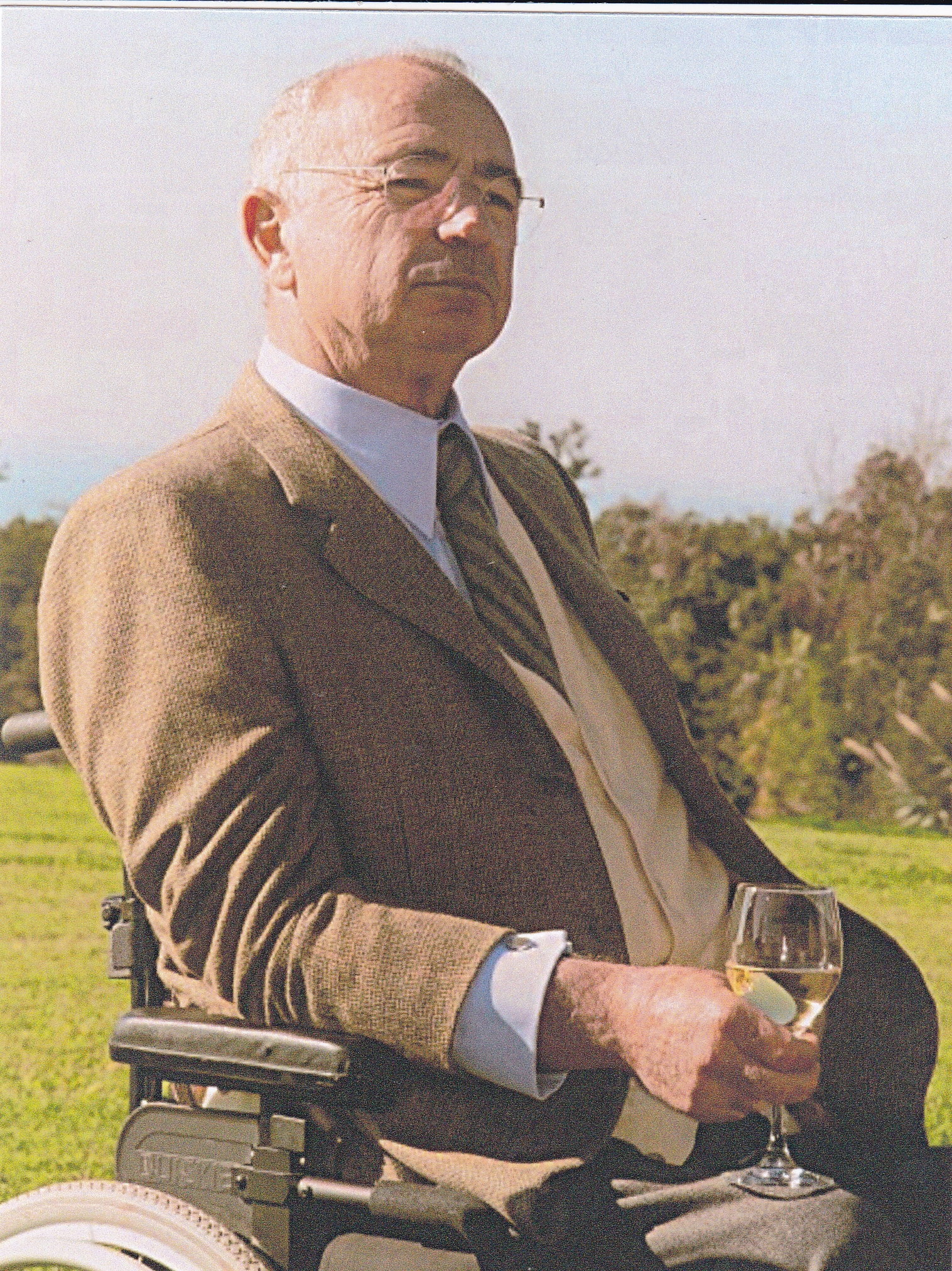
-2016 Weingut Beurer, Riesling, “Nothing”: 100% Riesling that has been on the skins (whole berries filled 50% of a 500 liter neutral barrel) for two and a half years with no sulfur added and unfiltered. Jochen says it is an orange wine without being orange as the color looked gold instead of orange or amber. Blood orange flavors with a hint of fresh sea urchin with Pineapple Underside-Down Cake and crunchy acidity that lingered with the smell of a forest after a rainy day. A wine that I could have sat with for a while just like when we made it to the summit of that track in New Zealand surrounded by wild alpine plants with the cold rain falling on our faces looking onto the other mountains as the fog surrounded us… it was like we were among the clouds… floating.
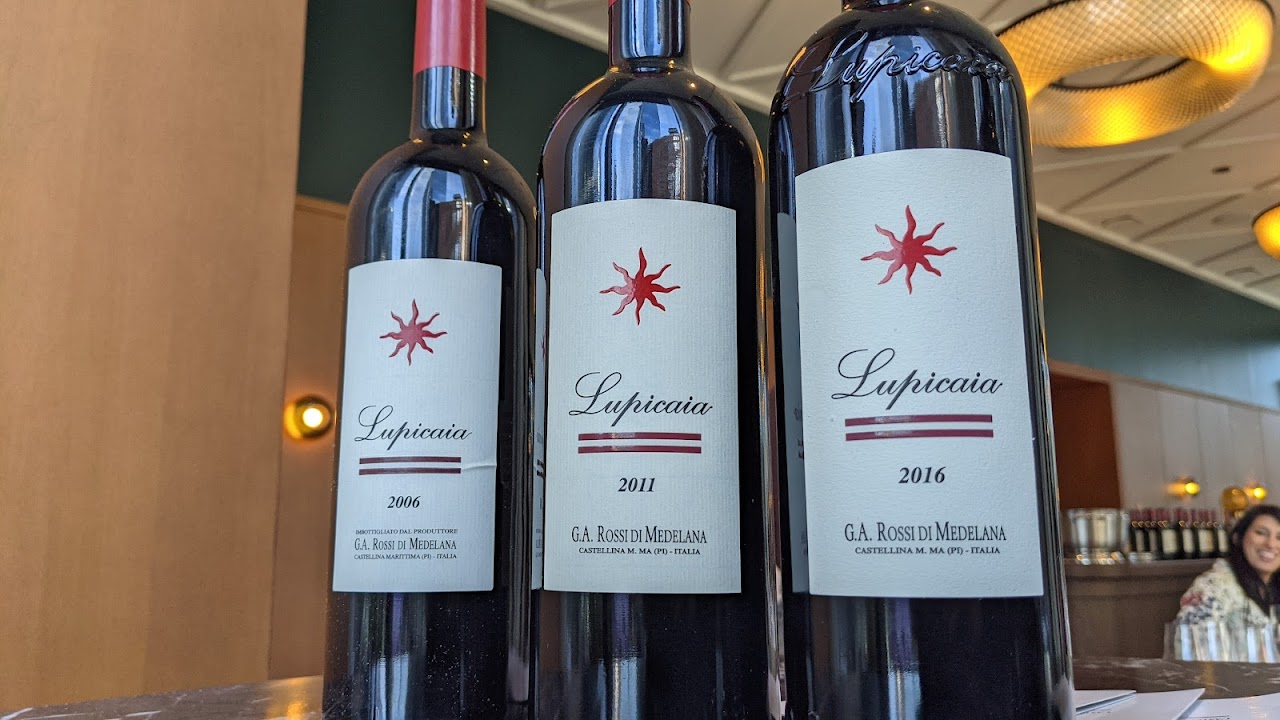
Posted in Dame Wine | Leave a comment