Nothing could overshadow the majestic power of The Grill restaurant in New York City, an official landmark, the last vestige of opulent glamour located in the heart of Manhattan; nothing could overshadow it, nothing…
But sometimes the impossible is only that because the imagination cannot fathom such a thing existing, such as placing such a devastatingly gorgeous place in the background, especially considering that a more understated décor has dominated fine dining restaurants around NYC in recent years. But then one doesn’t expect to encounter such a tasting from one of the most iconic wine areas in the world, 56 Chianti Classico wines in all, going back to the 1949 vintage, coming out in a delightful parade, astonishing wine writers and sommeliers alike in a trade tasting that took place in the morning at The Grill.
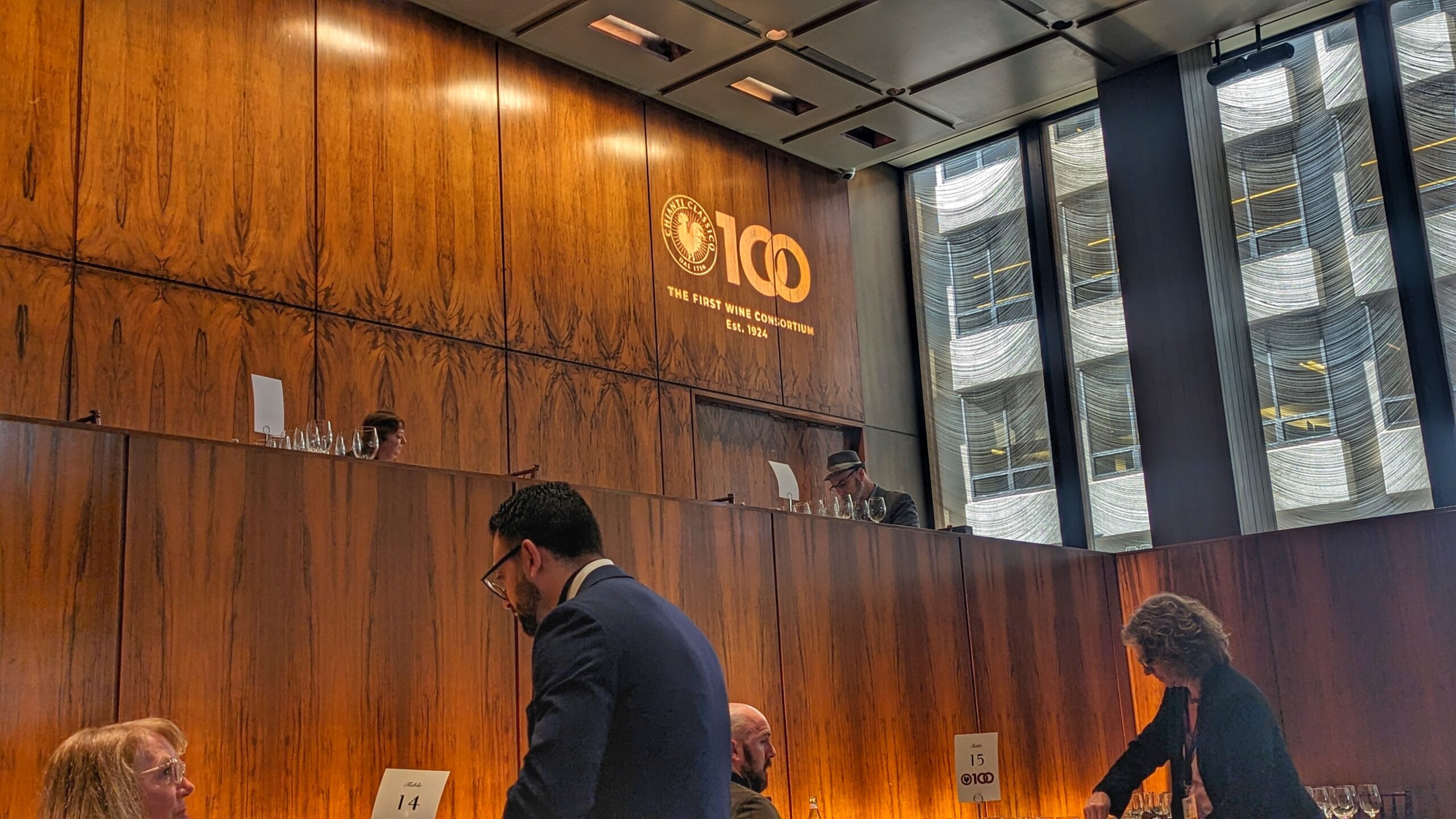
Photo Credit: Cathrine Todd
It was the highlight tasting for 2024 as all of the wines were in great shape, still conveying a sense of fruit, freshness and vitality that was astonishing, especially considering the oldest wine was 75 years old and the youngest was 25. An impressive celebration of the 100th Anniversary of the Consorzio Vino Chianti Classico, which today represents 480 Chianti Classico producers – a group that continues to protect and promote the historical area considered “Classico” in the Chianti area, giving it more prominence over other areas.
All the bottles of Chianti Classico wines were slowly marched out to find their way to glasses that sat in front of excited participants, many having labels that showed their advanced age. The landmark space in which these wines were carefully tasted seemed to fade to the background as if someone was rotating the focus ring on a camera. Only the bottles, the glasses and the slow pouring of the wine seemed to have a visual sharpness and the colors in the glasses ran the gamut from garnet to bright ruby, due to age differences, which would be followed by the most intoxicating, complex aromas that made one giddy even before the first sip. But on that particular day, three wines stood out, seemingly levitating with an astonishing beauty; many who collect and cellar wines know that bottles can have their good, bad and mind-blowing days, and it can be a cycle that goes up and down for many decades.
Those miraculous bottles were the 1969 Castello di Monsanto Chianti Classico Riserva ‘Vigna Il Poggio,’ 1985 Fèlsina Chianti Classico Riserva ‘Rancia’ and 1999 Castello di Querceto Chianti Classico Riserva.
Building A Strong Foundation
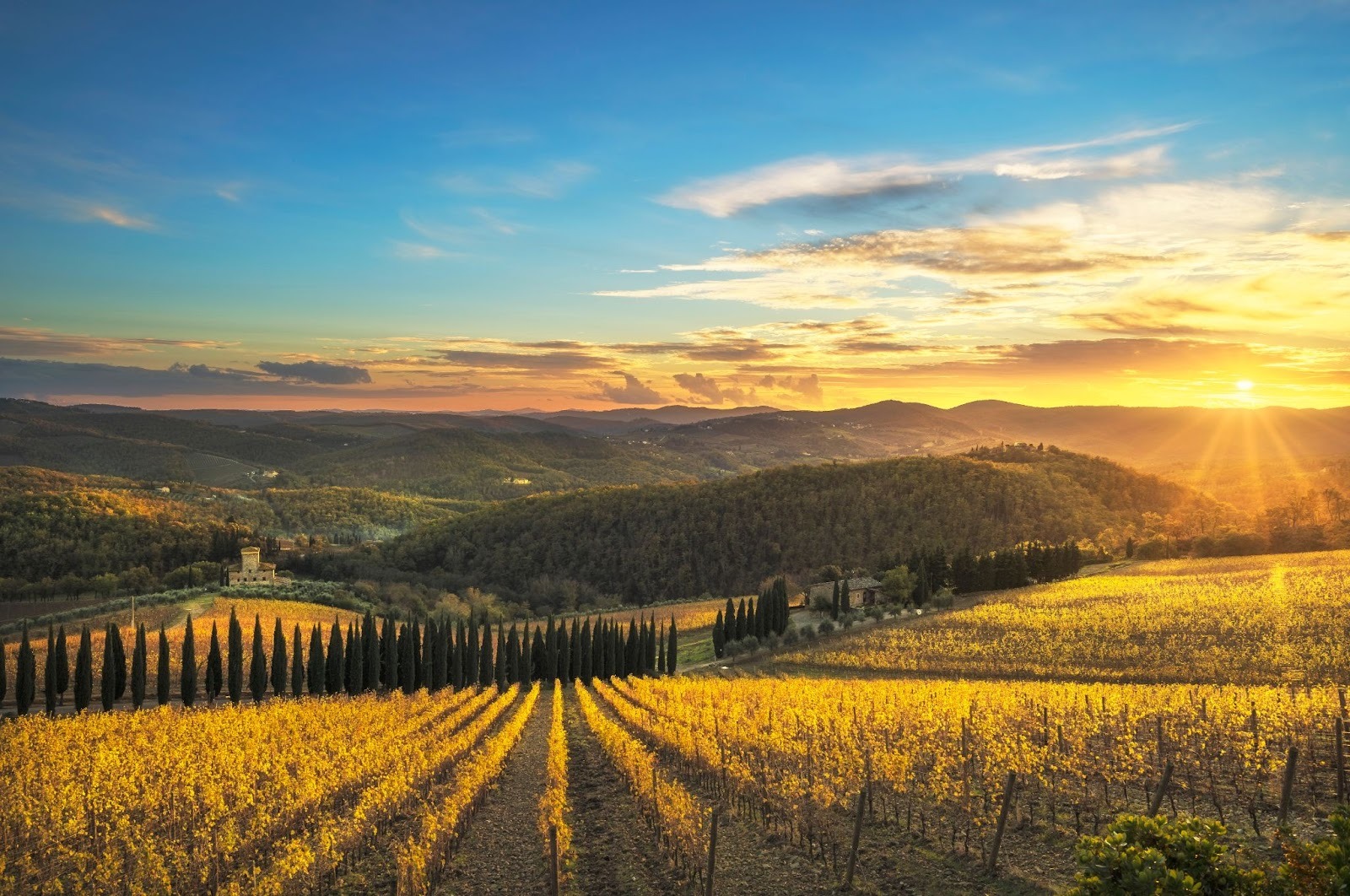
Photo Credit:
Consorzio Vino Chianti Classico
The Consorzio Vino Chianti Classico was founded in 1924 by 33 winemakers in the area, which is quite remarkable when one thinks about the timing as it was a handful of years after World War I, breaking up empires, redrawing dividing lines and leaving things in flux for many areas in Europe. The Industrial Revolution had already established itself in Tuscany with major industries like textile manufacturing taking over the region – eventually bringing more prosperity to some while destroying many others who were mainly part of the agricultural society that dominated the economy for so long. And so, while it seemed that any small family-run farming was doomed to fail and many abandoned their land to pursue a stable income in the cities, a group of family wine producers in Chianti Classico decided to give everything to their wines, as the whole purpose of their lives was to build on the glory of these historic wines.
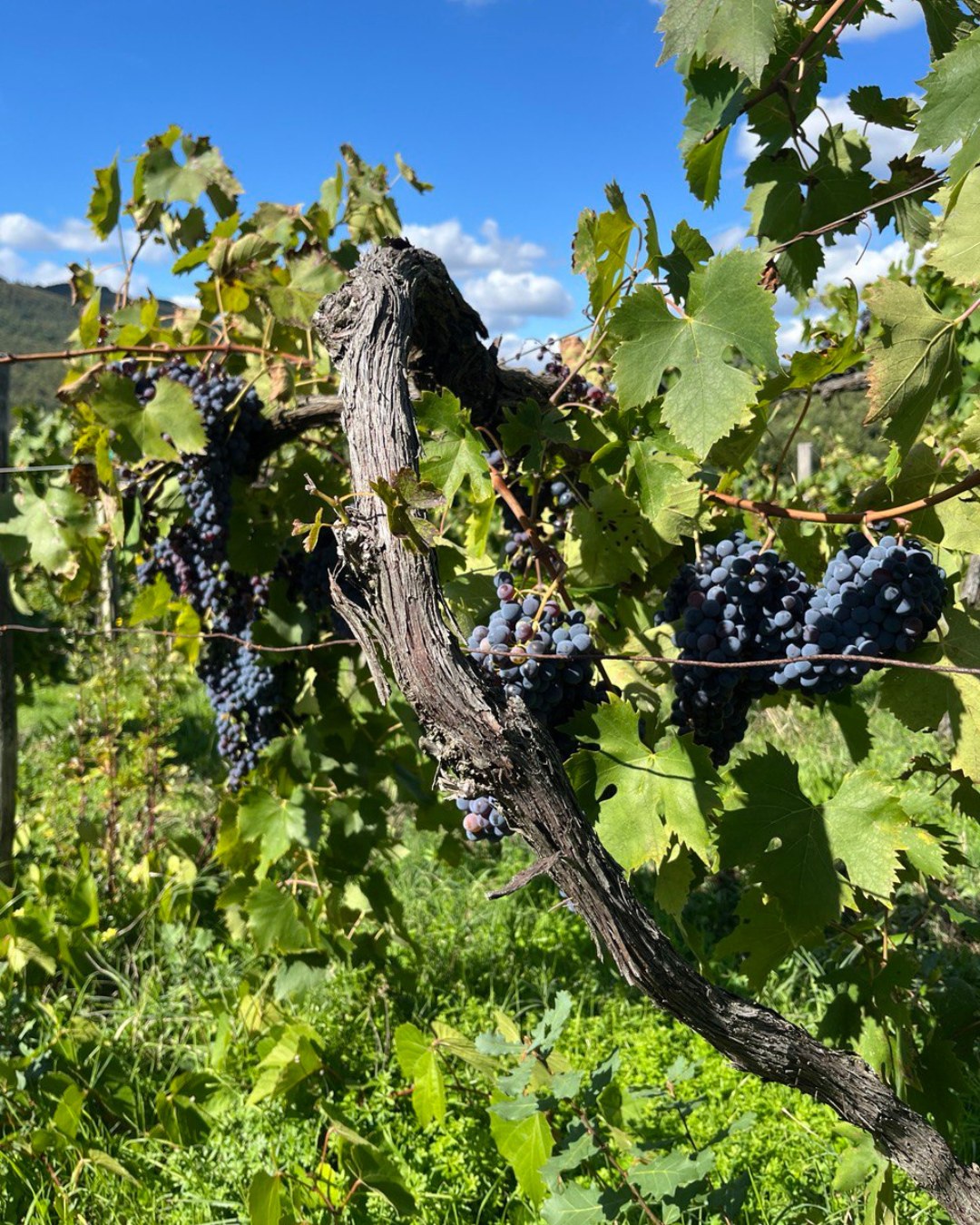
Photo Credit:
Castello di Querceto
One of those families, the François family, who helped to establish the Consorzio Vino Chianti Classico back in the 1920s, would go on to buy the Castello di Querceto estate and they were the only family with women present for the meeting that established this alliance of producers. Today, the François family has multi-generations running Castello di Querceto and they have certainly been innovators who have laid the foundation for higher-quality wine by focusing on single vineyards and altering vineyard management depending on the soil and micro-climates of various plots. They have become a pillar in making Chianti Classico a name associated with top quality and a strong sense of place.
Bringing To The Next Level
In the 1960s, “foreigners” started coming to Chianti Classico, bringing new ideas and a vibrant energy. Yet “foreigners” in this case doesn’t mean from another country – it means from another region in Italy, as each region is like its own country.
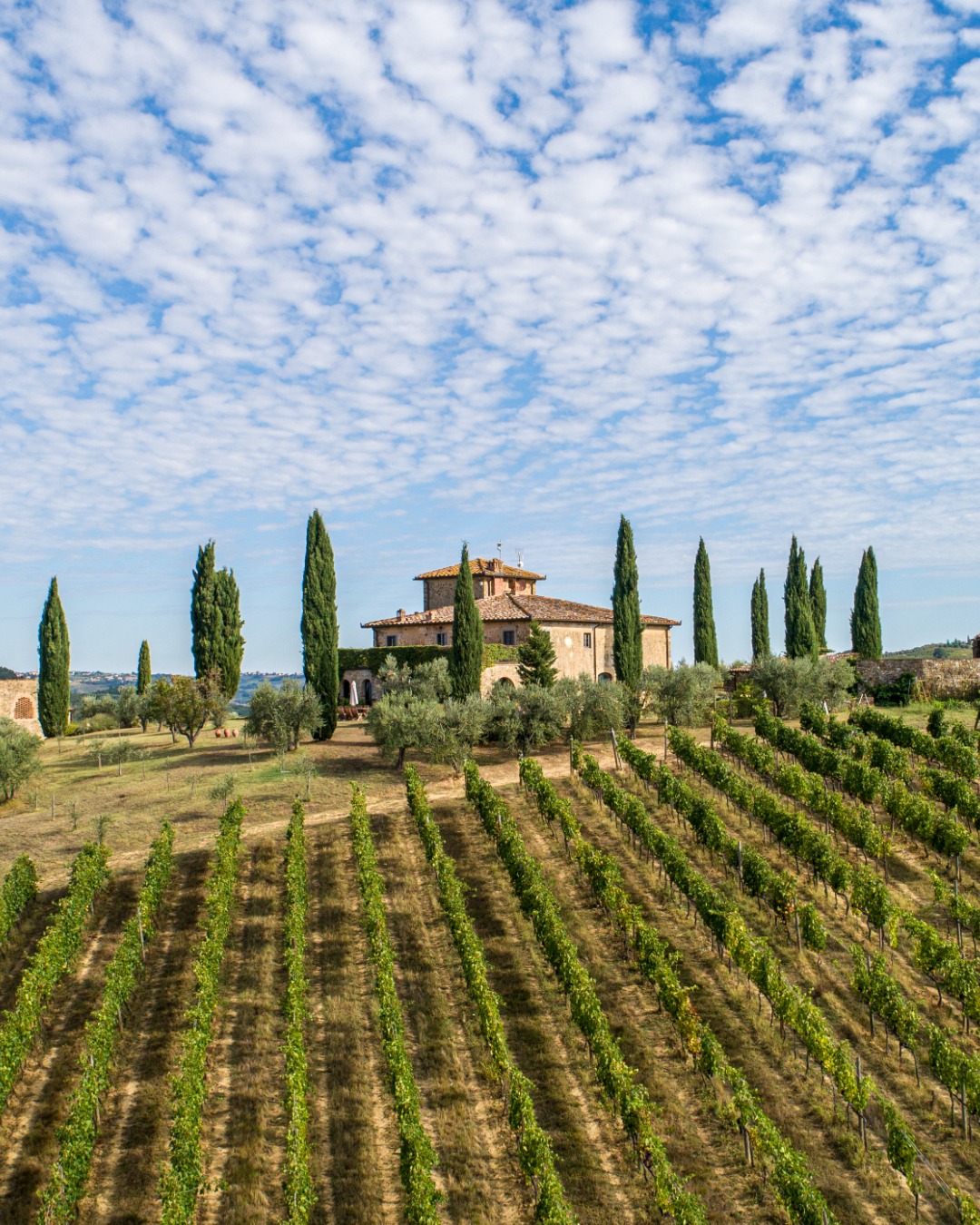
Photo Credit:
Castello di Monsanto
A young textile industrialist from the northern Italian region of Lombardy named Fabrizio Bianchi bought Castello di Monsanto with his father in 1961. He made it one of the most prestigious estates within just a few years. Fabrizio started to replant the vineyards, pulling out the white grape varieties as red and white were planted and fermented together in previous times, and he focused mainly on the Sangiovese grape variety. Today, his daughter Laura runs the estate.
Another industrialist, Domenico Poggiali, from the more eastern Italian region Emilia-Romagna, took over Fèlsina (Fattoria di Fèlsina) in 1964. The wines struggled for a time as there was no one who consistently oversaw the estate until Domenico’s daughter married a teacher named Giuseppe Mazzocolin. Domenico talked his son-in-law into giving up his teaching career to run the property. He threw himself into the job and was fortunate to befriend the legendary Luigi Veronelli, an Italian journalist who wielded incredible influence and stood by his principles to protect small winemakers, as well as artisan products, around Italy and his wealth of knowledge was such that those who were lucky could count on him for vital advice to lead them down the road to making outstanding wines.
Over seven years ago, a tribute in New York City was held for the legendary Italian journalist Luigi Veronelli, who had many of the top wine producers he heralded flying in for the occasion to pour a special wine for attendees. Giuseppe Mazzocolin, owner of Fèlsina, entered the stage with his 1985 “Grand Cru” Fontalloro wine – a wine that Luigi Veronelli deemed to be the first “Grand Cru” of Castelnuovo Berardenga in Chianti Classico.
First Italian Love
America’s first Italian wine love was Chianti with the understanding that Chianti Classico indicated higher quality. It is a wine not only with a deep and authentic history and culture but outsiders helped to bring the area closer to expressing a stronger sense of place as well as encouraging the natives to trust that their wines, which were at one time made for quantity as it helped farmers to get the calories they desperately needed, had the potential for a greatness that was beyond their dreams.
In a way, that is what makes Chianti, and especially Chianti Classico, in line with the American dream as it is about outsiders and the establishment coming together to raise the bar while keeping the soul of traditions alive to achieve a higher excellence that is appreciated around the world. And all of the 56 wines on display that day were showing quite well, even back to the 1949, as there were always a few producers who were crazy enough back then to place all their energies into making quality wine despite getting very little money for it. But it took a large group, such as the Consorzio Vino Chianti Classico, to work for decades to get everyone onboard with quality, and they are far from being satisfied as with each passing decade, the wines take another leap forward towards becoming even that much more impressive.
Sometimes it is easy to take one’s first love for granted, to get distracted by the newer, shinier wines that hit the market and cause a buzz, but if this 100th Anniversary tasting showed anything, it showed that these wines should be at the top of one’s list when it comes to seeking outstanding reds that become incredibly complex with age yet they don’t lose their vibrancy and that delectable fruit. It is good to revisit that first love and realize that one of the best wine experiences was always there, just waiting for its lover to return after other experiences to realize how good it really is.
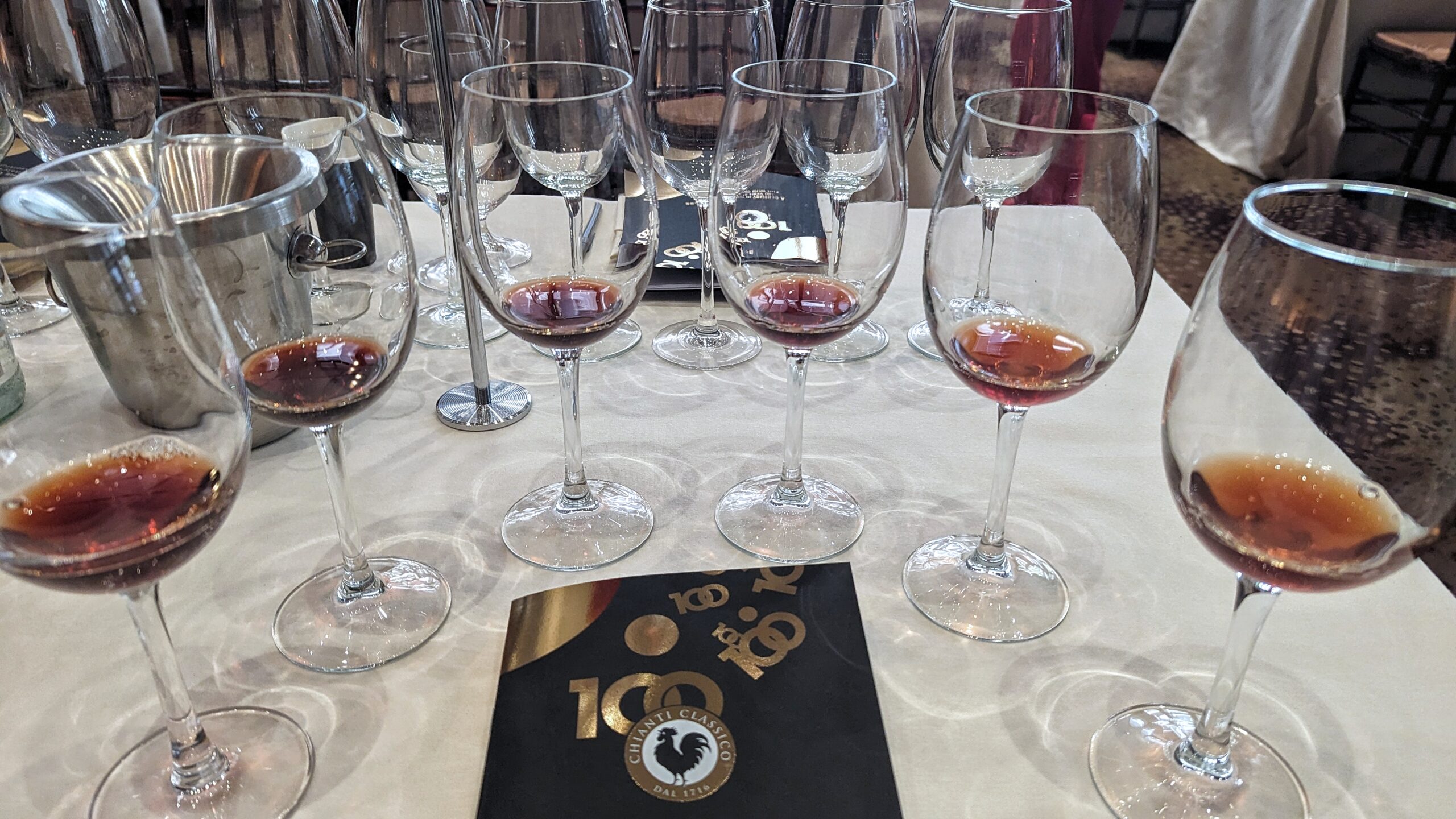
Photo Credit: Cathrine Todd
My three favorite wines of the tasting:
1969 Castello di Monsanto, Chianti Classico Riserva ‘Vigna Il Poggio’: Electric energy with cranberries and rhubarb that expands and deepens in the mouth with black cherry tart flavors intermixed with baking spices and a long, aromatic finish that dazzles.
1985 Fèlsina, Chianti Classico Riserva ‘Rancia’: An enchanting nose of wildflowers and pressed rose petals with ripe, juicy red cherry fruit that has fine structured tannins on the palate with a long finish that leaves notes of pristine red fruit and wet stones in one’s head.
1999 Castello di Querceto, Chianti Classico Riserva: Intense minerality from the very first sip with crushed rocks and chalky minerality, with a rich body that has just the right amount of plush fruit balanced by fresh acidity highlighted by hints of forest floor with a long finish that caresses the palate like long strands of ribbons made of silk.