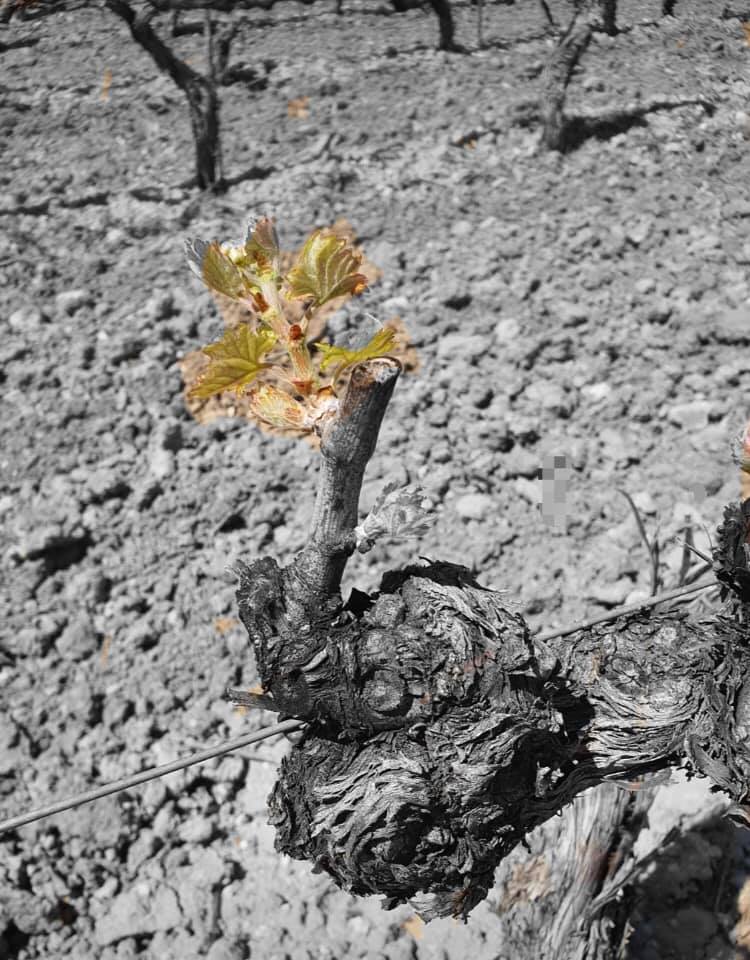
The Iconic Wines From Spain Produced By Embracing The Failures That Lead To The Path To Perfection

A young Spanish man from a family with an extremely successful business tried to define his life during his college years. His keen mind, filled with a strong curiosity for a wide range of subjects, at first put him on the path to becoming a doctor yet it is the law and law school that would ultimately take over his studies. During this time his family purchased a historically famous winery called Bodegas Vega Sicilia in the region of Ribera del Duero, in Spain, and so after law school this young man’s father asked him to run the winery. It could have easily become an impossible assignment as although Vega Sicilia was already an iconic estate founded in 1864, through time the vineyards became neglected and the neighboring wine region Rioja garnered more fame globally as a region as a whole over the years; the railroad built in the 1800s that connected Rioja to two important port cities gave it an advantage over other Spanish wine regions. Most other young men put in that position would have just kept the status quo – resting on the laurels of the fame of the estate while pursuing other interests on the side but instead he ended up devoting his life to the continual journey of finding perfection, if it does exist, becoming one of the greatest visionaries in the world of wine.

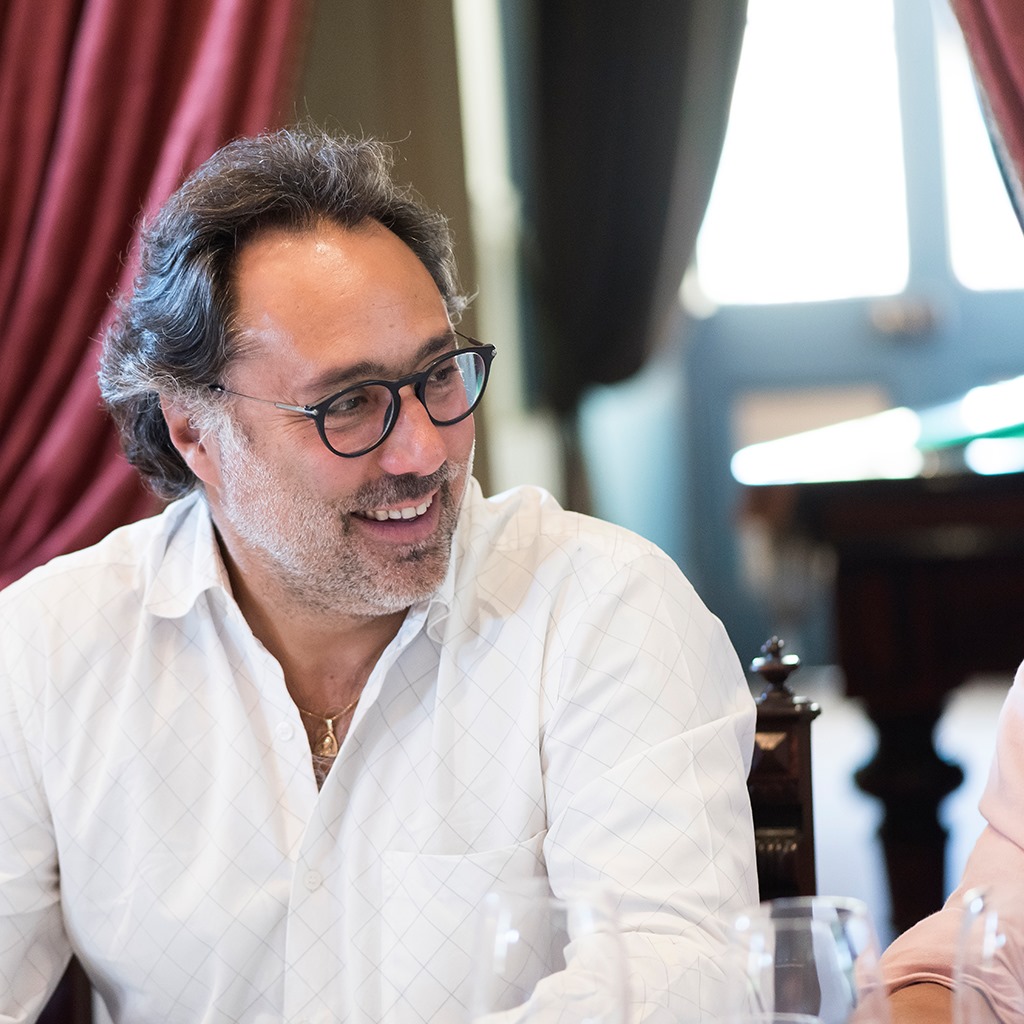
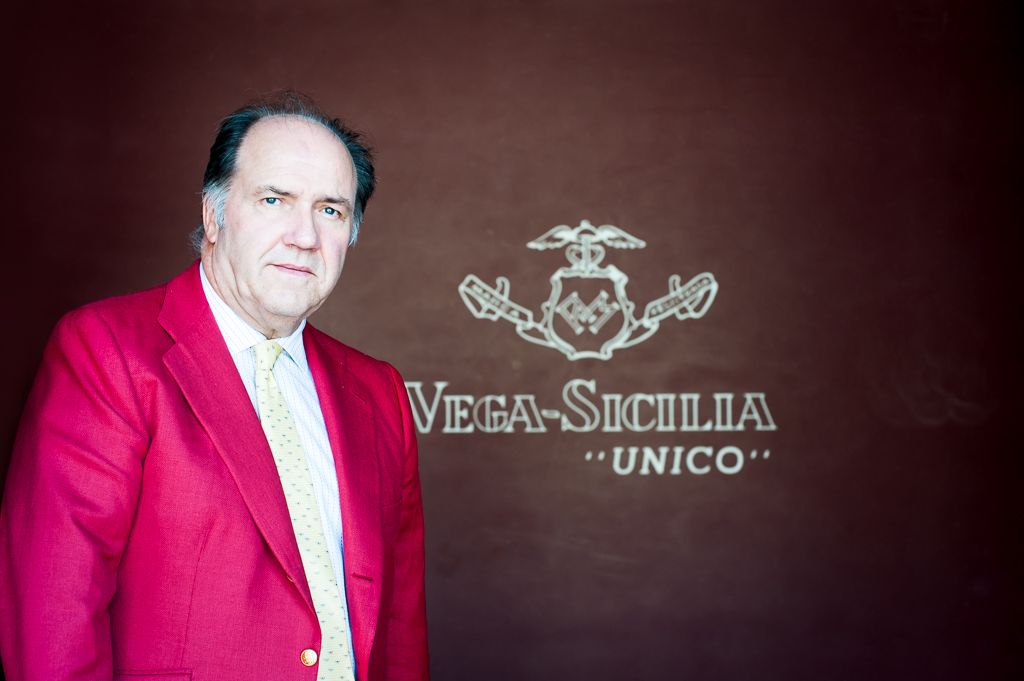
Pablo Álvarez

Pablo Álvarez
Photo Credit: Tempos Vega Sicilia

That young man who ended up taking over Vega Sicilia in 1985 was Pablo Álvarez who admits that despite liking wine he was “unfamiliar with the wine world” and so at the time, the winery’s long-time director, Jesús Anadón, helped him to understand the workings of the winery and most importantly, the vineyards. It was a “big responsibility” for Pablo especially considering he had just graduated from law school but he says that he was lucky enough to “fall in love” with the wine world and through all the intense ups and downs it was that love that has always grounded him when tough decisions had to be made; high quality standards would be maintained at all cost even seeming a little extreme to outsiders at times.      

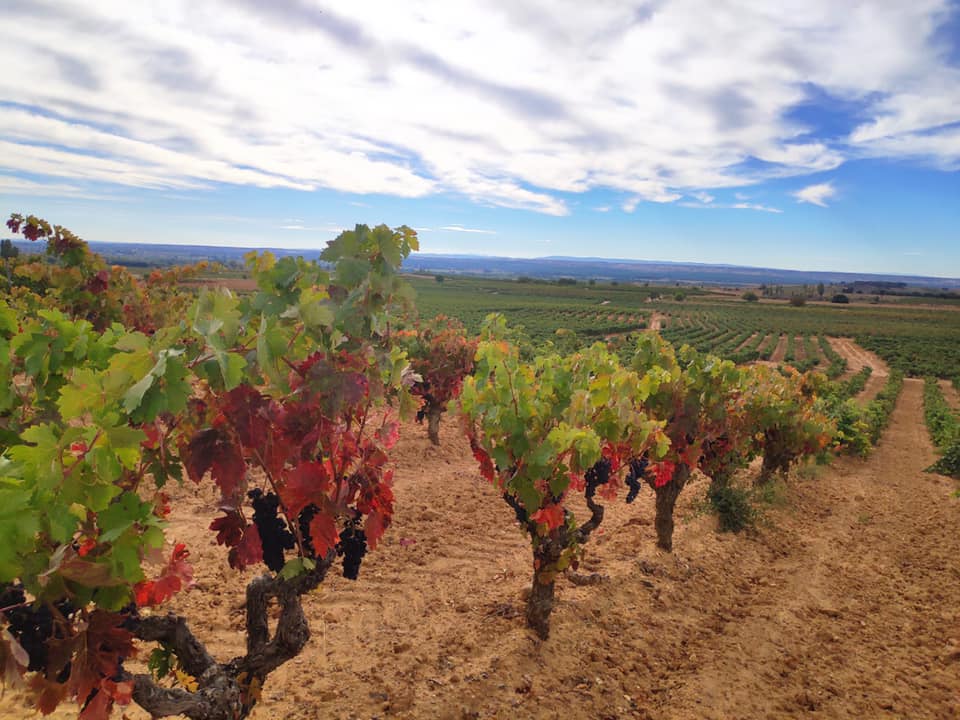
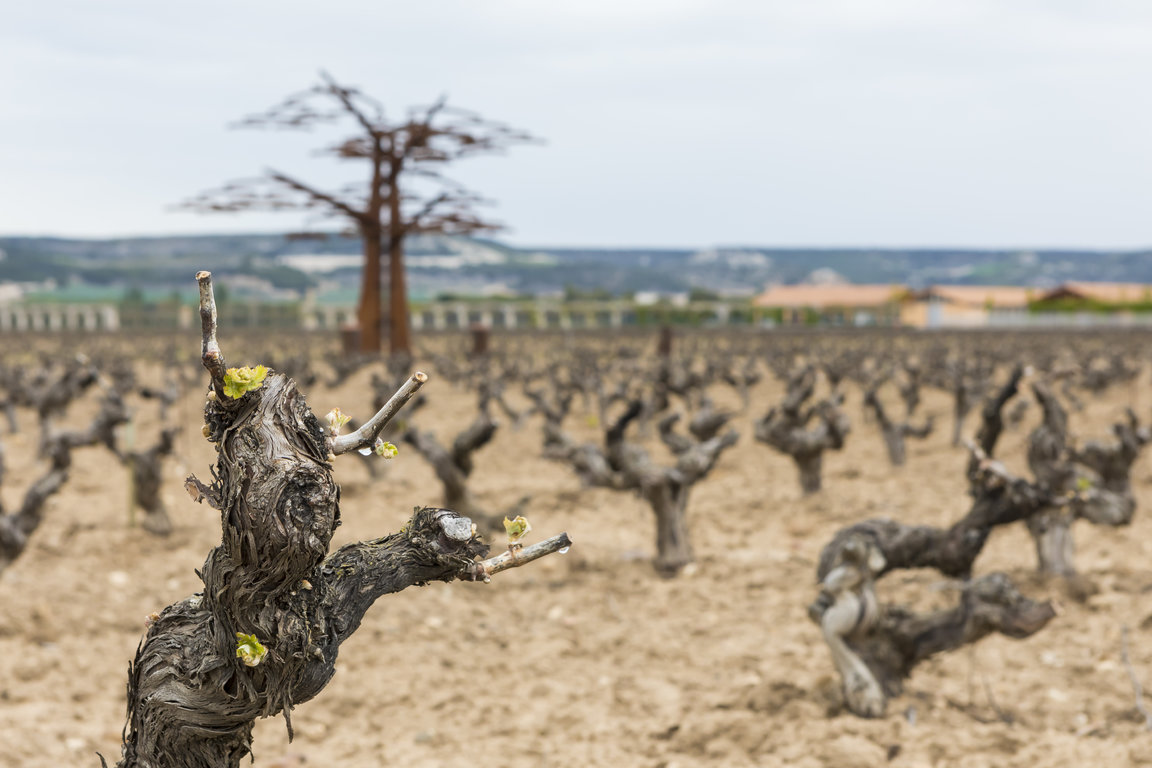
Vega Sicilia Estate Vineyard
Photo Credit: Tempos Vega Sicilia

From the very beginning it just made sense to Pablo to start to work organically in the vineyards, discontinuing the use of herbicides and chemical fertilizers starting in 1985 which was certainly shocking to his neighbors back in the ‘80s. Another thing that was surprising was how much effort and money he put into the vineyards considering that Vega Sicilia already had a loyal following but he saw that the vineyards could be so much more and so he replanted where it was needed, choosing the best Tempranillo clones within Vega Sicilia to replant – there are 24 different Tempranillo (aka Tinto Fino) clones on the Vega Sicilia estate. Also he brought in experts to study all aspects of each plot and began the slow process of understanding the best way to manage and cultivate the vines in any given vintage. “Today, after many years of effort, I am proud of our vineyard” notes Pablo as he has seen great progress through the decades and he is most proud of the people who manage it.  

Tempranillo

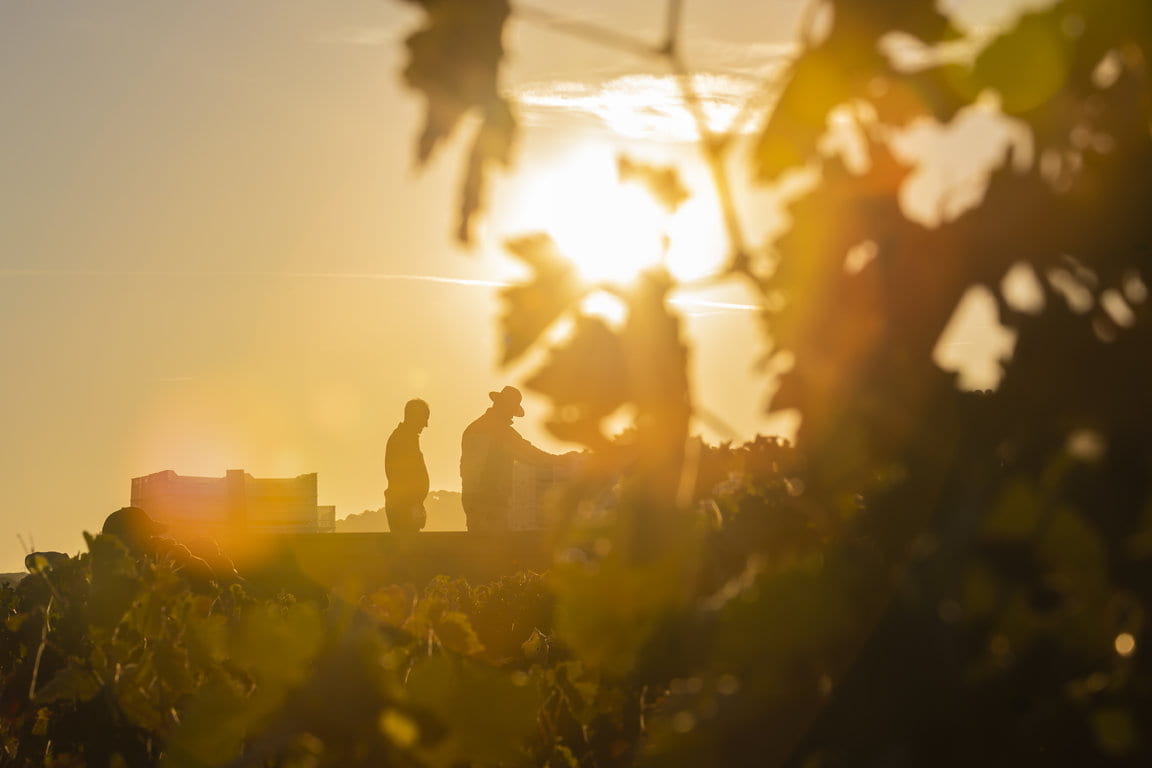
Working in the Vega Sicilia Estate
Photo Credit: Tempos Vega Sicilia

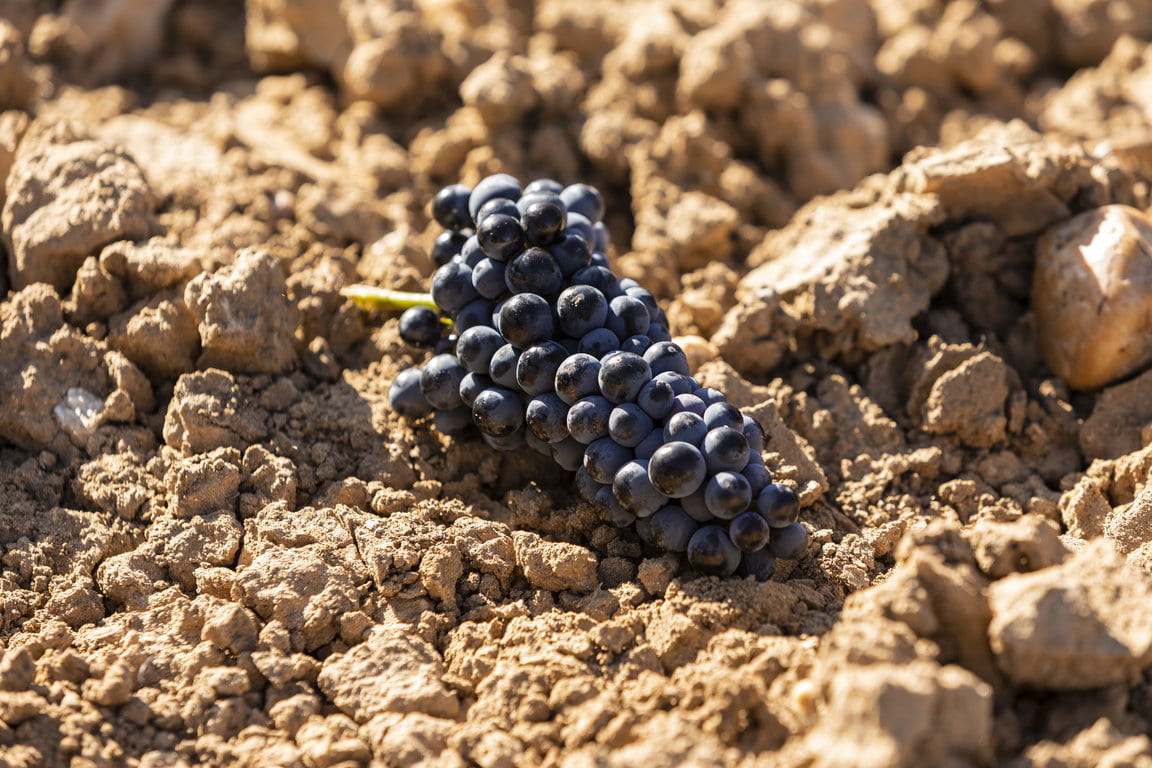
Pablo respects the fact that Bordeaux varieties are part of Bodegas Vega Sicilia history, and so there are still old Cabernet Sauvignon and Merlot vines on the Vega Sicilia estate that make up only a tiny portion of the blend in Unico and Valbuena 5 respectively, yet it is his deep passion for Tempranillo that drives him as he considers it to be “the finest and most elegant variety” and when it has reached an ideal maturation in bottle he says it is “the best variety in the world.” But also it is its affinity for expressing a sense of place (terroir) that also intrigues Pablo as he has not only delved into understanding each plot on the Vega Sicilia estate, as well as the rest of Ribera del Duero, but he has invested in the Spanish wine regions of Toro and Rioja and so he has taken an in-depth examination into the plots in those regions as well.

Tempranillo Grape Bunch in Ribera del Duero Photo Credit: Tempos Vega Sicilia

Pablo speaks about the different expressions of Tempranillo in different wine regions in Spain as being expressed directly in the different names it takes in the varying regions; it is Tempranillo in Rioja, Tinto Fino in Ribera del Duero and Tinta de Toro in Toro. He speaks about the “expressiveness” of Toro, the “subtle” qualities and “elegance” of Rioja and the “complexity” and overall fine excellence of Ribera del Duero.

Vega Sicilia and its captain, Pablo Álvarez, has helped to bring a broader audience of fine wine collectors to Ribera del Duero appreciating the excellence that is coming out of the region as a whole as Vega Sicilia’s wine Alión reflects the diversity of Ribera del Duero as opposed to their Unico and Valbuena 5 being focused on the expression of the estate of Vega Sicilia.

Inside the Alion Winery
Photo Credit: Tempos Vega Sicilia

Striving for perfection at all costs is a legendary aspect of Vega Sicilia under Pablo’s leadership and even though he admits that he doesn’t know if perfection exists yet, that hasn’t stopped him from trying to reach it. He did not produce Unico 1992, 1993, 1997 and 2001 because it did not live up to the standard and in other years, the amount of bottles produced depends on how much of the estate fruit lives up to the quality as the production can range between 40,000 bottles to 110,000 bottles and the fruit he doesn’t use is sold off to other wineries. The same applies to Valbuena 5, which comes from the middle and lower areas of the Vega Sicilia estate slopes, and Alión, which is a selection of vineyards throughout Ribera del Duero. Alión has its own dedicated winery and each winery (Vega Sicilia – Unico and Valbuena 5, Alión, Pintia in Toro and Macán in Rioja) follow their own winery and cellaring practices depending on what helps to unlock the terroir of each wine. Pablo has even planted 50,000 cork oak trees that one day will allow them to make their own corks as well as have their own barrel cooperage at Vega Sicilia that makes 30% of their oak barrels in Spain as they can then control proper aging for the oak staves before the barrels are assembled.

Avoiding Mistakes May Stunt Evolution

One cannot help, especially after going through a tough couple of years such as dealing with the Covid pandemic, to reflect on one’s life and it becomes even more profound when there is a loss such as Pablo losing a business partner, Benjamin de Rothschild, who passed away in January of this year from a heart attack at the young age of 57. As Benjamin and Pablo joined forces to buy vineyards and build a winery in Rioja with leaving the overall management to Pablo and his team since he has the most amount of experience in Spain. But such a loss makes one think about their legacy and what they would want for the future when they are no longer able to lead. Pablo hopes that future generations in charge of Vega Sicilia and the other properties will do better than he did and that they will never lose their drive as they will have a deep love for the wine world such as he does.

And when asked if he had the chance to tell his younger self anything, what would it be, he said, “I would say to that young man now, ‘Life must be lived with all its ups and downs.’” But he would not necessarily save himself from the “failures” as he always felt the failures meant he was moving; he knows he doesn’t have all the answers and that one has to try various avenues to ultimately get on the right track. But he does admit that he would have liked to have done things faster, as to a man who is always striving for perfection it still doesn’t seem he has gotten close enough to that goal… although to the outside fine wine world, his achievements are awe-inspiring and they have no equal.

***This article was originally published on Forbes: https://www.forbes.com/sites/cathrinetodd/2021/11/02/the-iconic-wines-from-spain-produced-by-embracing-the-failures-that-lead-to-the-path-to-perfection/

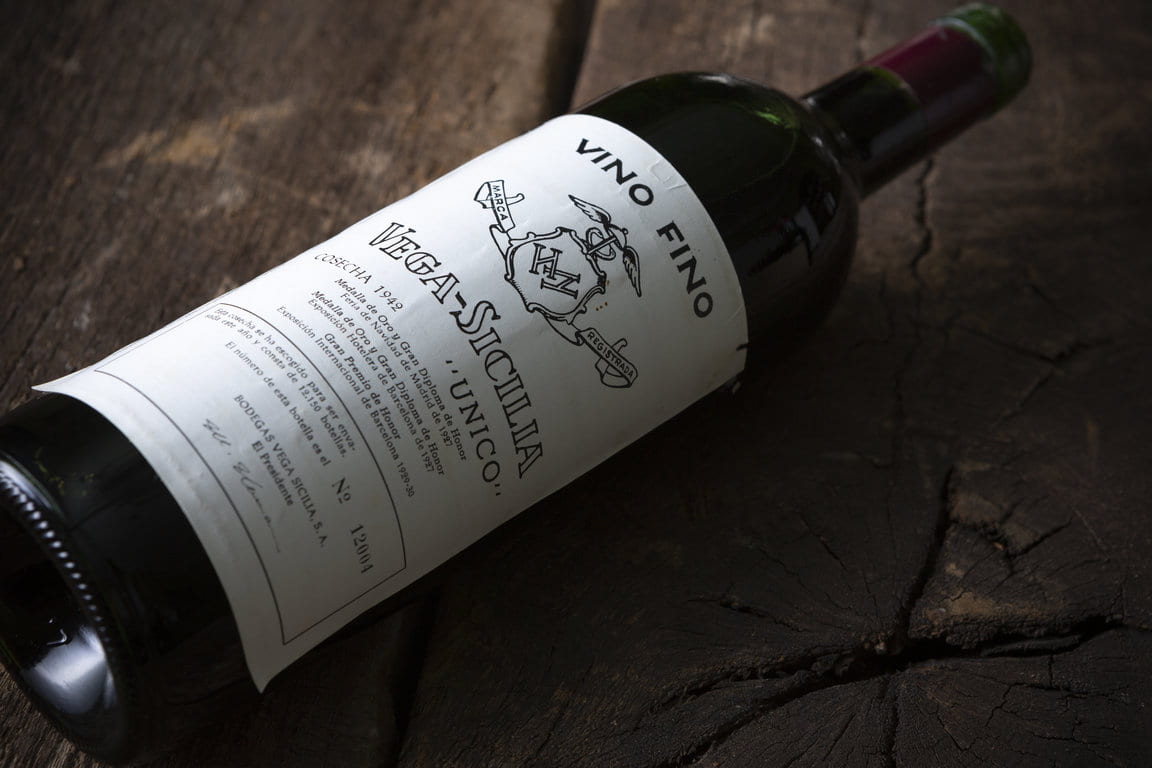
Bottle of Vega Sicilia Unico
Photo Credit: Tempos Vega Sicilia

Tasting Notes for Tempos Vega Sicilia Wines in Spain:

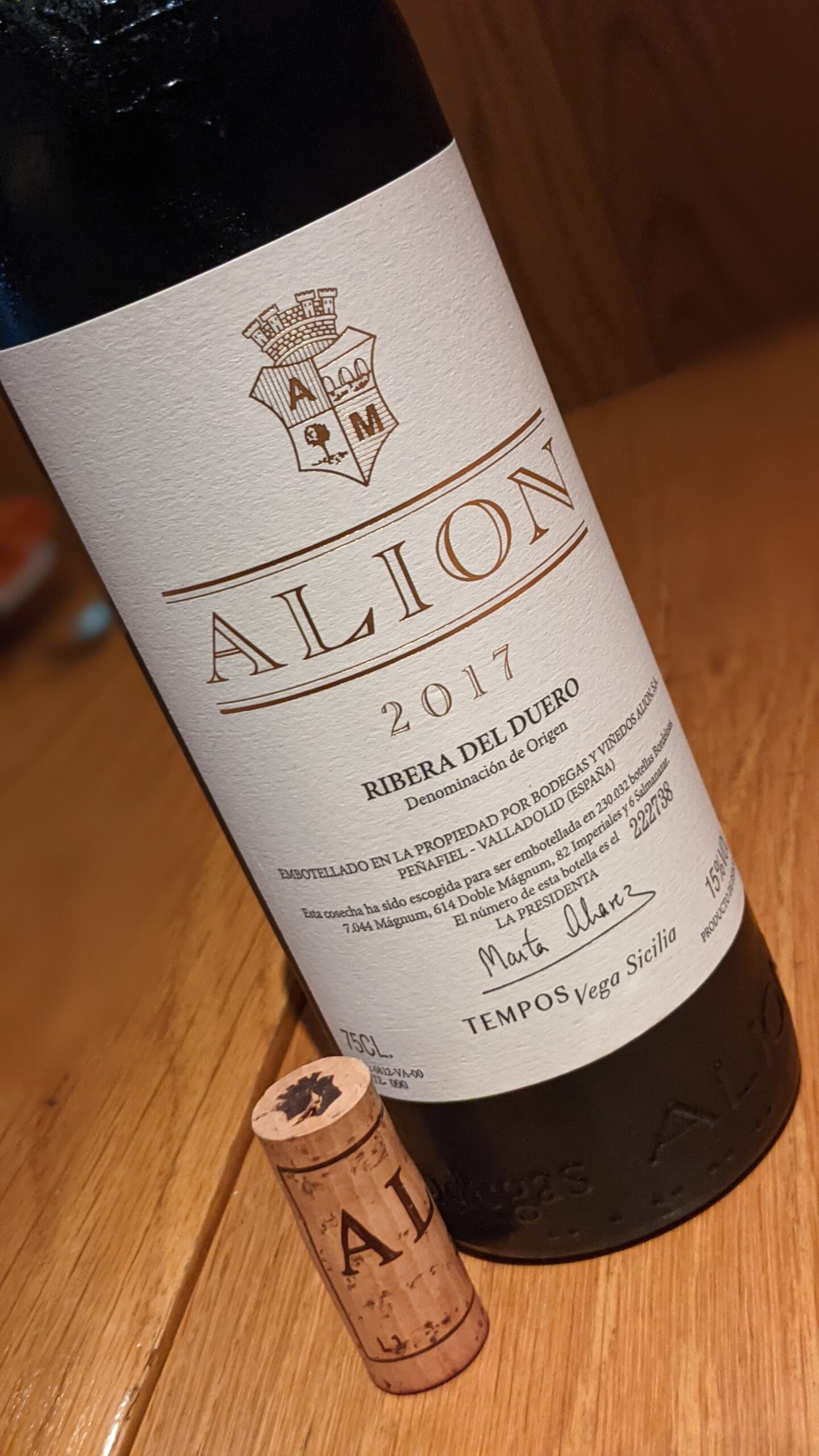
2017 Alión,
Ribera del Duero, Spain
Photo Credit:
Cathrine Todd

2016 Macán, Rioja, Spain: 100% Tempranillo. 2016 had a hot summer yet it was cooled off by September rains. There is a slight amount of grip that gives it a bit more power than the 2017 Macán with good mid-body weight that had black cherry flavors and some dusty earth with a hint of spice.  

2017 Alión , Ribera del Duero, Spain: 100% Tinto Fino  (the name for Tempranillo in Ribera del Duero). In Ribera del Duero the 2017 vintage was cooler but had a warm, dry end to the growing season. An enchanting balance between being juicy with plenty of dark fruit and a touch of licorice yet still lots of vitality and lifted spices and pretty floral finish.

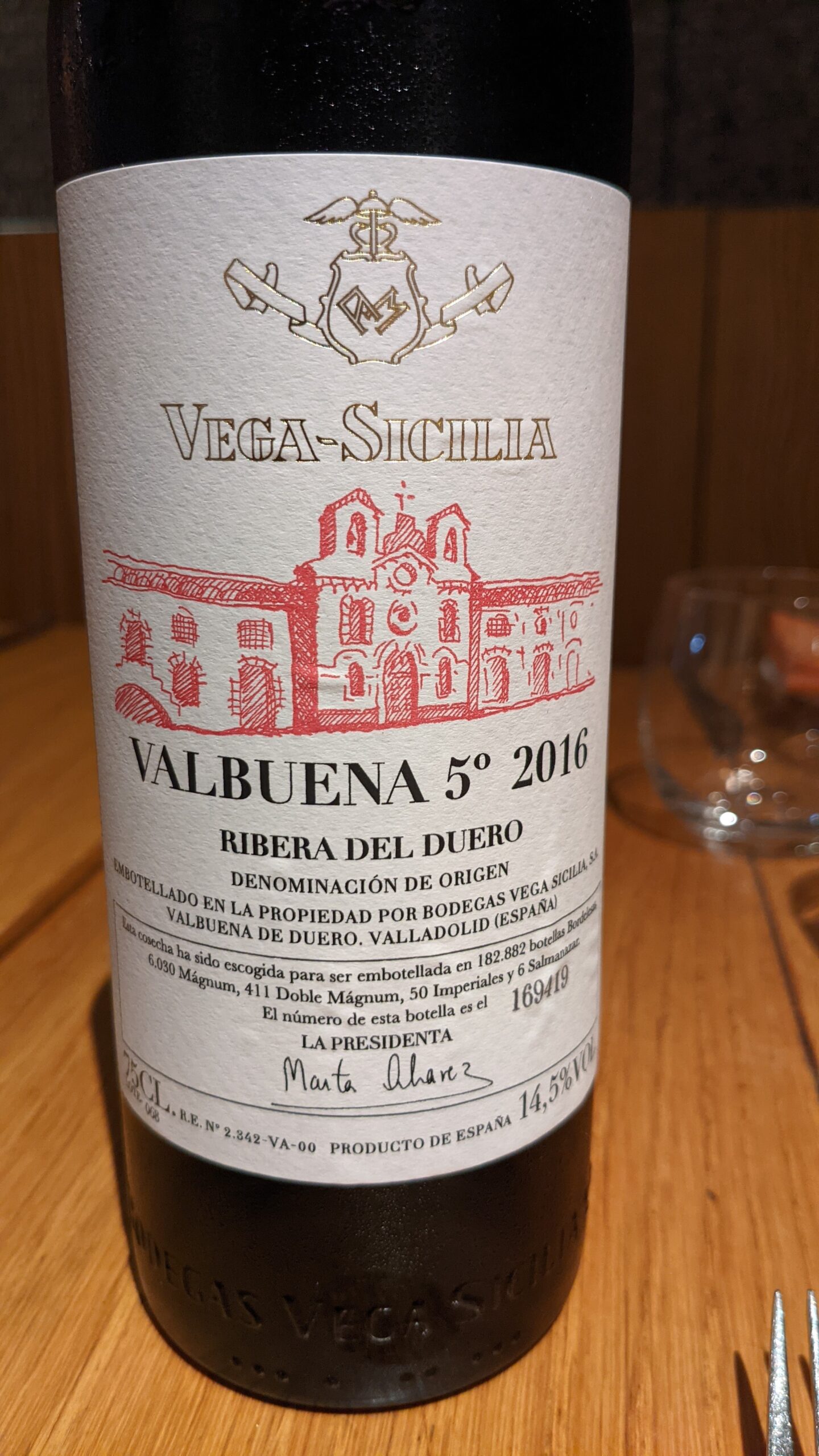
2016 Valbuena 5,
Ribera del Duero, Spain
Photo Credit:
Cathrine Todd

2016 Valbuena 5, Ribera del Duero, Spain: 94 % Tinto Fino (the name for Tempranillo in Ribera del Duero) and 6 % Merlot. The 5 in the name of the wine represents the fact that this wine is always aged five years in the cellar before being released onto the market. An inviting Valbuena that has plenty of lush fruit to make it immediately gratifying yet there is a lovely textural component to this wine that gives an overall elegance that is breathtaking. 

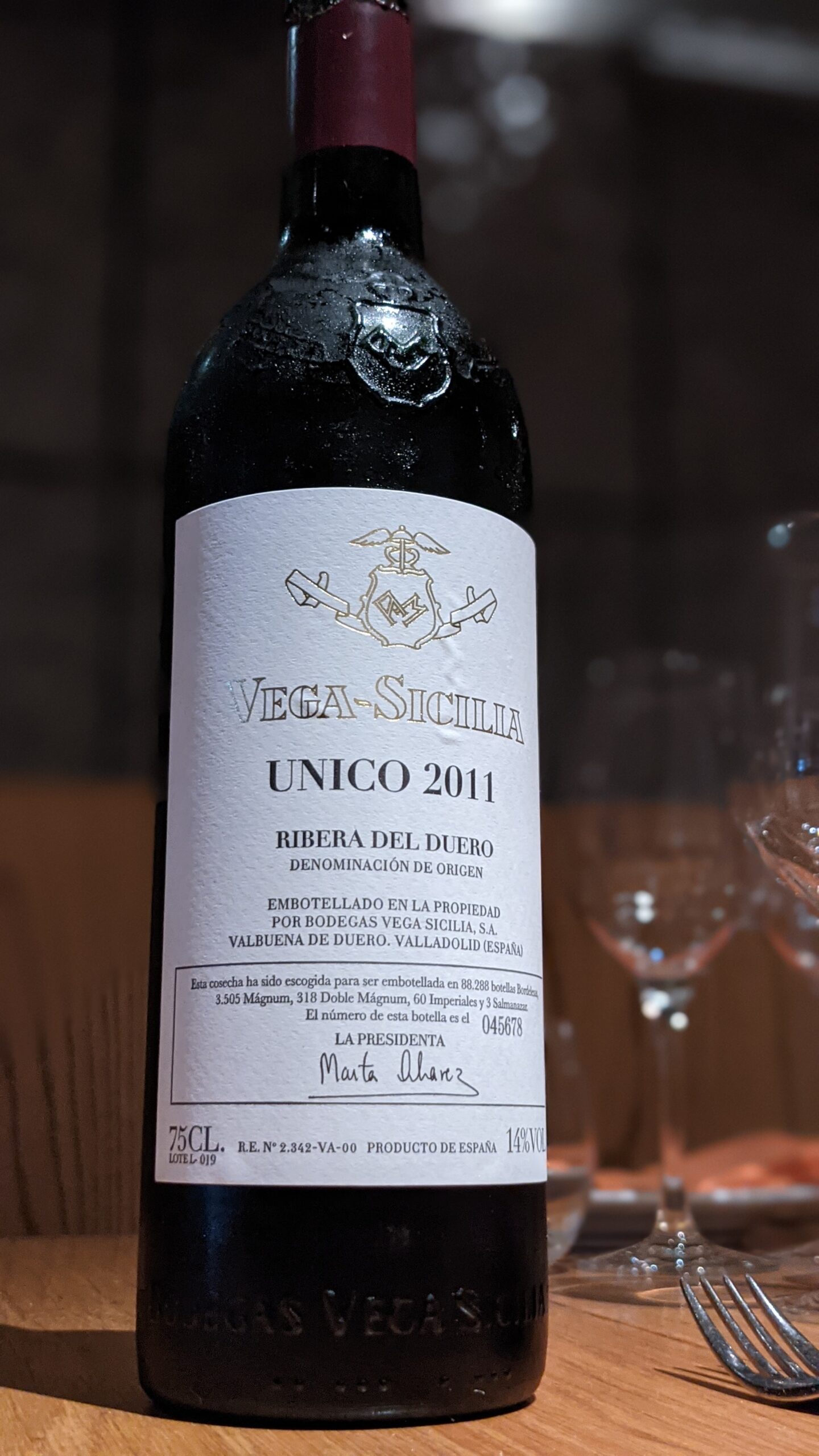
2011 Unico,
Ribera del Duero, Spain
Photo Credit:
Cathrine Todd

2011 Unico, Ribera del Duero, Spain: 95 % Tinto Fino (the name for Tempranillo in Ribera del Duero) and 5 % Cabernet Sauvignon. The ideal balance of sweet and savory with blackcurrant preserves that is taken to another level of complexity with fresh leather and bacon fat that has a wonderful textural balance as well with a good amount of fleshy fruit that is given a combination of finesse and power by finely etched tannins.

Preview Tasting Of Tempos Vega Sicilia Wines That Are Not Released Yet:

2017 Pintia, Toro, Spain: 100% Tinta de Toro (the name for Tempranillo in Toro). 2017 was a cooler vintage and so this Pintia had a lot of freshness yet it was balanced with ripe raspberry notes and layers of complexity expressed in bay leaf, tobacco and dried thyme notes that had fine tannins and a long finish with lots of finesse.

2018 Macán Clásico, Rioja, Spain: 100% Tempranillo. Pablo Álvarez and Benjamin de Rothschild decided to create a first and second wine just like the great Grand Cru Classé wines in Bordeaux. This ‘Clásico’ is the second wine of Macán and the 2018 vintage was warmer than 2017 and the wines are more expressive. A mix of black and red fruit with hints of cinnamon that had supple tannins and rich black raspberry flavors on the palate with underlying notes of broken earth.

2017 Macán, Rioja, Spain: 100% Tempranillo. The first wine of Macán and from the cooler 2017 vintage. A wine with a beautiful vibrancy and purity of blackberry fruit that had hints of desert scrub with lots of focus and drive on the fresh finish.

2018 Alión, Ribera del Duero, Spain: 100% Tinto Fino (the name for Tempranillo in Ribera del Duero). The 2018 is even juicier than the 2017 with cassis flavors and a generosity right off the bat with baking spices and sweet tobacco with firmer tannins.

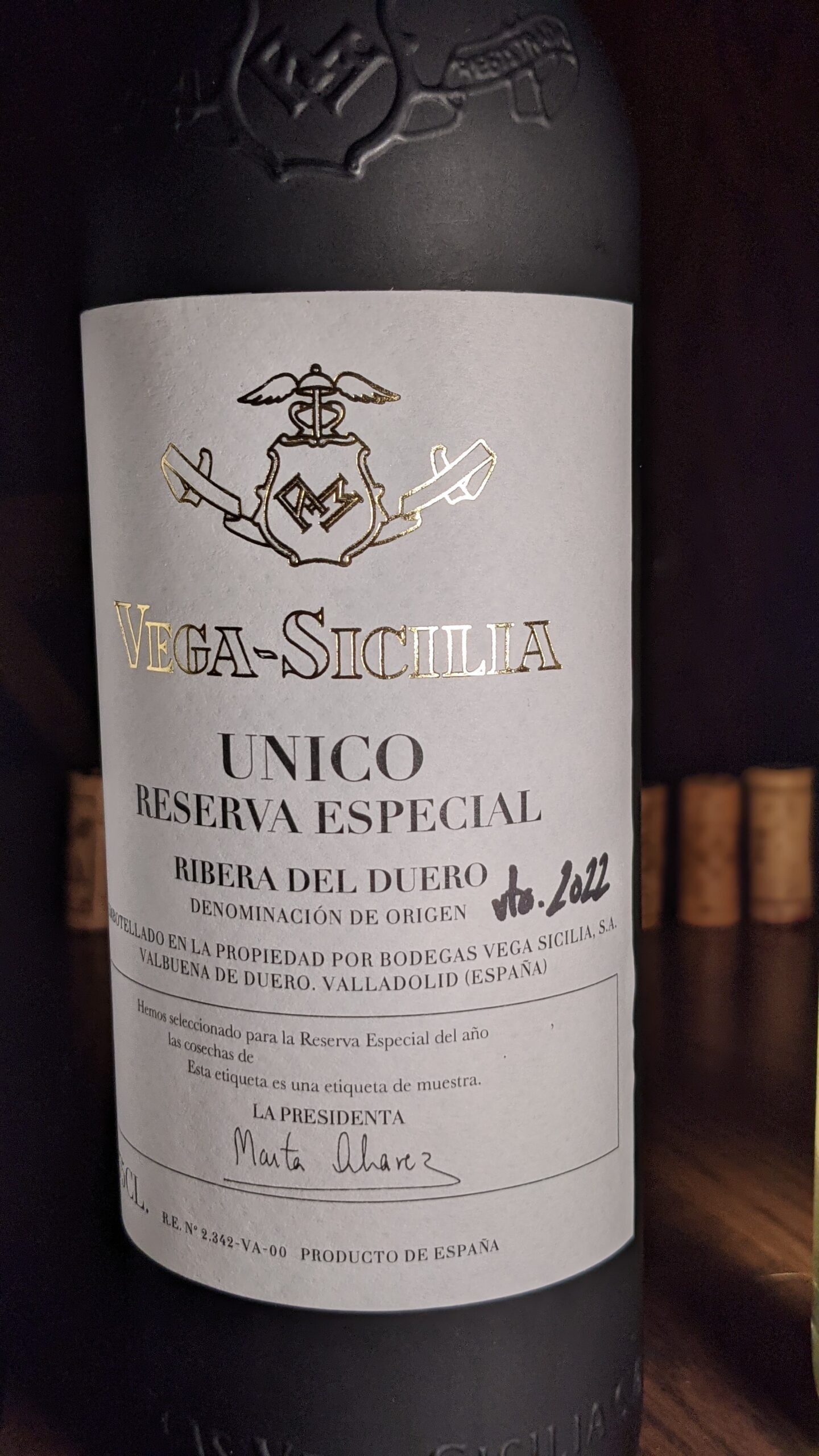
Unico Reserva Especial Photo Credit:
Cathrine Todd

2017 Valbuena 5, Ribera del Duero, Spain: 94 % Tinto Fino (the name for Tempranillo in Ribera del Duero). and 6 % Merlot. Pretty violet notes from the first nosing of the wine with plum and blueberry fruit with a more mineral intensity than the 2016.

2012 Unico, Ribera del Duero, Spain: 95 % Tinto Fino (the name for Tempranillo in Ribera del Duero) and 5 % Cabernet Sauvignon. More weight and broader tannins than the 2011 with a smoky minerality and forest floor quality that makes it extremely intriguing with a long expressive finish.

Unico, Reserva Especial, Ribera del Duero, Spain: Blend of 2008, 2010 and 2011 vintages of Unico; release date will be 2022. This wine had intense concentration and power but at the same time extremely well-integrated tannins and a delicate beauty that would seem to be qualities that would contradict each other but somehow exist in harmony within this Unico Reserva bottling. No set of aromas and flavors could do it justice as it is best described as a profound experience to have such power and delicacy all in one.

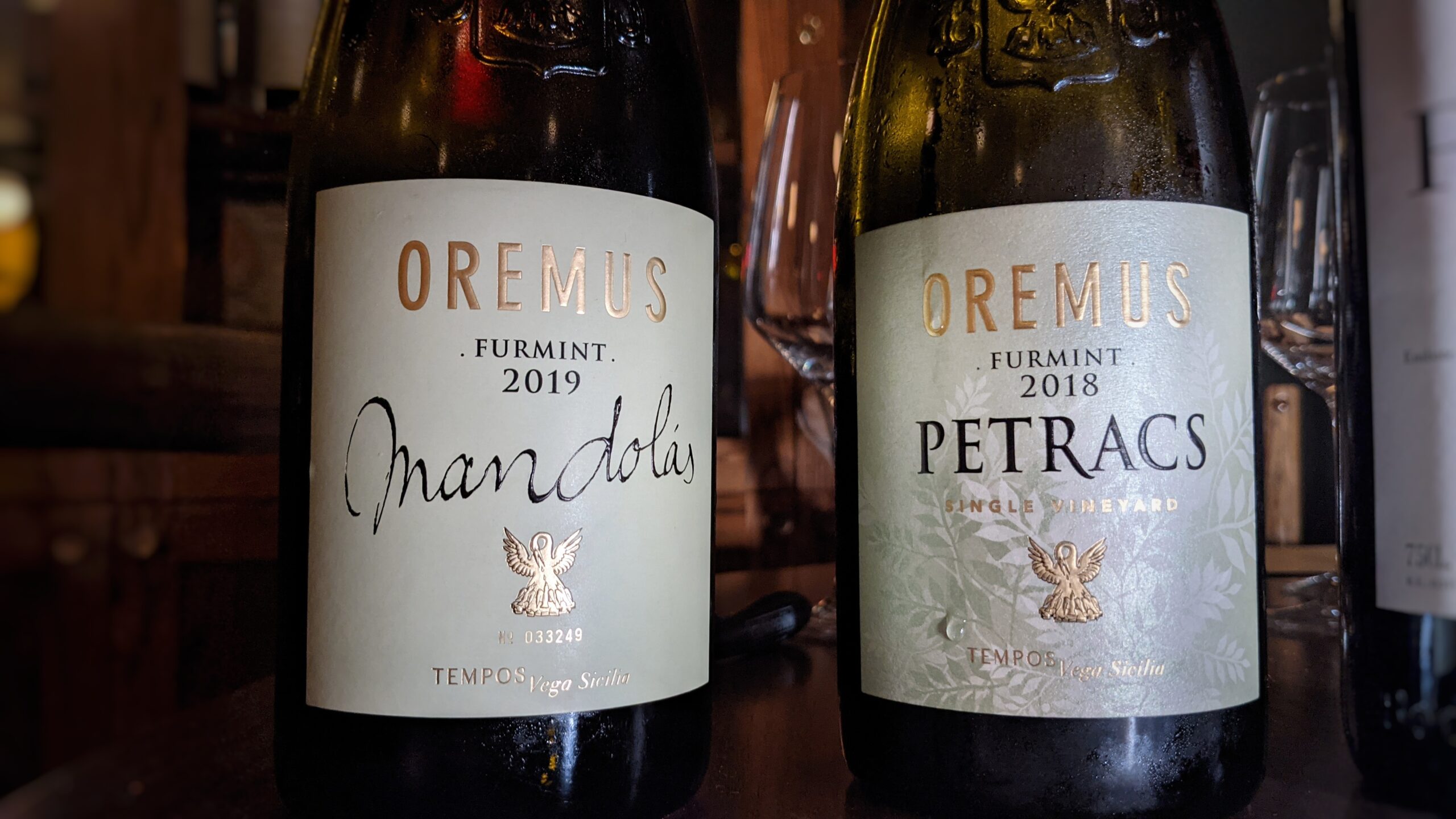
2019 Oremus ‘Mandolás’ and 2018 Oremus Single Vineyard ‘Petracs’
Photo Credit: Cathrine Todd

Oremus Wines from Hungary:

Tempos Vega Sicilia produces two dry white wines with their Oremus winery called Mandolás and the single vineyard Petracs as well as a late harvest sweet wine and varying levels of sweetness of the famous Tokaji aszú sweet wines. Pablo Álvarez is a great lover of white wines and he has tried for many years to produce a white Vega Sicilia wine in Ribera del Duero but it has not lived up to his standards and so he took the opportunity to invest in a Tokaj estate in 1993 as he loves their legendary sweet wines as well as improving dry white wines from the area. Their Oremus vineyards were classified as a “Primae Classis” in 1772 which can be equated to a first growth property (in Bordeaux).

2018 Oremus, ‘Mandolás’, Tokaji Furmint Dry, Tokaj, Hungary: 100% Furmint Dry Wine. Intriguing nose with a unique note that I can only describe as walnuts sautéing in sugar, salt and butter that had hints of anise seeds and honeysuckle with a combination of lemon custard and pineapple flavors on the palate that had a cutting acidity laced with a saline minerality.

2019 Oremus, ‘Mandolás’, Tokaji Furmint Dry, Tokaj, Hungary: 100% Furmint Dry Wine. Dried flowers with apricots and white pepper that was crisp and energetic with citrus peel on the finish. 

2018 Oremus, Single Vineyard ‘Petracs’, Tokaji Furmint Dry, Tokaj, Hungary: 100% Furmint Dry Wine from Single Vineyard. The first vintage of this wine was 2017. More nuanced flavors with fennel fronds and cumin seed with zingy green mango notes that danced along the palate like a graceful ballerina.

2017 Oremus, Late Harvest, Tokaj, Hungary Photo Credit: Cathrine Todd

2017 Oremus, Late Harvest, Tokaj, Hungary: Blend of Furmint, Hárslevelü, Zéta and Sárgamuskotály. Orange marmalade with citrus blossom, peach pie and spicy finish and couple pair with so many different kinds of food as the acidity really off-sets the sugar.  

2020 Oremus, Late Harvest, Tokaj, Hungary: Blend of Furmint, Hárslevelü, Zéta and Sárgamuskotály. Citrus blossom, tangy lemon curd with candied orange peels with mouth watering acidity.

2014 Oremus, Tokaji Aszú, 5 Puttonyos,
Tokaj, Hungary
Photo Credit:
Cathrine Todd

2010 Oremus, Tokaji Aszú, 5 Puttonyos, Tokaj, Hungary: Blend of Furmint, Hárslevelü, Zéta and Sárgamuskotály. Caramel, burnt sugar, spicy, coconut and rich with high acidity and extraordinarily long length of flavor.  

2014 Oremus, Tokaji Aszú, 5 Puttonyos, Tokaj, Hungary: Blend of Furmint, Hárslevelü, Zéta and Sárgamuskotály. Baklava with honey syrup balanced by fierce acidity and refreshing notes of lemon sorbet and quince paste with a very, very long finish.

Posted in Dame Wine | Tagged , , , , , | Leave a comment

Top Champagne House Releases 50-Year-Old Vintage Onto The Wine Market

Piper-Heidsieck Hors-Série 1971 Cap
Photo Credit: Cathrine Todd

Tucked away in the northern limits of wine grape growing ability, in the acclaimed region of Champagne, France, an adolescent young man is crushed seeing how much of his family’s grapes were decimated by hail as it was the second hail storm within two months. It was a tough growing season – frost during the spring, initially killing off some of the buds that would potentially become grape bunches, the cold weather lasting until June but then abruptly becoming very hot with back to back storms. As a child, the vineyards were always a magical place and no other job on the earth seemed to be as wonderful but now, approaching adulthood, the backbreaking work and feeling of helplessness as Mother Nature dictated the future of the harvest made it an overwhelming job that had its moments of despair. But for this young man there was no other path as unlike the top Champagne houses, who were the buyers of their grapes and had an image of a luxurious lifestyle and global reach, the family grape growers had a simple farmer’s life and for generations that was the only option for those born to growers.  

That vintage ended up producing concentrated grapes due to the low yield as well as containing high amounts of freshness due to the long periods of cold weather and today it is being released 50 years later by Piper-Heidsieck as a special edition bottling called Hors-Série 1971 – only 2021 bottles available. This is the first offering of a new collection created by their chief winemaker, Émilien Boutillat, who took over in 2018 for award winning winemaker Régis Camus, who is purely focusing on Piper-Heidsieck’s tête de cuvée Rare Champagne, but Émilien is also the son of the Champagne grape grower who remembers the 1971 vintage like it was yesterday.

One Foot in the Old, One in the New

At 34 years old, Émilien Boutillat has already accomplished so much more than his father could have ever imagined. He left Champagne to go to university in the South of France to receive two degrees, one in winemaking and one in viticulture, and then after university he worked at Château Margaux in Bordeaux and in the region of Châteauneuf-du-Pape before he leaped off to the rest of the world with time spent in New Zealand, California, Chile and South Africa; each experience giving him more knowledge that included varying techniques in the vineyards and wineries as well as learning about various cultures and languages.

Émilien tasting grapes with Jean-Luc Corpart, Piper-Heidsieck vineyard manager, who has worked closely with the growers on behalf of Piper-Heidsieck for over 20 years.
Photo Credit: Piper-Heidsieck Champagne

After his time in South Africa he decided to come back to Champagne without any prospects but he wanted time to figure out where he wanted to ultimately build his winemaking career. After being jobless in Champagne for a while, he was offered a job in Chile that would allow him to establish himself as a head winemaker there but then that downtime at home with his family, the place where he grew up, made him think that although it was a great opportunity, one that he might regret passing up on, that he wanted to come back home for good and take his chances in Champagne. He found himself working for a couple of Champagne houses and he even became cellar master of Champagne Cattier until in October of 2018 when he was offered the job of chief winemaker and cellar master at Piper-Heidsieck. The team at Piper-Heidsieck thought Émilien was the ideal choice as he has a deep respect for the traditions of Champagne which pulsed through his blood but he also has an open-minded approach backed up with a tremendous amount of different experiences that will make it possible for him to guide Piper-Heidsieck to the next level.

And certainly Émilien has big shoes to fill as his predecessor, Régis Camus, won the title of Sparkling Winemaker of the Year eight times by the International Wine Challenge and has been a part of bringing another level of complexity to Piper-Heidsieck with the use of a high portion of reserve wines (older wines kept in Champagne houses to blend later) and seeking out special vineyards, even if not officially designed Grand or Premier Cru, that bring an overall elegance and balance to each cuvée. But Émilien already has a great start with winning the 2021 title of Sparkling Winemaker of the Year by the International Wine Challenge earlier this year.

Hors-Série 1971

Piper-Heidsieck has given Émilien the freedom to explore the past and future of Champagne with a new collection that he has created called Hors-Série that is the French name used for a magazine’s special edition and the wines from this collection will be extraordinary – each in its own unique way. The first offering of this collection is the 50-year-old 1971 vintage that has aged on its lees (particles that precipitate out during the second fermentation in bottle resulting in more complexity and texture) for over 49 years. As Émilien was talking to the Piper-Heidsieck team he discovered that the 1971 was a vintage that could be in a great spot currently as it was displaying vibrant and bright fruit notes in the past as they would taste the bottles in their cellar throughout the years. And Émilien himself was shocked at the “freshness” of the wine when he first tasted it and so he knew this would be the ideal first offering to pay respect to the past, honoring the other winemakers who each had a role, the winemaker who made it and the other two who have tasted it through the years with both deciding to hold onto it until it was in its ideal state as well as all the vineyard growers who grapes went into that bottle during that difficult vintage.

Piper-Heidsieck Hors-Série 1971
Photo Credit: Cathrine Todd

Émilien personally contributed to the wine by choosing a 2019 Chardonnay that did not go through malolactic conversion of tart acid into softer lactic acid to top off each bottle after they lost some wine once the lees were extracted during disgorgement. But his modern day slight adjustment as the current winemaker is another wink to the past as the rule for Piper-Heidsieck back in the 1970s was to only make wines that blocked malolatic as opposed to today with some lots being allowed to go through the conversion while others are not depending on what will give that particular lot of wine balance.

The Hors-Série collection will not only release back vintages but it will release wines that are considered unique in some aspect and may show recent blends with stronger winemaking choices, or display how they are combating climate change with rising temperatures, in future releases. Émilien notes that the Hors-Série collection is “a wild card” for him and he has carte blanche to do with it what he wants as long as he is respecting the characteristics and style that is important to Piper-Heidsieck.

When Émilien is asked if it was ever in the back of his mind that he would eventually come back to Champagne and become cellar master for a Champagne house, he says he could never imagine that as it was really about just taking it step by step, just feeling fortunate that he had opportunities that his father and previous generations didn’t have in the past. He could have just as easily ended up on the other side of the world helping to shape a completely different winemaking region. But in that moment of rest and reflection, when he came back to Champagne after working all over the world, he knew he needed to stay for a bit to see if it was possible for him to become a chief winemaker for a Champagne house, something he couldn’t envision when he was younger. But today he is not only the chief winemaker and cellar master for one of the top Champagne houses but he is spearheading them into the future – the son of a grape grower who all those years ago seemed limited in his life choices and what he could offer for his children’s future.

***This article originally appeared on Forbes: https://www.forbes.com/sites/cathrinetodd/2021/10/16/top-champagne-house-releases-50-year-old-vintage-onto-the-wine-market/

Piper-Heidsieck Hors-Série 1971 Cap
Photo Credit: Cathrine Todd
Piper-Heidsieck Hors-Série 1971 Bottle and Gift Box
Photo Credit:
Cathrine Todd

The packaging is just as unique as what is in the bottle of the Hors-Série 1971 as the label is traditionally styled yet the cap on top has colors that point to the era of the 1970s when there was a lot of experimentation and exploration of thinking outside the box going on around the world. Each gift box is made out of 100% oak and so the colors and grain are different for each of them and Émilien notes that even though the 1971 was blended and bottled at the same time, kept in the same place and eventually disgorged at the same time, each bottle has subtle differences because the long aging time brings out varying nuances with each bottle and so that is why such a gift box is fitting. But he also assures that each bottle has been checked to make sure it is not oxidized before release as those that were found to be faulted were discarded.

Piper-Heidsieck, Hors-Série 1971: 50% Pinot Noir and 50% Chardonnay from 12 different vineyards from 12 different Cru in Champagne, mainly Grand Cru and Premier Cru vineyards from the Montagne de Reims and Côte des Blancs sub-regions of Champagne. Aromas of citrus blossoms with dried white flowers and flavors of lemon custard mixed with fresh lemon peel, brioche, hints of nutmeg and an underlying note of chalky minerality with a creamy texture and fine bubbles that has lots of vitality and energy on the long finish. Disgorged in February 2021 with only 2021 bottles on the market, each individually numbered; suggested retail price: $499.

Posted in Dame Wine | Tagged , , | Leave a comment

Texas Wines Show Adventurous Spirit And Love For Diversity

Texas ranchers Ed and Susan Auler’s lives wound up taking a completely different course during a trip to France in 1973 while they were looking into French cattle breeds to potentially cross with their Angus herd as well as learning different ranching techniques. But the wine and food of Burgundy and Bordeaux, as well as many other regions of France, enchanted them with their charm, beauty and sense of community. They ended up becoming one of the founding families of the Texas post-prohibition wine industry as they started to make wine from test vineyards at the University of Texas and today, Susan says they still make the Chenin Blanc and Sauvignon Blanc over 40 years later from those same vineyards with their Fall Creek Vineyards.

Fall Creek Vineyards Harvest Salt Lick Vineyards Photo Credit: Courtesy of Big Thirst Marketing

The state of Texas is actually a little larger (in area) than France and has as much diversity when it comes to its varying topography and so the Auler’s time in France, which they ended up traveling there every year, taught them that defining specific areas with an appellation status would be key for the future of a wine region; and hence they established the Texas Hill Country AVA (American Viticultural Area) which today is the most well-known wine area in Texas. 

Susan talked about how wonderful it was to start in the 1970s as the food and wine scene was so small that everyone knew everyone and hence why legends such as André Tchelistcheff (the most influential post-prohibition American winemaker) came out to check their vineyards and told Ed and Susan that he thought it was a great idea to plant vineyards in Hill Country; today their ‘Meritus’ wine is dedicated to André as he inspired them to fully commit to investing in vineyards. In 2013 they took another major leap with their Fall Creek winery by bringing onboard Sergio Cuadra as director of winemaking, a recommendation from their friend Paul Hobbs, and his experience of working with various types of vineyards with Concha y Toro as well as working with the fine wines of Errazuriz’s Caliterra in Chile made him an ideal choice to bring out the various terroirs (sense of place) in the diverse landscape of Texas.

What started out as Fall Creek Vineyards and a couple other wineries experimenting with university plots back in the ‘70s has turned into a fast growing industry with not only adventurous people coming from all over the world to explore working the vineyards in a state that grows a multitude of grape varieties but wine tourism itself has become one of the fastest growing businesses in Texas Hill Country.

Texas Heat

Fall Creek Vineyards Harvest Sergio Cuadra
Photo Credit: Courtesy of Big Thirst Marketing

Sergio made the case for Texas as that it was mistakenly once considered a hostile place for wine grapes, and not that they don’t have their challenges like all wine regions, but that some of the varieties they work with do quite well in the heat. He makes the point that many grape varieties that are used for winemaking today can be traced to origins coming from the Middle East area around 6,000-8,000 years ago as archaeologists have found proof of winemaking existing in that area during those times. And he has compared temperature charts from those Middle East areas during those times with today’s Central Texas climate and he notes that they are very similar. So in his mind many of these grapes are made for the kind of heat that they get with summer temperatures that are 95 Fahrenheit and above during the day and 80 Fahrenheit at night in some parts of the Hill Country. Although he hasn’t proved it, he is sure that some vines have it in their DNA to adapt to the heat once it kicks in during the spring and hence why they survive the extremely hot summer months.

But with that said, Texas has a diverse climate and topography throughout and just within the Texas Hill Country in Central Texas the weather can vary from arid to humid, from cooler temperatures to fierce heat, from lots of sun to lots of overcast weather and among that is a plethora of soil types and structures that range from being relatively young to over a billion years old according to Sergio; Hill Country itself is nine million acres in size with only 1,000 acres planted with vineyards so far. And that is why Fall Creek has been able to make award winning wines from different varieties such as their single vineyard Chardonnay with lots of finesse and elegance, single vineyard Tempranillo that is earthy and complex to their ‘Meritus’ Bordeaux-blend that displays the multifaceted layers of blending sites.

But the founders of Hill Country such as Fall Creek are not the only ones getting accolades for their wines but a young startup founded by Susan Johnson with her husband Billy has received awards as well. The Johnsons planted their first grapevines in 2015 and built their winery Texas Heritage Vineyard in 2017 and then they won Best of Class for their 2018 Barbera and Double Gold for their 2018 Souzão with four other medals from the 2021 San Francisco Chronicle Wine Competition. After 31 years in the corporate world, Susan retired and with her husband moved from Austin to Fredericksburg, the most popular wine tourist destination in Hill Country, to pursue their agricultural dreams. After a lavender farm didn’t work out, Susan decided to enroll in a viticulture program and during one fateful trip to Napa Valley, as they were on a mission to visit small, successful wineries there to mull over whether getting into the wine business was a good idea, they took the leap and purchased 3,600 vines after drinking too much great Napa wine; most people who visit Napa join a wine club but the Johnsons went all in to becoming wine grape growers. 

2018 Texas Heritage Vineyard Souzao
Photo Credit: Cathrine Todd

The Texas state flag displayed on the Texas Heritage Vineyard label really evokes that Texas adventurous spirit, “up for anything” attitude and willingness to do the backbreaking work needed that Susan and her husband perfectly represent; although Susan’s husband still works full time, often times he is helping out in the winery during the weekends doing “cellar rat duty” and spending most weeknights during harvest time helping out in the vineyards. Susan juggles many different jobs and just one of them is working with their winemaker to decide on harvest dates, blends and which vineyards they are going to purchase as they are still waiting on many of their estate vineyards to reach a certain maturity. Despite Susan noting that they want to move towards bottling 100% Hill Country fruit, she did decide to purchase from the Texas High Plains (a huge plateau reaching up to 5,000 feet in elevation and it is drier than Hill Country with cooler nights) in the North West portion of the state this year because she couldn’t pass up working with Mourvèdre for the first time as well as Albariño – they are making an unoaked and oaked version as well as a pét-nat (low in alcohol, slightly sparkling wine that is unfined and unfiltered).

The pét-nat came about after something went wrong with one of their chillers for their tanks and so they turned their tank room down to 55 Fahrenheit until they could get someone out to fix it but because of that slight rise in temperature that tank of Albariño was right at the place it needed to be for a pét-nat and so they bottled it. It is called Spindletop after where the first major oil gusher happened in Texas in anticipation that one of the bottles may explode since the wine is unfiltered and has some residual sugar – none have exploded yet while the bottles rest in their cellar but as Susan said, “We are up for trying anything and so we will see what happens.”

Rock Star Mentoring A New Generation

Kerrville Hills Winery John Rivenburgh 2021 Semillon Harvest
Photo Credit: Courtesy of Kirk Tuck

Texas Heritage brought in veteran winemaker John Rivenburgh to consult for their 2017 and 2018 vintages before they hired a fulltime winemaker and John has become one of the biggest names on the Texas wine scene. He is currently president of Texas Hill Country Wineries, a long-time advocate for sustainable practices, an award-winning winemaker and basically the guy that everyone watches to see what works and doesn’t work. Many wine producers have hired John as a consultant and he currently manages just under a couple hundred acres of vineyards in the state of Texas with 60 more acres coming under his management next year; in the past couple of years he has made around 39 varieties from 27 different vineyards for each vintage.

In 2019, John bought Kerrville Hills Winery located in the quaint, charming town of Kerrville which is a 30 minute drive south of the much more famous tourist destination Fredericksburg. But he makes the case for Kerrville being a must-see to visit as it has tons of art galleries, an old art deco theater that overlooks a river and has stunning walking trails along the river with gorgeous cypress and live oak trees, just to name a few things that make it special. “It is a cool town that is artistically and culturally one of the most advanced in Hill Country,” John said with pride. And although he admits that at first he bought Kerrville Hills, the first winery in Kerrville, so he could build up the name with some great wines to then eventually sell for a profit, he ended up falling in love with the town and people.

After he bought Kerrville Hills and felt that this was going to become his home, he realized how much he loved teaching others and so he started an incubator to help people make their Texas winery dreams come true. Then Covid hit and he talked about how “2020 was financially a pretty scary time” but the idea that he had so many people calling him because they wanted to learn how to make wine or start a winery in the middle of a pandemic was “pretty amazing”. It really showed that the Texas wine industry was on an unstoppable upward rise and it couldn’t even be halted by the coronavirus.  

2021 Texas Heritage Vineyard Mourvèdre Harvest
Photo Credit: Courtesy of Robbyn Dodd Photography

Throughout his experience, John has seen some grape varieties and/or clones (different mutations of a variety) that just crash in Hill Country heat and others that are able to adapt. His philosophy is that Mother Nature will show a grower what works and doesn’t work and Texas grape growers are starting to get on a better track of what is best for various vineyard plots. And he feels that Hill Country, which has been dependent on buying a significant amount of grapes in the past from the High Plains, is becoming independent with its own vineyards and that it is on the cusp of really jumping off as its own wine region; although he admits that he will always buy grapes from the High Plains as certain grapes just do a lot better up there.

Defining Texas Wine

John has been fortunate enough to travel all over the world consulting and working with other wine producers and he understands that many wine regions hang their hat on a couple of varieties that make it easier for them to gain notoriety. But the sheer size of Texas with its great amount of diversity, Hill Country itself could be broken up into several sub-regions, really lends itself to a wide range of grape varieties being used and some grapes in his mind have done better in Texas than anywhere else in the world such as the extremely tannic grape variety Tannat. As many in the Texas wine industry know, John is basically the king of Tannat and he has worked all over the world, as well as all over Texas, helping people with their lots of Tannat. At last count he has worked with 195 different Tannats and he doesn’t use micro-oxygenation but uses other protocols for taming the tannins in Tannat that could range from maceration techniques to timing of adding nutrients to barrel aging but it is different with each plot. “Texas Tannat is like the Goldilocks of Tannat”, noted John as it has “a little bit of fruit, a little bit of acid, well integrated tannins” and he feels that they have found the one place where it does a great job on its own.

But with that said, he doesn’t want to get to the place where a wine producer has to make a Tannat or other well-known Texas wines like Tempranillo or Piquepoul Blanc, as it not only goes against the richness of the diverse topography of Texas to rest only on one variety but as John expressed, “touting our diversity is just ingrained in us as Texans.”

And as everyone else jumped on the bandwagon of making the thirst-quenching Piquepoul Blanc when John started doing it, he then decided to search for those plots that could make age-worthy white wines. And he had been working with a special plot of Sémillon that has nice freshness with beautiful fruit with some honey and spice but not too heavy that he decided to age mainly in used oak. He honestly admitted that he doesn’t know why that plot grows such a well-balanced Sémillon but it just fits into the Texas theme that once one has felt like he has figured Texas out something comes along to break that perception.

It is never going to be easy to just put Texas under one stereotype of making a certain type of wine as John noted that they break stereotypes every day in Hill Country; when people come out and it is not only the wines that challenge their perceptions but the diversity of independent thinking people, the wealth of arts and culinary delights that can be found in Austin and San Antonio and everywhere in between really surprises people in the best ways. “I know we don’t get the greatest rap outside of Texas,” said John but he promised that Hill Country was very different from what most people would expect.

But the enormous task of figuring out all the potential vineyard nuances of Hill Country, let alone Texas, doesn’t escape John as he says with an easy smile, “It may take us one hundred years” but they will eventually figure out all of those nuances and he figured it would be his children’s children that would figure it out.  

Thinking back over 45 years ago, when Ed and Susan Auler were inspired by their trips to France to start growing grapes and building a winery in Texas Hill Country, one day, maybe when John’s grandchildren are leading the way with other multi-generational Hill Country wine producers, Texas will be a world-renowned wine region of its own that will inspire others with its independent and adventurous spirit and love for diversity to go against the grain. 

***This article was originally published on Forbes: https://www.forbes.com/sites/cathrinetodd/2021/10/09/texas-wines-show-adventurous-spirit-and-love-for-diversity/

2017 Fall Creek Vineyards ‘Ex Terra’ Salt Lick Vineyards and 2018 Fall Creek Vineyards ‘Meritus’
Photo Credit: Cathrine Todd

Fall Creek Vineyards

2019 Fall Creek Vineyards Chardonnay ‘Certenberg Vineyards’
Photo Credit: Cathrine Todd

2019 Fall Creek Vineyards Chardonnay, Certenberg Vineyards, Texas Hill Country, Texas: 100% Chardonnay. Golden color with notes of hazelnut, pristine white peach and apricot flavors with a stony minerality that had bright acidity that was balanced by a moderately creamy texture that finished with orange blossoms. Sometimes it can be quite boring or disappointing to taste Chardonnay from emerging wine regions but I have to say that this one was quite impressive as it was perfectly balanced while hitting all the pleasure centers.

2017 Fall Creek Vineyards ‘Ex Terra’, Salt Lick Vineyards, Texas Hill Country, Texas: 100% Tempranillo. Fresh leather, dark chocolate with freshly dug earth with blueberry pie, singed thyme and finely etched tannins; a super star Tempranillo; decant for an hour.

2018 Fall Creek Vineyards ‘Meritus’ Texas Hill Country, Texas: 50% Merlot and 12.5% Petit Verdot from Certenberg Vineyards and 37.5% Cabernet Sauvignon from Salt Lick Vineyards. Smoldering earth, charred oak and blackcurrants that had rich cherry flavors with hints of cigar box and savory spices that had a juicy mid-palate with some grip. A lovely homage to André Tchelistcheff; decant for an hour.

Texas Heritage Vineyard

2018 Texas Heritage Vineyard Barbera
Photo Credit: Cathrine Todd

2018 Texas Heritage Vineyard, Barbera, Texas High Plains AVA, Texas: 100% Barbera. Bright medium ruby color, red cherries, dried flowers, fresh acidity, moderate weight, good fleshy round tannins. Simply delicious.

2018 Texas Heritage Vineyard, Souzao, Texas High Plains AVA, Texas: 100% Souzão. Opaque color with hints of purple and the nose has notes of tar, cocoa powder and cherry pie balanced with plenty of earthiness with wet clay and a underlying mineral note that is lifted by the bright acidity; well-managed tannins and the wine overall has intense concentration yet wrapped up in a delivery with lots of finesse. Impressive.

2019 Kerrville Hills Winery Sémillon
Photo Credit: Cathrine Todd

Kerrville Hills Winery

2019 Kerrville Hills Winery, Sémillon, Kerrville in Hill Country, Texas: 100% Sémillon. The nose has aromas of honeysuckle, golden apples, toasted spices and roasted almonds with medium body and  rich peach and apricot flavors with fresh acidity. An addictive wine.

2017 Kerrville Hills Winery, Tannat, Kerrville in Hill Country, Texas: 100% Tannat. Does not use micro-oxygenation but through maceration techniques and nutrition during fermentation he has developed a way to tame the tannins in Tannat. Deep inky color with a nose that sings of dried blueberries and boysenberry pie with a hint of vanilla bean with a mineral edge that had silky tannins and a round texture with juicy black and blue fruits, plums as well, with spice cake and crushed rocks intermixed giving more complexity. Who knew that a 100% Tannat could be so beautifully balanced?!

2017 Kerrville Hills Winery Tannat
Photo Credit: Cathrine Todd
Posted in Dame Wine | Tagged , , , , | Leave a comment

The Woman Who Carved A Path For Fine Wines From Argentina

Catena Zapata vineyards with snow-capped Andes Mountains in Mendoza, Argentina
Photo Credit: Catena Zapata

A sweet young woman walked side by side with her father, a man who had been her hero from as far back as she could remember, in vineyards that sat at almost 5,000 feet in elevation among the foothills of the Andes Mountains in Argentina. As the cold weather sent a chill up her spine while the sun beating down brought warmth to her face, she looked around at the land that would one day be considered one of the greatest vineyards in Argentina and one of the most intensely studied vineyards in the world. The lovely nature of this young woman made her the favorite among everyone in her family and so it was decided that this vineyard would be named after her, Adrianna, and this special piece of land would eventually become part of the realization of her father’s dream: showing the world that Argentina could make some of the greatest wines in the world.

Nicolás Catena Zapata was walking with his daughter that day and he would eventually be considered a giant in the world of wine but it wasn’t without an uphill fight as although his family winery, Bodega Catena Zapata, had been around since the late 1890s and he was already considered a living legend in Argentina, there were many in the established fine wine world who did not take their wines seriously. And as his youngest daughter, Adrianna, would be the inspiration for one of their greatest vineyards, his oldest daughter, Laura, would join him to run Catena Zapata and not only carved a path in the fine wine world but take the idea of sense of place, a.k.a. terroir, as well as the concept of ‘grand cru’ sites to another level of research and discussion.

Changing the World

Malbec row of vines in Catena Zapata’s Angelica Vineyard that was first established in 1902
Photo Credit: Catena Zapata

As Adrianna was walking in the vineyards with her father, her older sister Laura was getting her medical degree in the U.S. to which she would follow by completing a residency in a California hospital. Today, when Laura is introduced as Dr. Laura Catena, her title not only represents her dedication to education and research but also many years as a part-time emergency doctor as she balanced going back and forth to and from California and Argentina, raising her children and running one of the most respected family wineries in the world. But initially that was not supposed to happen – while she was back in university she wanted to save the world and she thought there was no better occupation to accomplish such a mission than to devote her life to medicine.

Despite looking up to her father, Laura had a desire to find her own path in the world and a woman following her own path was considered a revolution within itself as an Argentine woman in the 1990s. She became well-acquainted with the U.S. when her father Nicolás Catena Zapata spent some time as a visiting scholar of economics at the University of California, Berkeley, in the early 1980s, while Laura finished high school in California. It was a good time to take a break from living in Argentina as there was political and economic instability as well as Laura being given the chance to learn to speak English fluently, as well as eventually French, and along the way she found her way into medicine. But Nicolás needed his daughter at various times in her young adulthood to help him speak to great châteaux owners in Bordeaux, as he always admired the top wine regions of France, as well as help her father at events such as the New York Wine Experience but she was deeply bothered by the patronizing comments her father received in the 1990s that were compounded by seeing everyone fight to talk to the French and Italian producers at wine events while paying very little attention to her father even though he was considered a king in Argentina. So she found a way to balance bringing not only her family’s name to international wine conversations of fine wine but also showing the world the potential of Argentina as a winemaking country.

Research and Championing

Grape bunches in Catena Zapata vineyards
Photo Credit: Catena Zapata

When Laura officially joined her father to help run Bodega Catena Zapata in 1995, she also started the Catena Institute that same year as many things about vineyards and winemaking were based more on anecdotal information instead of facts from reliable research. One of the things that was eventually disproved was a statement from her father’s vineyard manager that said that grapes such as Malbec and Cabernet Sauvignon would never ripen at high-altitude elevations like in the Adrianna Vineyard. And so Laura, with experts she had hired in varying scientific fields, went on a mission to study every aspect of the Catena vineyards and vines and followed it through to the winemaking process and final wine product. Recently the Catena Institute released a report that shows a positive sense of place being expressed in some of their top sites with the Malbec variety as she argues that the idea of terroir, or a ‘grand cru’ vineyard, should not just be associated with such legendary places as Bordeaux and Burgundy but that some of the high-altitude vineyards in Argentina, which the Catena family has been at the forefront of growing grape vines at extraordinarily high elevations, should also be considered as sites that produce distinct, complex wines that have the structure and acidity for long-term aging.
Laura’s medical background instilled in her the importance of research and data that she could use to back her claims of having high quality vineyards and also the research provides them with data that helps Bodega Catena Zapata to make the right choices along the way of vineyard management and wine cellar techniques. But when she is asked about setting up ‘grand cru’ designations for Argentina, Laura is quick to say that she doesn’t think that such a notion is a good idea at this time. First, she believes that there is still a lot to learn about climate change and the ramifications of sites that are considered top quality at this time, as they may not be considered top quality in the future, and there is also the problem of politics with allowing the most powerful wine producers in Argentina to pick the sites as they may base their choices on their own personal best interests instead of what is in the best interest of displaying the greatest vineyards of Argentina; ideally she would like it to be independently chosen designations by qualified people but at this time she doesn’t know if such a thing is possible.

Chipping Away Stereotypes

Snowy mountains behind Catena Zapata’s vineyards
Photo Credit: Catena Zapata

But when it comes to the potential of the fine wines of Argentina, Laura has no doubt that after over 25 years of research and winemaking “that certain terroirs in Argentina can make wines of elegance and character, wines that have the structure, acidity and complexity to age for several decades and perhaps even a century.” And still, to this day, she is constantly meeting with wine buyers, sommeliers and wine educators to openly discuss their own experiences with talking about the great wines of Argentina that are not officially designated compared to the officially designated ‘grand cru’ wines such as those in Bordeaux and Burgundy. Some find that a wine that has the classification of ‘grand cru’ on the label is an easy one for wine drinkers to immediately grasp as being a fine wine but, fortunately, as time goes on, more and more wine consumers are open to learning more about high quality wines from Argentina as well as other places outside of historically celebrated wine regions; although sometimes chipping away at stereotypes can be a long process that is not for the faint of heart.

Laura’s own mission of showing the potential of wines from Argentina started with her frustrations with how her father was not receiving the respect that he deserved and certainly things have changed as today he is listed among the great men who were true visionaries and advocates for their wine regions such as Robert Mondavi for Napa Valley and Angelo Gaja for Barolo and Barbaresco. Yet one could make an argument that Laura is just as deserving of such a title, although her grandfather could never imagine having a woman, let alone a granddaughter, be the visionary to take the wines of Argentina to the next level.

Laura Catena and her father Nicolás Catena Zapata
Photo Credit: Catena Zapata

After 25 years of balancing a life of living in California and Argentina, raising children and working part-time as an emergency room doctor while taking on the responsibility of creating a world marketplace for Argentina wines, she is still bringing wine professionals and scientific experts together to have complex conversations as to how wines from Argentina are viewed across the globe. She wants to hear the issues that she needs to address as she is laser focused on striving to always make sure that Argentinian wines are a valid part of the conversation and that their wines always over-deliver. Through time, Laura has realized that it was important for her to save the world where she grew up and that meant that she needed to be a part of improving the vineyards, winemaking practices and becoming a voice for a country so that children in Argentina could grow up in the vineyards like she did; making it possible for grape growers and wine producers to have a future and today she couldn’t be happier to continue to work side by side with her father to keep the wine industry in Argentina alive. 

And even though Laura had retired from being a doctor, she still volunteered to help vaccinate many homeless people in San Francisco as that side of her will always be there. And this pandemic has had so many ups and downs that have included constant shutdowns and various mutations of the Covid virus that it has been difficult to avoid moments of hopelessness for many; hence why people like Laura, who jump into action to chip away at a crisis, are vital. She understands that every small step forward has to be seen as a victory to keep propelling a people forward as it is a never-ending journey in her mind to continuously evolve with the times to produce honest high-quality wines. And just as she was leading a recent discussion of the concept of ‘grand cru’ vineyards, a famous Master Sommelier used the term ‘parcela’ – a term used in Argentina to talk about great vineyard plots that express distinctive qualities – and her face immediately lit up as she knew that another big victory was won when it came to receiving the respect that the wines of Argentina so rightfully deserve.

2018 Catena Zapata, Adrianna Vineyard ‘White Bones’ Chardonnay Photo Credit: Cathrine Todd
2018 Catena Zapata, Adrianna Vineyard ‘White Stones’ Chardonnay Photo Credit: Cathrine Todd

2018 Catena Zapata, Adrianna Vineyard ‘White Stones’ Chardonnay: 100% Chardonnay from the Adrianna Vineyard in the Gualtallary in the southwest wine region of Valle de Uco in Mendoza located over 4,800 feet in elevation. A real intense minerality and hence the name, with notes of wet stones and limestone minerality that had rich lemon custard and juicy white peach flavors on the palate.

2018 Catena Zapata, Adrianna Vineyard ‘White Bones’ Chardonnay: 100% Chardonnay from the ‘White Bones’ plot which is right next to the ‘White Stones’ plot in the Adrianna Vineyard and the differences in these wines really shows diversity of place. There is a distinctive herbal character that cannot be compared to any other herbaceous wine and it gives it a more aromatic quality as well as the wine being more linear on the palate with an intense energy that finishes with citrus peel, white flowers and more of a crumbly limestone. Laura said they are still studying where this herbal note comes from in this plot.

2017 Catena Zapata Adrianna Vineyard ‘Fortuna Terrae’ Malbec
Photo Credit: Cathrine Todd

2017 Catena Zapata Adrianna Vineyard ‘Fortuna Terrae’ Malbec: 100% Malbec from their ‘Fortuna Terrae’ plot in the Adrianna Vineyard located at around 4,480 feet. This wine is an ideal specimen for displaying the potential elegance of Malbec when grown under certain conditions. Pristine blueberry fruit with a mixture of violets and spices on the nose with complex flavors of forest floor and black fruit on the palate that was knitted together with fine tannins. 

2017 Nicolás Catena Zapata
Photo Credit:
Cathrine Todd

2017 Nicolás Catena Zapata: 59% Cabernet Sauvignon, 33% Malbec and 8% Cabernet Franc from the Adrianna, Nicasia and La Pirámide Vineyards. Laura expressed that this wine was very dear to her heart as it was named after her father as he has always loved Cabernet and Malbec blends. Layers of an array of black fruits on the nose such as cherries, black raspberries and blackberries with notes of dark chocolate and flakes of sea salt, gravelly soil and lush cassis on the palate with bright acidity and structured tannins that had a long, flavorful finish.

Posted in Dame Wine | Tagged , , , , | Leave a comment

A Napa Valley Wine Homage To Ancient Persia By An Immigrant From Iran

Darioush Estate Dinner Sunset
Photo Credit: Darioush

As the sun began to rise and shine its rays of warmth on the hot southern coast of Iran, a Range Rover started to drive towards the cooler areas of the country before the heat started to accumulate. In the backseat with his sleeping bag was a young civil engineer, Darioush Khaledi, who had started a construction business with two of his classmates from Tehran Polytechnic. Darioush had two drivers tag teaming to continually drive him to their over 20 construction sites around Iran, the sleeping bag was for the few cat naps he could catch here and there between the longer drives. It was an exciting time for these young engineers as they went from their first government contract for $100,000 to eventually $500 million in a matter of eight years.

After eight years of never taking a real break from his construction business, Darioush’s wife was able to get him to travel with her to California to visit her sister in Redondo Beach, Los Angeles. All it took was experiencing the breathtaking sunset at one of the oceanfront restaurants to instantly fall in love and Darioush was determined for he and his wife to buy a house in Los Angeles and find a path to American citizenship. Back then, one could get a green card by starting a business so Darioush took some of the money coming in from his construction business and bought a grocery store in Los Angeles so he and his wife could start their journey to becoming American citizens while traveling back and forth for a couple years between Iran and California.

For a few years Darioush and his wife lived the life of traveling back and forth between Iran and California until 1978 when the Islamic Revolution took over Iran and he had everything taken away. Darioush lost his company, his real estate holdings and all his money and so he had to start from zero again. He knew that for him to make a decent living in the grocery business he would have to buy more stores and build a chain of them within Southern California. The high interest rates in the early 1980s in the U.S. created a situation for Darioush where his profits couldn’t cover his payments on his loans so he had to sell a store here or there just to keep up with the payments; at one point a friend suggested he sell his whole grocery business, KV Mart, as it just seemed too much work to keep his head above water but Darioush noted “the word quit is not in my vocabulary.” Through time he created the largest family-owned grocery business in California.

But along the way a particular passion called to Darioush, one that was rooted in a memory of him at six years old sucking on a towel that was dipped in the wine his father made at their home in Iran. And that love of wine continued throughout his life with many trips to Bordeaux with his wife as Darioush was mesmerized by wine producers talking about the sense of place, terroir, of their wine. At first Darioush and his wife wanted to buy a château in Bordeaux as they loved the wines, the community and place but a trip to Napa Valley changed all of that.

Darioush Winery

Darioush Boulevard
Photo Credit: Darioush

Darioush and his wife, Shahpar, decided to celebrate a wedding anniversary in Napa Valley and they were completely taken with the natural beauty as well as with the wines but preferred those made in the cooler climates of Napa Valley. It dawned on both of them that it made more sense to buy vineyards and a winery in Napa which was a lot closer to their home in Los Angeles than an estate in Bordeaux, but they took a few years to get to know Napa and the landscape of the various micro-climates and varying aspects that influence different expressions of Napa Valley wine.

They ended up buying an estate a half mile south of the Stags Leap District on the Silverado Trail, the southern section of Napa, since it is cooler in climate (which was against the conventional wisdom of the 1990s) and they were able to establish the Darioush winery in 1997. When it comes to the name of the wines, Darioush says that everyone assumes that he named his winery after himself but it actually pays tribute to the Persian King Darioush, also known as Darius I, who constructed many monuments throughout the First Persian Empire around 2,600 years ago that displayed the incredible artistry and craftsmanship of the Persian people. One of King Darius I’s projects was the five palaces that were built in Persepolis, today the ruins are a World Heritage Site, and Persepolis is the inspiration for the Darioush winery that was eventually built.

As Darioush explained, hospitality is deeply rooted in the Persian culture and from the very beginning, even when they only had a double wide trailer as a tasting room, his wife decorated it with such exquisite Persian décor that many people forgot they were in a trailer. Through time he has built a stunning visitor’s center that includes many stone carved pillars that transports one back to ancient Persian times and although it is a destination grandiose winery on the top of many people’s lists as a must-see to visit, the hospitality is just as warm and inviting as if one was visiting a good friend’s home; as that is what it means to be Persian to Darioush and his wife Shahpar, to welcome people with generosity in their soul and love in their heart.

Inspired by Opportunity for All

Darioush Estate Vineyard
Photo Credit: Darioush

Darioush explained that there have been three times in his life when he has had to start from scratch and he hopes that this is the last time; such a statement begs the question of how he kept going on. He simply said that he is inspired by the people around him and that his job as chairman and CEO of KV Mart, his successful grocery chain, mainly involves recruiting and retaining good people. For him to see a worker start from the bottom, who is an immigrant who cannot speak English, to then send him to night school to learn English and then college to eventually one day give a speech in front of thousands of people as vice president of the company is more valuable than money to him. Also, he proudly noted that most of his management positions for his winery are mainly held by people who started from the bottom. Helping his employees reach their potential as well as giving back to the communities where his grocery stores are located as well as helping Napa Valley’s most venerable population have become important missions for him as he himself is grateful for what America has given him.

Learning about Darioush’s story is even more poignant during these times as many have seen the images of the Afghan people begging to be taken by U.S. soldiers as America started to leave Afghanistan recently. One such tragedy happened early on when the initial evacuations were chaotic as a young Afghanistan soccer player trying to jump on a departing U.S. military plane ultimately fell to his death. His dream was to bring Afghanistan to the national stage when it came to soccer and as the Taliban (an extremist Islamist religious and military organization) started to completely take over Afghanistan again after 20 years, that dream was being crushed – any dream that involved celebrating Afghan culture and values freely was completely crushed that day in Afghanistan itself. Those images of Americans leaving Afghanistan are heartbreaking as everyone cannot be saved and so many around the world suffer under circumstances that an American who was born and bred in the U.S. will never be able to completely comprehend.

Darioush Khaledi
Photo Credit Darioush

But Darioush knows all too well how special America is and if he and his wife were trapped in Iran after the revolution, their lives would have been drastically different. But in the U.S., Darioush can introduce people to the beautiful Persian country and way of life that existed for thousands of years, before a repressive government came in, that involves 7,000 years of wine culture and the famous wine region of Shiraz (many of the stones that built Darioush were imported from quarries near Shiraz) in Iran which had 300 wineries there until the Islamic Revolution in 1979 made alcohol illegal. Today his highly-acclaimed Darioush wines and certainly the pinnacle of them, Darius II, are expressions of the great combination of an immigrant like himself being able to keep his precious culture alive because of the freedom and diversity that exists in America.  

In one of the rooms at the Darioush winery there is a picture of Darioush Khaledi wearing an Ellis Island Medal of Honor that he received in 2008 that pays tribute to those immigrants who not only achieve great success in the U.S. but who are great examples of sharing their culture and adding to the rich tapestry of American life. He remembers that day like it was yesterday, as he stood there waiting to receive his medal with all branches of the American military present as the American anthem played celebrating all who were being honored that day and he was overwhelmed with the idea that such a great country would welcome an immigrant like him who lost everything at one time and all he had were “ideas in his head and a heart filled with hope”; he, in return, has been a part of adding to the greatness of America with his own immigrant story.

***This article was originally published on Forbes: https://www.forbes.com/sites/cathrinetodd/2021/09/24/a-napa-valley-wine-homage-to-ancient-persia-by-an-immigrant-from-iran/

Darioush Wine Box
Photo Credit: Cathrine Todd

Darioush had a partnership with the Victoria and Albert Museum in London in conjunction with the opening of the museum’s expansive new exhibition, Epic Iran. Darioush served as a sponsor of the exhibit, which was open to the public on Saturday, May 29 and ran through Tuesday, September 21, and displayed 5,000 years of Iranian art, design and culture, bringing together over 300 objects from ancient Islamic and contemporary Iran. One of just the many ways Darioush is keeping their roots alive as well as enhancing the world with Iranian art, design and culture.

2020 Darioush Signature Viognier
Photo Credit: Cathrine Todd

2020 Darioush Signature Viognier, Napa Valley, California: 100% Viognier coming from cooler vineyard sites from the Darioush estate and Oak Knoll. Floral nose with orange blossom and jasmine that has pineapple and juicy mango on the palate with some hints of ginger and fresh acidity balancing it out.

2017 Darioush Signature Shiraz
Photo Credit: Cathrine Todd

2017 Darioush Signature Shiraz, Napa Valley, California: 100% Shiraz from cooler vineyard sites from the Darioush estate and Oak Knoll. The decision to use the term ‘Shiraz’ over Syrah pays homage to their most well-known wine region in Iran. A good amount of weight on the body with bright blackberry fruit and hints of earth, cedar box and tobacco leaf with a long expressive finish of rich espresso notes.

2018 Darioush Signature Cabernet Sauvignon
Photo Credit: Cathrine Todd

2018 Darioush Signature Cabernet Sauvignon, Napa Valley, California: 100% Cabernet Sauvignon from cooler Napa vineyards on the Darioush Estate as well as in Mount Veeder and Coombsville. This was the first vintage where it was 100% Cabernet Sauvignon as they were really happy with the Cab in 2018. Complex nose of pencil lead, cocoa dust and gravelly earth that has blackcurrant fruit and fresh herbs on the palate that was finely structured with an intense energy.

2016 Darioush ‘Darius II’ Photo Credit:
Cathrine Todd

2016 Darioush ‘Darius II’ Napa Valley, California: 81% Cabernet Sauvignon, 11% Merlot and 8% Cabernet Franc sourced from their Sage Vineyard in Mt Veeder, their Apadana Block on Darioush Estate as well as in Pritchard Hill, Spring Mountain and Howell Mountain – all sites known for elegant fruit and higher retained acidity. It is best to decant this wine for at least two hours if one decides to drink it now as it takes a couple hours to open up. Enticing aromas that were multi-layered with smoldering cigar, blueberry scones, truffles and hints of asphalt that has rich red and black fruit on the palate that has silky tannins with a very long aromatic finish that left hints of lit incense lingering in one’s head; outstanding wine. Each vintage of Darius II has a different label that represents a different artistic Persian piece.

Posted in Dame Wine | Tagged , , , | Leave a comment

Pinot Noir Wines Expressing Differences From Three Great Vineyard Sites Throughout California

Landmark Hop Kiln Estate
Photo Credit: Alexander Rubin Photography

California is one of those states that provokes an array of images – pictures of jaw-dropping natural beauty that can range from the charming vineyards that are tucked within the numerous woodlands of Sonoma County to the magnificent views of the rugged central coastline in Big Sur to further down to the much visited stunning beaches of Santa Barbara. A wine producer in Sonoma called Landmark Vineyards recently compared three single vineyard Pinot Noir wines from great vineyards in these three different wine regions in California. One might automatically think that the most northern vineyard in Sonoma Country would be the leanest wine and the more southern vineyard in Santa Barbara making the richest but it is quite the opposite and it really shows the diversity of the topography of California with its various pockets that can produce a wide range of Pinot Noir excellence throughout the state.

Greg Stach first started with Landmark Vineyards 20 years ago and only took a brief break to work at another Sonoma wine producer in Russian River Valley early in his winemaking career. He was quickly called back to Landmark with an assistant winemaking position that led to him eventually becoming head winemaker. Before he started his journey as a winemaker he worked in the restaurant business as well as wine retail in northern California and quickly became a wine geek with the siren song of Pinot Noir from Russian River Valley in Sonoma County getting him hooked. Like a true wine geek, he became curious about wines from all over the world and his evident passion made many in the business around him suggest that he make the leap from wine buyer to winemaker. At first, becoming a winemaker seemed impossible as the science was too much for Greg when he first took enology classes at the University of Fresno in his early 20s but with a lot more age and experience under his belt, he went back to get his enology degree and he was back to his first love of making California Sonoma County Pinot Noir.

Sta. Rita Hills in Santa Barbara County

:Greg Stach
Photo Credit Landmark Vineyards

As much as Greg was obsessed with Pinot Noir from Sonoma County, he was also game to taste as much Pinot Noir from other wine regions in California throughout the years and as time went on, the wine areas within Santa Barbara, a place that had at one time been mainly known as a wonderful travel destination for those who wanted to avoid the crowded beaches of Los Angeles (two hours south of Santa Barbara) to take in the serene atmosphere of the Santa Barbara coastline, started to receive his attention. Over the years, various wine areas in Santa Barbara, such as Sta. Rita Hills, have made a name for themselves among wine connoisseurs as great wine growing places that were remarkably cool climate areas. In a lineup of three of Greg’s Landmark single vineyard Pinot Noir wines including one from Russian River Valley and one from Monterey, it is the southernmost of the three, the La Encantada Vineyard in Sta. Rita Hills in Santa Barbara, that has the coolest accumulative weather according to Greg.

Sta. Rita Hills “is in a much more windier climate” notes Greg and not only does it give the wine brighter red fruit, he believes that the grape skins thicken as a reaction from the intense winds and so the wines will have a lot more structure.

Santa Lucia Highlands in Monterey County

Four hours north of Santa Barbara is one of the most photographed places in California, the Bixby Bridge which is along a section of the Pacific Coast Highway in Big Sur. The majestically over-whelming view encompasses a palette of varying shades of blues reflecting from the Pacific Ocean while surrounded by heart-stopping jagged cliffs that are brought together by an elegantly designed bridge that brings a focal point that helps one to digest the over-whelming landscape. Just a half an hour away is the wine region of Monterey County and its most well-known sub-region Santa Lucia Highlands where Greg sources Pinot Noir grapes from the Escolle Road Vineyard, in the northern section of Santa Lucia Highlands.

The Escolle Road Vineyard is cool-climate as well and it is influenced by the fog and sea breezes from Monterey Bay yet it has a longer growing season, sometimes up to a month longer, and so it will get darker fruit and a distinctive “plum” character that sometimes has added notes of chocolate. Greg noted that the owners of this vineyard are also produce farmers and so if anything goes awry, the owners can bring over a crew of 100 to meticulously handle any challenges in their vineyard.

Russian River Valley in Sonoma County

And four hours north of Monterey is the famous Russian River Valley in Sonoma County with Greg’s Hop Kiln Vineyard – he noted that once they bought this vineyard in 2016, that “Landmark bought a landmark” as Hop Kiln has a remarkable history. The label of Landmark’s Hop Kiln single vineyard Pinot Noir with hop kilns on the label points to its history as a piece of land where Italian stonemasons built these large hop kilns in 1905 so they could grow hops and dry them. Eventually a disease wiped out the hops as ideally hops should be grown in an area that freezes every winter but as luck would have it, the hop farm was right next door to the Rochioli winery and vineyards – one of the most well-respected and sought after vineyards in the Russian River Valley. Through time, the property was planted with Pinot Noir as a known superior site and it ended up in Landmark’s hands as one of their most prized possessions.

Landmark Vineyards in Kenwood, Sonoma
Photo Credit: Landmark Vineyards

The Hop Kiln Vineyard is in the Russian River Valley area called the Middle Reach which contains a who’s who of some of the most iconic producers and vineyards and it is known as well as the warmest area in the wine region. Just for contrast, Greg talked about their Rayhill single vineyard in the Sebastopol area of Russian River, one of the coolest areas, and he said that the wines were “vastly different”. But when it comes to the Hop Kiln Vineyard it is more complicated than it just being the warmest site as when it comes to temperatures “the highs are higher but the lows are lower” compared to the other two properties as Greg explained and that in general, Sonoma County, where the Landmark winery is located, will get a few days of intense heat during summer weeks but the latter part of the week will be countered by a few days of significantly cool weather as the fog is pulled in by the heat and cools things off until it dissipates; and the fog lingers for several hours more in the area of the Hop Kiln Vineyard compared to Greg’s experience at their winery in Kenwood, Sonoma County. Furthermore the Hop Kiln Vineyard is divided into different sections as the elevation varies by 300 feet from bottom to top and so some of the grapes can be richer and plusher while others more vibrant and fresh. And so the resulting wine has red cherry jumping out of the glass that is additionally highlighted with black and blue juicy fruit, sweet spice and a luxuriantly inviting body. 

Greater Appreciation for What Started It All

Greg notes that his handling of these single vineyard Pinot Noir wines are similar in the winery for all three wines and includes trying to allow native fermentations when possible, using only free-run juice with no pressed wine added and small amounts of new French oak in cellaring the wines in barrel. Even when it comes to working with various Pinot Noir clones (different mutations of the Pinot Noir grape variety) in these vineyards he feels that those vines that reach ten years or older really display more of the sense of place, a.k.a. terroir, in the wine than the different characteristics of the clone. As it is really mainly about place for Greg, that is what he is always looking for in his single vineyard designates and the idea that he gets to work with one of his favorite grape varieties in different terroirs really makes this journey a constant thrilling experience.

But one cannot help but notice the extra glimmer of excitement when Greg talks about the Russian River Valley Hop Kiln Vineyard that represents where it all started for him. Tasting the wines of Rochioli was a game changer for Greg and he noted that he, like many others, started his wine journey with Pinot Noir “because it is approachable”. But after discovering Russian River Pinot Noir he went and explored the whole world, training his palate and his mental awareness of different styles and quality levels, but then he came back to Pinot Noir “because it is really the most complex red wine there is”. As what has a great appeal to many, such as the wine that everyone is fighting over at the party, doesn’t mean it is not the most complex and elegant as the idea that only wine geeks can get a truly great wine doesn’t always hold true in every wine situation. Sometimes great wines attract a diverse audience of wine lovers because it hits so many pleasure centers and just enjoying it is enough. Although for others, such as Greg, they need to taste the world of wines learning as much as they can to see what they are missing out on only to be led back to those wines in Russian River Valley that started it all… but with a greater appreciation of what these wines bring to the table.

Landmark Single Vineyard Pinot Noir Wines
Photo Credit: Cathrine Todd

***This article was originally published on Forbes: https://www.forbes.com/sites/cathrinetodd/2021/09/17/pinot-noir-wines-expressing-differences-from-three-great-vineyard-sites-throughout-california/?sh=6f3f29b141e6

2018 Landmark Vineyards, ‘La Encantada Vineyard’, Sta. Rita Hills AVA, California: Overall pretty and elegant wine with vibrant flavors of pomegranate and cranberries with aromatic rose oil notes balanced by earthy forest floor and energetic acidity with structured tannins.

2018 Landmark Vineyards ‘Escolle Road Vineyard’, Santa Lucia Highlands AVA, California: Sucks one in with its deep and dark fruit and dark chocolate flavors that has contrasting hints of citrus peel that meld together to create a chocolate covered orange slices note with a richer body than the La Encantada Vineyard. 

2018 Landmark Vineyards ‘Hop Kiln Estate’, Russian River Valley AVA, California: Singing with red cherries and rich blackberry and blueberry flavors with a background of baking spice, smoky minerality and earthy morels that danced across the plush body; a sweet and savory knockout punch with an intensely mineral edge.

Posted in Dame Wine | Tagged , , , , | Leave a comment

Spanish Family Winery Survival Saves Century-Old Ungrafted Bush Vines

Close Up of Old Bush Vine Photo Credit:
Bodegas Piqueras

A secret garden of vineyards sit at 2,300 feet and beyond in elevation within a tiny wine region called Almansa in Spain, surrounded by limestone mountains called El Mugrón that protect the old, dry-farmed bush vines that are ungrafted as it is a place that is quite isolated from anything from the outside world. Ungrafted vines are always a remarkable sight in Europe considering that European vineyards were almost wiped out completely by an American pest called phylloxera, hence why many European grape vines are grafted onto American rootstocks to combat it. Almansa soils are mainly made up of limestone and they are poor in nutrients and the combination of having such a soil with an arid, cooler climate makes it difficult to grow anything besides cereals, olive and almond trees and vineyards that produce low yields.

It is a town that, many times, gets passed up as one drives from Valencia on the central eastern coast to the city of Madrid without the person knowing that in their rearview mirror is a special designated wine region that specializes in such unique dominant red grape varieties such as Garnacha Tintorera (known as Alicante Bouschet in France) and Monastrell (known as Mourvèdre in France). But if European wine history has taught the wine world anything it is that many wine regions were never fully discovered because there wasn’t a strong enough transportation infrastructure to assist them with getting their wines to markets in major cities and the wine regions that became popular early on were able to construct vital infrastructures to vital markets.

It is amazing that these old bush vine vineyards were able to survive in a tiny delimited wine region in Spain that had no fast track to fame, especially considering that the European Union was paying vineyard owners to pull up their vines as there was a European wine surplus – combined with these low yielding vines make it difficult to make a living when they are tragically being blended away into bulk wine; even the Spanish Civil War, from the mid to late 1930s, played a part as many of the wine producers from the small town of Almansa either died in the war or were part of the hundreds of thousands of people who just went missing during and after that time. Yet one family was able to continue on and kept these old bush vines alive: Bodegas Piqueras.

Bodegas Piqueras

Luis Piqeras
Photo Credit: Bodegas Piqueras

Luis Piqueras started making ‘jug wine’ for his neighbors in 1915 and he was one of the few locals that had the great fortune of coming into a significant amount of money in the late 1920s and hence he was able to buy a large plot of land where he would build a modern winery over time. Luis’s son-in-law Mario Bonete went on to study winemaking and today, Mario’s son, Luis’s grandson, Juan Pablo Bonete Piqueras runs the winery with his brother continuing to strive to showcase these vineyards so they will survive for generations to come. As Juan Pablo (known as JP1) was standing in his tasting room surrounded by black and white photos of his grandfather and father, he stated that his father, Mario, established the Almansa DO in the 1960s to make sure it was recognized as a quality winegrowing area. “In fact my father was the president of the DO for more than 18 years and I was also the president of the DO for eight years,” Juan Pablo said with pride as it is very much a family mission to keep the Almansa wine region alive with his brother, nephews and soon to be his son joining the fight. And considering there are only 12 wineries that are a part of the DO and 750 grape growers with Piqueras producing over 80% of the wines from the Almansa DO, if Piqueras decided to close shop it would have a massive negative effect on the region.

Piqueras Wild Fermented Verdejo
Photo Credit: Cathrine Todd

The winemaker of Bodegas Piqueras, Juan P. Cantos, affectionately called JP2, is another one who has joined the fight after spending many years learning from other wineries around Spain, as well as a harvest to refine his white winemaking skills in New Zealand, and he even won a competition to become a winemaking student at the legendary Spanish winery Vega Sicilia. Interestingly enough he was born in Almansa but his winemaking dreams took him to other places until four years ago when he decided to come back home mainly due to family and friends but he discovered in the process of coming back that there was a wealth of old bush Monastrell and Garnacha Tintorera vines.

Juan Cantos is very well aware that the red variety Monastrell is not only better known coming from the Southern Rhône (Mourvèdre) but also from other areas of Spain such as Jumilla and Yecla – the latter being a wine region he has already previously worked in, and that Garnacha Tintorera a.k.a. Alicante Bouschet is a rare red variety from Southern France with red flesh as well as dark skins yet has recently made a strong name for itself in Southern Portugal, its often proclaimed adopted home. But Juan Cantos makes a case for those who love these grapes, and those who are curious about them, that the Almansa wine region is a place that shouldn’t be missed but getting that message out is difficult because their budget as a wine region is severely limited due to only having a handful of wine producers in the region.

Wealth of Old Vines in a Modest Wine Region

Castillo de Almansa
Photo Credit: Cathrine Todd

Bodegas Piqueras makes a few different lines of wine and the ‘Castillo de Almansa’ is the most widely distributed; one can find them in the U.S. from $12-$15 and although they are their middle tier wines, they still contain 45 to 65 year old dry-farmed Monastrell and Garnacha Tintorera with the ‘Selección’ containing Monastrell, Garnacha Tintorera and Tempranillo from 65 to 90 year old dry-farmed, ungrafted bush vines. Then their premium line of wines go by Piqueras such as their ‘Piqueras VS’ that contains 50% Monastrell and 50% Garnacha Tintorera from dry-farmed, ungrafted bush vines that are over a century old, and the VS is such a beloved wine that it is the only one that Juan Cantos and Juan Pablo Bonete Piqueras sign. Juan Cantos has been working on a couple of fun projects such as the ‘Piqueras Wild Fermented Verdejo’ white wine and the newly released ‘Los Losares’ which are two different single varietal wines from a single vineyard that is 3,000 feet in elevation containing a stony soil with vines that are over 80 years old; there are two bottlings, only 6,000 bottles made of each, one is from the old dry-farmed, ungrafted bush vines of Monastrell and the other with Garnacha Tintorera.

It is still a struggle to get the word out about these special vines that are off the beaten path, tucked away in this limestone mountainous area of Almansa but at least there is a producer such as Bodegas Piqueras who has been able to guarantee a paycheck for these farmers year in and year out for over a century; if it wasn’t for Piqueras, potentially all of these old, ungrafted vines and a way of life that involves traditional vineyard farming techniques would be lost as other places around the world are certainly much more famous and can command higher prices, unlike the unknown Almansa. And to think, it all came down to one day, the day that the founder Luis Piqueras bought a lottery ticket for eight pesetas and he ended up winning the equivalent of $50,000. That not only changed everything for the home winemaker to invest in building a professional winery but it changed the courses of actions that could have taken place for the entire winemaking area as the farming families would have to grub up these precious vines just so they could put food on the table. And it is only fitting that a woman who runs their administration office in logistics is the granddaughter of the man who sold Luis that ticket. A moment in time that altered the future lives of so many yet this community is still hoping to get to the next level… where the globe recognizes the value they bring to the wine world.

Posted in Dame Wine | Tagged , , , , , , , , | Leave a comment

French Wine Producer Using Electric Wires To Combat Frost In Chablis, Burgundy

Domaine William Fèvre Grand Cru Les Clos 2009 and 2018
Photo Credit: Cathrine Todd

Very little sleep was had by Domaine William Fèvre’s cellar master Didier Séguier while he fought 20 nights of frost over a span of only 29 days in the Chablis wine region in northern France in April earlier this year. “And the temperatures were very, very low this year, around -8 Celsius [18 Fahrenheit],” Didier explained. In some vineyards they lost 50% of their potential grapes in vineyards where they were able to employ protection against the frost while other vineyards lost all of the potential for any grape bunches hence there was zero production. Even though Didier is very well-acquainted with frost, as it has become one of the most concerning issues for Chablis over the past six years, 2021 was still a shock in its relentless onslaught of severe freezing temperatures.

“The frost has become more and more of an important factor compared to 20 years ago,” noted Didier, as bud break (first stage of the vine cycle) used to happen later in the year and so if there was a frost it wasn’t that extreme when it came to low temperatures and most of the buds could survive; yet today, due to climate change, the higher temperatures earlier in the year, around end of March, bring the vines out of their winter dormancy earlier and the resulting bud break is more at risk with colder weather that is not only due to an earlier start in the year but the weather has become even more extreme since the past six years; they are no longer just dealing with temperatures that are just below freezing as the lows have dipped even further.

Over the past few years a multitude of profound photos of lanterns and candles in the Chablis vineyards have flooded the internet every spring showing the world how these wine producers are trying to bring warmth to the vines, pictures that are at once stunningly beautiful and heartbreaking. But when it comes to dealing practically with the frost, Didier says one of the best tools they use to combat it is the un-romantic electric wire. 
Frost Protection

Bud covered in ice
Photo Credit: Domaine William Fèvre

There are three main practices that Didier uses to combat frost: spraying water, lighting candles and electric wires. They will spray water in their ‘Côte Bouguerots’ section of their Grand Cru vineyard Bougros but for the rest of their vineyards where they implement frost protective practices the choice is either candles or electric wire. Didier, who is always concerned with the environmental impact, insists on animal fat based candles as opposed to gas filled lanterns as it is less toxic for the surroundings, although in his opinion there is nothing like electric wire when it comes to battling the frost in the most efficient and sustainable way.  

Electric wires are the most “environmentally friendly and the easiest to use on many levels but is considerably more costly,” states Didier. Just the idea of the man power that William Fèvre needed with bringing out all those candles in the middle of the night, for 20 nights among multitude of plots within Chablis (they own 193 acres in total with 77 acres being Grand Cru and Premier Cru sites) makes one’s head spin, and it is impossible to bring out enough people and candles and so many vineyards were 100% damaged by the frost in 2021. Yet the electric wires can be programmed to turn on automatically when the temperatures go too low and so it is easy to understand how electric just makes more sense, as well as it doesn’t emit anything into the air, although it is costly to properly install and maintain these electric wires and so at this time they only have it installed in almost four acres of the Grand Cru Vaudésir and part of the Grand Cru Les Preuses as these areas are highly prized plots that also have a high risk for frost. But he says that they are planning to add more electric wires to the Premier Cru Montée de Tonnerre in 2022 and the remaining part of Les Preuses in 2023.

 Modern Sensibility Balanced with Old Values

William Fèvre cellar master Didier Séguier Photo Credit: Cathrine Todd

As climate change takes its toll on Chablis, as it is doing all over the world, Domaine William Fèvre is exploring practices that incorporate modern sensibility while still maintaining their core values, being a wine producer that first started 250 years ago, of taking care of the community and their surroundings. This does not only extend to which practices to use while they combat frost but it is also represented by Didier using organic practices since 2000, and William Fèvre will be certified organic in 2023, as well as incorporating biodynamic principals.

As Didier has faced an onslaught of challenging times with the 2017 and 2019 vintages losing 50% of their yields and now the 2021 facing much greater loses with a pandemic on top of it, he always finds solace in William Fèvre’s farm that he started around ten years ago. There are goats, donkeys, ducks, chickens and a bee hive just to name a few of the creatures that add to the biodiversity of their estate that produce eggs and honey that are enjoyed by their workers. It is the place where he can go when the world doesn’t make sense so he can ground himself in the beauty of life and the pandemic has given him more time with the animals; he even witnessed the birth of the baby lambs in March. It was a hopeful reminder that yes, life can be cruel and take every thing away from you within a blink of an eye but around the corner there is always the gift of new life that inspires a weary soul that the fight is well worth it.

***Originally published on Forbes: https://www.forbes.com/sites/cathrinetodd/2021/08/31/french-wine-producer-using-electric-wires-to-combat-frost-in-chablis-burgundy/?sh=3a9edfa72820

Domaine William Fèvre Wine Samples
Domaine William Fèvre Wine Samples Photo Credit: Cathrine Todd

The 2019 is the next vintage to be released and the below wines are a few tasting notes of samples from that vintage which is characterized by wines with a great amount of concentration balanced by a great amount of acidity. All of the wines are 100% Chardonnay but Didier likes to refer to them as Chablis wines since it is the place that distinguishes the wine over the grape variety.

2019 William Fèvre, Domaine Chablis: A blend of William Fèvre’s vineyards in the Chablis appellation. Chalky, white flowers and citrus pith on the palate with fierce acidity.

2019 William Fèvre, Grand Cru Bougros (Domaine): Intense minerality with exotic passion fruit and juicy white nectarine with a wet stone quality on the very long and mouth watering finish.

2019 William Fèvre, Grand Cru Les Clos (Domaine): Already bigger, bolder on the nose with orange blossom, lemon meringue and a creaminess on the nose with seashell notes laced throughout, finishing with a saline minerality on the palate.

Posted in Dame Wine | Tagged , , , | Leave a comment

Champagne, Rhône And Burgundy Wine Festivals Coming To New York City

La Fête du Champagne Event with Champagne expert Peter Liem and Daniel Johnnes being lifted up
Images courtesy of La Paulée®

The smell of wines bursting with fruit, spice and freshly foraged mushrooms filled the air bringing an energy to the room that was so electric that it vibrated on another level of happiness, sense of community and pure exuberance. As the night went on, wine producers hugged long time wine clients, Rolling Stones songs became the soundtrack to this celebration, people chatted about their favorite wine of the night while pouring it in a glass of someone they just met hours ago; the evening culminated with people singing Burgundian drinking songs while waving their napkins in the air with complete abandonment. It was a Burgundy wine gala dinner to be remembered for the ages and it was a source of mental nutrition that many drew on during one of the worst times in recent history that would descend upon everyone just shortly after – this was the 20th Anniversary of La Paulée de New York that was celebrated five days before the Covid lockdown in New York City in March of 2020.

La Paulée NYC 2017
La Paulée de New York in 2017 with chef Daniel Boulud on the left and Daniel Johnnes on the right
Images courtesy of La Paulée®

For 20 years, La Paulée de New York has been considered one of the greatest wine celebrations in the U.S.. Former wine director of Daniel (one of the top fine dining restaurants in New York City and beyond founded by chef Daniel Boulud), Daniel Johnnes, based his La Paulée on a recreation of La Paulée de Meursault in Burgundy where wine producers and their friends come together to share their wines. It is a much needed gathering, putting all the competition and stresses of life to the side to come together without any walls so people can bond over a common love – wine. It doesn’t matter if one is rich or poor, young or old, wine savvy or novice; many from all walks of life have joined various aspects of La Paulée, which has been celebrated in other U.S. cities throughout the years; and that is when wine is at its best, when good people drinking good wine are sharing it with others. It is an experience that goes beyond just the alcohol creating a buzz as it is a mutual group intoxication that takes everyone on an ethereal carpet ride that creates one of the best wine related memories for all involved.

The creator, Daniel Johnnes, was not raised drinking expensive Burgundy wines; he had a humble upbringing in the middle class suburbs outside New York City. But it was an intense love for everything French that started to percolate at 18 years old that would eventually lead him to working in the wine world. He became the wine director of Montrachet restaurant in 1985, the first restaurant of the famous wine restaurateur Drew Nieporent that opened in the once desolate NYC neighborhood of Tribeca – later becoming one of the prime downtown areas for innovative dining and killer wine lists. Daniel noted that at the time there weren’t any places outside of the Windows on the World restaurant, which was located in the World Trade Center, in NYC that were “serious wine restaurants” during that time and so Montrachet, with its encompassing wine list, was a revolution. He then went on to become wine director of Daniel Boulud’s The Dinex Group starting in 2005 and Daniel Boulud has been one of the chefs who has been an integral part of La Paulée de New York as well as partnering with other events such as La Fête du Champagne.

Restocking Up on Vital Good Times

La Fête du Champagne with Olivier Krug on the right talking to a Champagne lover at one of the events.
La Fête du Champagne with Olivier Krug on the right talking to a Champagne lover at one of the events
Images courtesy of La Paulée®

As cities such as New York City are returning to a state of relative normalcy with the restaurant world coming back to life due to high Covid vaccination rates, Daniel Johnnes and his team are now planning live events again to take place between November 6th-13th with their La Fête du Champagne festival – a combination of Champagne events and virtual webinars; the webinars will include wine packs for people so they can taste along from the comfort of their homes. All the live events will be following the NYC and CDC guidelines as well as requiring proof of vaccination from anyone working or attending the events. Champagne wine expert Peter Liem will be presenting the La Fête du Champagne with Daniel Johnnes again and just a couple of the extraordinary events include a grand tasting with Olivier Krug, sixth generation of the Krug family, and a gala dinner where attending Champagne producers will be sharing special bottles, as well as guests bringing their own Champagne bottles from their cellar, to be paired with a multi-course menu designed by chef d’honneur Daniel Boulud who will collaborate with chef Esther Ha of Momokfuku Ko, chef Ryan Hardy of Legacy Records and chef Melissa Rodriguez.

Images courtesy of La Paulée®
People coming together to share their love of wine at a Daniel Johnnes’ event
Images courtesy of La Paulée®

From November 10th-13th, Daniel Johnnes will reignite live dinners, lunches, seminars and tastings for Rhône wine lovers with the La Tablée New York festival and these wines not only connect to Daniel’s deep love for all things French but it also links back to his early beginnings as a wine director at Montrachet as his boss at the time, owner Drew Nieporent, went on to open Tribeca Grill which has one of the most comprehensive Rhône wine lists in the city.

La Paulée San Francisco in 2016   Images courtesy of La Paulée®
La Paulée de San Francisco in 2016 
Images courtesy of La Paulée®

Daniel is hoping to bring back La Paulée live in NYC in March of 2022 as well as bring it to Los Angeles for the first time. Earlier this year, in March, they had what was called La Paulée Mondiale – Mondiale meaning Global in French – which was a 100% online celebration with people attending from Singapore to the U.S. to Europe and beyond. It was a bittersweet gathering online with wine producers and chefs with Daniel Johnnes leading the way; many had tears in their eyes that were a combination of pure joy of being able to at least connect as a group in some way combined with the sorrow that it wasn’t the same – nothing was the same. The question, “What does La Paulée mean to you?” was posed to many of the Burgundy wine producers in an interview series which was part of the La Paulée Mondiale online event this year and some spoke with a heartbreaking tone that struggled while holding back the emotions of being crushed… one moment they were hugging and kissing people while passing bottles around and the next moment French wine producers didn’t know when they would be able to visit the U.S. again.

Images courtesy of La Paulée®
La Fête du Champagne with chef Daniel Boulud and Daniel Johnnes and other Champagne lovers
Images courtesy of La Paulée®

But Daniel Johnnes, being the man that he has always been, held up the light for these wine producers (a combination of famous and obscure winemakers who held a special place in his heart) and he was not going to accept the possibility of the end of these extraordinary events as he knew there was an even greater urgency to bring civilized human interactions back that were centered on a passion for wine and food. “Wine is not about money,” Daniel said and it may seem odd to those not in the business but insiders know this all too well as it is a business with low margins even when it comes to selling wines for thousands of dollars – and many times the people involved in making that wine or pouring it for a customer in a restaurant are not getting the majority of the profits from such a bottle. These festivals that Daniel organizes demands a huge budget and huge investment hence there is a huge amount of risk and he is putting his whole livelihood and his future security on the line; such an idea became greatly apparent as he was on the verge of losing everything if the New York City lockdown had happened just five days earlier and La Paulée de New York would have been cancelled at the last moment.

La Fête du Champagne Event in New York City
La Fête du Champagne event in NYC
Images courtesy of La Paulée®

Yet during the pandemic, Daniel Johnnes has been able to expand into online events, start consulting for restaurants by managing their wine programs (Daniel Boulud being his first client), establish a sommelier scholarship program and create the Pressoir.wine Club that is designed to take wine lovers’ and collectors’ experiences to the next level. Daniel has brought on-board Raj Vaidya, the last wine director of Daniel Boulud’s The Dinex Group, as Daniel Johnnes hired Raj back in 2009 as head sommelier at that group mentoring him to eventually take his place. Raj talked about the new role of the sommelier going back to the basics as he said, “You are not going to just have someone who dresses well and be that sort of sommelier. It is really about service and wine knowledge and having a certain amount of humility.” Another member of Daniel Johnnes team who has worked for his La Paulée company for over nine years, Max Goldberg Liu, has known Daniel all his life since he is his son’s lifelong friend. When Max was 13 years old, Daniel took him on a trip with his son to France and Max noted that such a trip was a great example of how Daniel mentors people by just showing them France through Daniel’s deep connection with the culture and people and Max exclaimed, “It was a life changing experience for me.”

Broken Pieces Coming Back Together

Chef Daniel Boulud and Daniel Johnnes hugging after a successful event in New York City
Images courtesy of La Paulée®

Many facets of societies around the world were broken once the pandemic came on full force, and Daniel Johnnes’ company was one of the many businesses that were broken as well when Covid initially reared its ugly head in the U.S. and he is on the journey of putting it back together again as he has many people he loves depending on him. And his mission is far from over with “turning people on” when it comes to French wine that goes beyond conceptual ideas in a book. Also, Daniel is very familiar with trying to put back together jagged, broken pieces as at the tender age of 15 years old, he lost his father and soon found himself getting into a lot of trouble as an adolescent trying to process an enormous amount of grief. His mother and father had lived in France after World War II for a time and so his mother thought that living in the South of France for several months before he went to college in the U.S. would be a good way to keep Daniel out of trouble. He ended up living with a local French woman for four years in the small Provençal town where he was staying… and that was the beginning of his great love affair with France.

This journey started with Daniel being broken by his father’s death and those pieces never exactly fit back together. But that is not always a bad thing as sometimes they fit back together in such a way that it allows in more light. And that is what is so exciting about the next La Fête du Champagne, La Tablée or La Paulée as all of these events are being put back together in a different way within a world that is forever changed. While there are certainly tons of trepidatious feelings mixed with intense adrenaline, it is the chance to experience falling in love for the first time all over again but with a greater sense of wisdom.

***Originally this article appeared in Forbes: https://www.forbes.com/sites/cathrinetodd/2021/08/27/champagne-rhone-and-burgundy-wine-festivals-coming-to-new-york-city/?sh=330ef0826bad

Posted in Dame Wine | Tagged , , , , , | 1 Comment

Choosing A Life Based On California Pinot Noir Wine Over The Biotech World

Bouchaine Vineyard with Sunrise
Photo Credit: Bob McClenehan

The golden sunrise revealed thick fog that slowly rolled over Mount Tamalpais as Chris Kajani stood on her winery’s terrace watching this “miraculous” sight. The wine estate she runs, Bouchaine, is tucked away off the beaten path of Napa Valley in the cooler climate area of Carneros. The remarkable difference between Carneros and other parts of Napa, such as St. Helena which is barely a 40 minute drive north, would sometimes include days that had over a 20 degree difference. When the fog starts to cascade onto her mainly Pinot Noir and Chardonnay vineyards it leaves moisture that enveloped the leaves and grapes in its wake yet that moisture quickly evaporates in the accompanying wind. The fog is part of the energetic flow that starts in the San Francisco Bay, is further powered by the San Pablo Bay and Napa River to find itself among the Bouchaine vines, completely changing the sense of place in comparison to its non-Carneros Napa neighbors. Still, to this day, it remains an experience that is beyond her wildest dreams when she first contemplated leaving the biotech world for a life devoted to making California wine.

Chris Kajani in the Bouchaine vineyards in Carneros, Napa Valley, California
Chris Kajani in the Bouchaine vineyards
Photo Credit: Bob McClenehan

A major career change doesn’t always work out the way one thinks; the images that presents themselves in one’s head while fantasizing about a dream job does not always come to fruition. But for Chris Kajani, the landscape that surrounds her job as winemaker and general manager of Bouchaine gives constant chills up her spine with the small miracles she witnesses throughout the growing season. The combination of the consistency of the fog balanced with the erratic climatic bursts such as hailstorms gives her a life that is filled with dependable wonderment and electrically charged challenges that demand swift action; a life that is at once enchanting and thrilling.
Taking the Leap

Although Chris is a proud Napa Valley native who was raised with a father who loves to collect Napa wines as well as her getting the opportunity to travel to Europe and experience the wines there, she never knew that one could make a living in wine. So she worked in biotech for years until she met a winemaker named Ed Kurtzman who has an impressive resume working with top Pinot Noir wine producers throughout California. But besides the great resume, he is also an incredibly hard worker as he drove a cab in San Francisco while getting his winemaking degree in Fresno, and so despite Chris not being born into a winemaking family, Ed was a great example of someone who came from a humble background and through relentless hard work became a well-known figure in the industry. “Ed talked me into this,” explained Chris and she said that he let her do a part-time harvest at Testarossa, a Pinot Noir and Chardonnay producer in the Central Coast, so she could see for herself if the winery life was for her.
Chris was bitten hard by the wine bug as she was fiercely determined after her Testarossa experience to get into one of the most prestigious winemaking universities in the country, U.C. Davis. Chris already had a degree in science as well as a recommendation letter from Ed Kurtzman so she knew the next step was to let the Davis admissions committee, for the viticulture and enology graduate program, know how committed she was to joining their program. “I literally stalked them and audited all the classes as I really wanted to get in the first time,” Chris said with a laugh.

Gerret and Tatiana Copeland Photo Credit Bouchaine

She ended up interning at Pahlmeyer which made wine from Napa and Sonoma vineyards planted with Bordeaux varieties as well as Chardonnay and Pinot Noir and Chris said that the wines that blew her away the most were always the Pinot Noir wines as they were “light, bright and graceful”. Then she joined Saintsbury in 2006 and it gave her a chance to work with various vineyards throughout Anderson Valley, Sonoma Coast and all over Carneros. She happily stayed there for almost nine years until a beaconing light from the Bouchaine owners called to her. And before Chris knew it she was having a six hour conversation at their home in Delaware with the owners, Gerret and Tatiana Copeland, and at one point Mrs. Copeland looked at her and said, “Chris, you have already made wine and you could be doing that forever but what if you could run the winery? What if you did it all?” It was like being hit by a lightening bolt and even though she never envisioned being the general manager of a winery, Mrs. Copeland made that vision come alive for her in that moment.

One big passion that Chris and the Copelands shared was rooted in Pinot Noir and the importance of site. Gerret and Tatiana Copeland both have had a long-lasting passion for Burgundy Pinot Noir wines; Gerret’s French-descended American family built the DuPont Company (his father, Lammot du Pont Copeland, was DuPont’s 11th president) but more importantly in this context, his father and mother loved French wine. Gerret fell in love with Burgundy wine during his first trip there with his father when he was only 16 years old. Tatiana came from a great legacy of artistic and independently minded Russians as her great uncle was the legendary composer Sergei Rachmaninoff and her grandmother was the first woman to drive a car through Moscow’s Red Square. Tatiana ended up coming to California for undergraduate and graduate school and by means of a successful business career she would meet her future husband Gerret Copeland and together they would try to make their wine dream come true. In the 1980s it was impossible to buy in Burgundy so Tatiana sought out a property for them to buy in California which led her to what would become the Bouchaine estate.

Bouchaine Vineyard in Carneros, Napa Valley, California

Bouchaine vineyards in Carneros, Napa Valley, California
Photo Credit: Bob McClenehan

The estate was not much to look at in 1981 as it had a couple of dilapidated buildings yet the feeling of being nestled among a hidden natural wonderland instantly won Tatiana over although the question of whether it could produce high quality wine was not answered as the Carneros area in Napa was not the well-known name that it is today. But her friend, André Tchelistcheff, who happened to share her Russian heritage as well as being America’s most influential post-Prohibition winemaker came out with her and when he saw the land and the fog he said that it was the ideal place for Pinot Noir… and at that moment it was meant to be as that was their dream wine to make.  

Sharing the Miracle

“Before I started in wine I couldn’t tell you what the weather was like,” Chris said with an introspective look on her face. But since her first full-time harvest in 2004, she can remember every aspect of the growing season and the recall of it is just as vivid and emotionally vibrant as if she was reliving it in real time. Today she is completely engaged and connected with the symbiotic relationships that pulsate among the nature that surrounds her and she had the same impassioned wave of feelings that Tatiana had the first time they each experienced the Bouchaine property – part of the magic of the wines is the experience of the place. Of course the challenges of the Covid pandemic has made it difficult to share this special property but Chris says that she can always count on the Copelands to support them in any of the fun ideas they come up with and the more out of the box it is the better so they were able to adapt pretty quickly; whether it is doing special bottlings of wine, planting a small section of an atypical variety for the area or in the case of the pandemic, investing in all the equipment to do online tastings with their customers, the Copelands are always there to give them what they need.

During these trying times everyone needs to know there is still plenty of magic to be had in life and many have experienced how easy it is to get lost in the darkness when the magic seems to have completely disappeared. Chris herself, who feels that giving visitors this incredible experience is the best part of the job, desperately missed hosting real live people when things were in lockdown. But as life is slowly getting back to normal, it makes the moments of having people come out mean that much more and reinforces the notion that she has gone down a path that brings beauty, conviviality and much needed escape to people’s lives. And it all started with a random conversation with a Pinot Noir winemaker who introduced her to a world that she didn’t even know existed and then it was just up to her to fully commit to making that leap… a leap that she could have never imagined would ultimately help to keep the magic alive for herself as she still witnessed the copper tinted fog roll in, even during the darkest of times.

***This article originally was published in Forbes: https://www.forbes.com/sites/cathrinetodd/2021/08/22/choosing-a-life-based-on-california-pinot-noir-wine-over-the-biotech-world/

2018 Bouchaine Estate Chardonnay and 2018 Bouchaine Estate Pinot Noir
2018 Bouchaine Estate Chardonnay and 2018 Bouchaine Estate Pinot Noir Photo Credit: Cathrine Todd
2020 Bouchaine, Vin Gris of Pinot Noir

2020 Bouchaine, Vin Gris of Pinot Noir Photo Credit: Cathrine Todd

2020 Bouchaine, Vin Gris of Pinot Noir, Carneros, Napa Valley: 100% Pinot Noir grapes where 95% is whole cluster pressed and 5% is saignée.Purple flowers with wild strawberries on the nose and lots of energy, high acidity with a touch of texture that gives it shape with stony minerality on the finish. 720 cases made.

2018 Bouchaine, Estate Chardonnay, Carneros, Napa Valley: 100% Chardonnay. Carneros is famous for its cool climate Chardonnay as well as its cool climate Pinot Noir wines. Juicy peach with nectarine skins that had a hint of marzipan that was ideally balanced with mouthwatering acidity; such a great Chardonnay to pair with food. 3,500 cases made.

2018 Bouchaine, Estate Pinot Noir, Carneros, Napa Valley: 100% Pinot Noir. Multi-layered nose with smoldering earth and black cherry that is intermixed with cardamom pods and forest floor that has bright acidity and round tannins. 3,100 cases made.

2018 Bouchaine ‘Swan Clone’ Estate Pinot Noir
2018 Bouchaine ‘Swan Clone’ Estate Pinot Noir Photo Credit: Cathrine Todd

2018 Bouchaine ‘Swan Clone’ Estate Pinot Noir, Carneros, NapaValley: 100% Pinot Noir from the Swan Clone. A stunningly pretty, perfumed nose that was lithe and light on the body like a ballet dancer and hence why this particular clone of Pinot Noir is called Swan; really elegant yet still nicely concentrated on the mid-palate with ripe strawberries that had a refreshing basil note in the background. 500 cases made.

Posted in Dame Wine | Tagged , , , , | Leave a comment