Photo Credit: Cathrine Todd
In 1945, the Soviet Union seized control of East Germany, beginning a 40-year oppressive grip on the Germans in that territory, limiting opportunities that forced many of the most educated to flee to West Germany for the promise of a better life and a connection to the rest of the world. But the easy flow of people with aspirational dreams was immediately shut down in 1961 when a lengthy network of barbed wire, steel and concrete posts went up overnight and was dubbed the “Berlin Wall.” Over the next couple of decades, the barrier was reinforced with a concrete wall that loomed up to 13 feet high with intimidating towers and a “death strip” fashioned with trip wires, floodlights, guard dogs, and orders to shoot to kill without hesitation. For a few generations, the “Berlin Wall” was an infamous symbol of a physical hurdle for those living a life that was predetermined: a secure job, but a job that went nowhere beyond what was designated; on the other side there was the hope for various possibilities to carve out one’s own path. This symbol was not only famous in Germany but all over the world, and hence, when it came down in 1989 due to a combination of rising protests and a major miscommunication allowing hordes of people were able to pass thousands of guards, destroying the wall as they walked to a world filled with more opportunities, it showed the globe that communism would not prevail.
1976 Bischöfliche Weingüter Trier
Photo Credit: Cathrine Todd
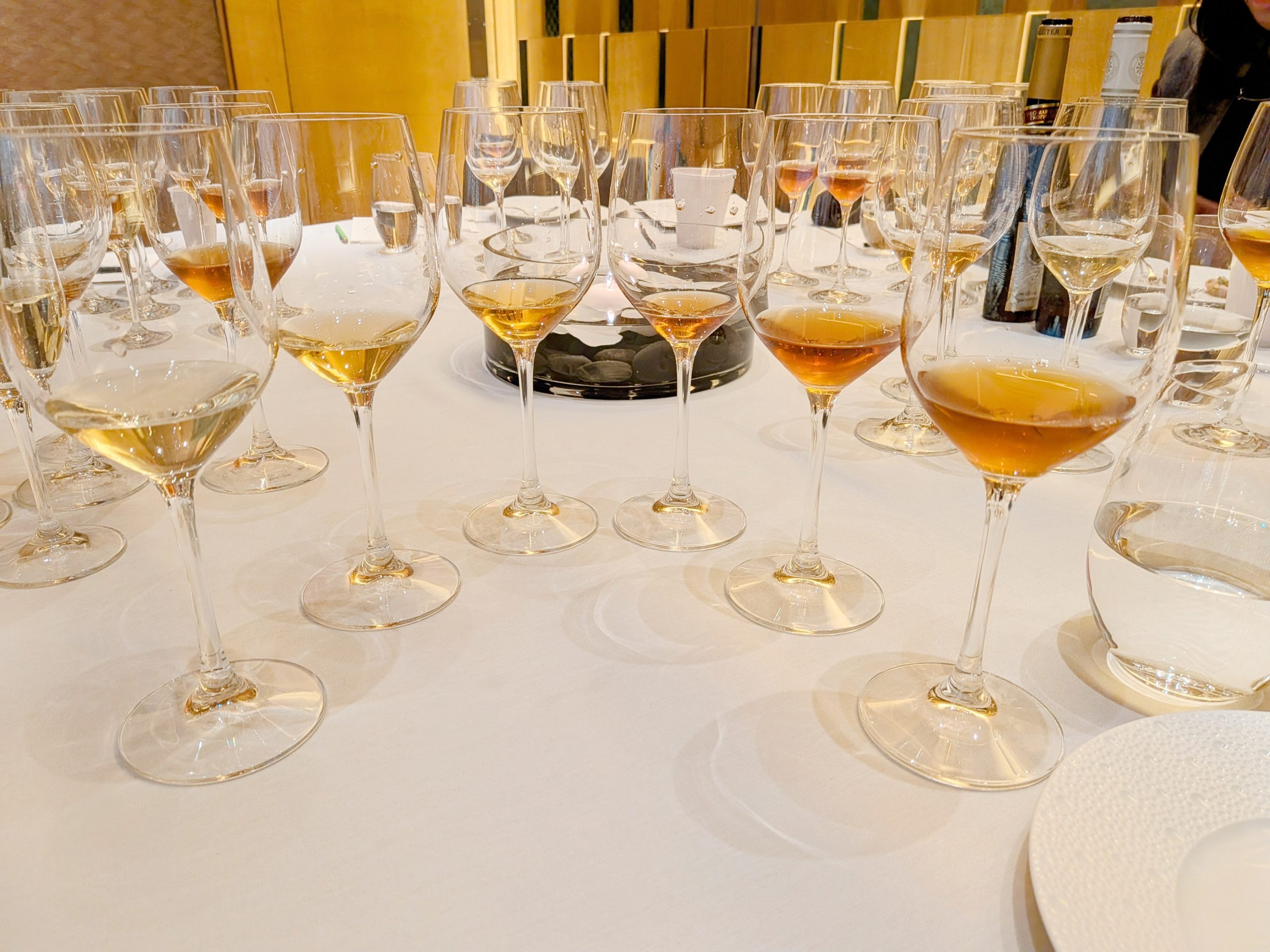
During a recent German Riesling wine vertical in New York City, celebrating the 50th anniversary of the legendary 1976 vintage, another vintage in the lineup, the 1989, was significant as being recognized as the first modern wine vintage due to it marking the start of consistently warmer weather, but it was also the beginning of the end of the Cold War. The fear of the dark cloud of oppression that struck the hearts of young and old, with many in the U.S. having vivid memories of running through nuclear war drills in school as young children, was lifted and now many could finally breathe a sigh of relief.
Two Historical Estates
Two historical estates representing two of Germany’s most prestigious wine regions hosted this momentous tasting. The wine estate Bischöfliche Weingüter Trier is located in the Mosel region, and the other estate, Schloss Vollrads, is located in the Rheingau region; when it comes to not only the best German wine in the world, but the most outstanding, long-lasting white wines in the world, these two regions top the list.
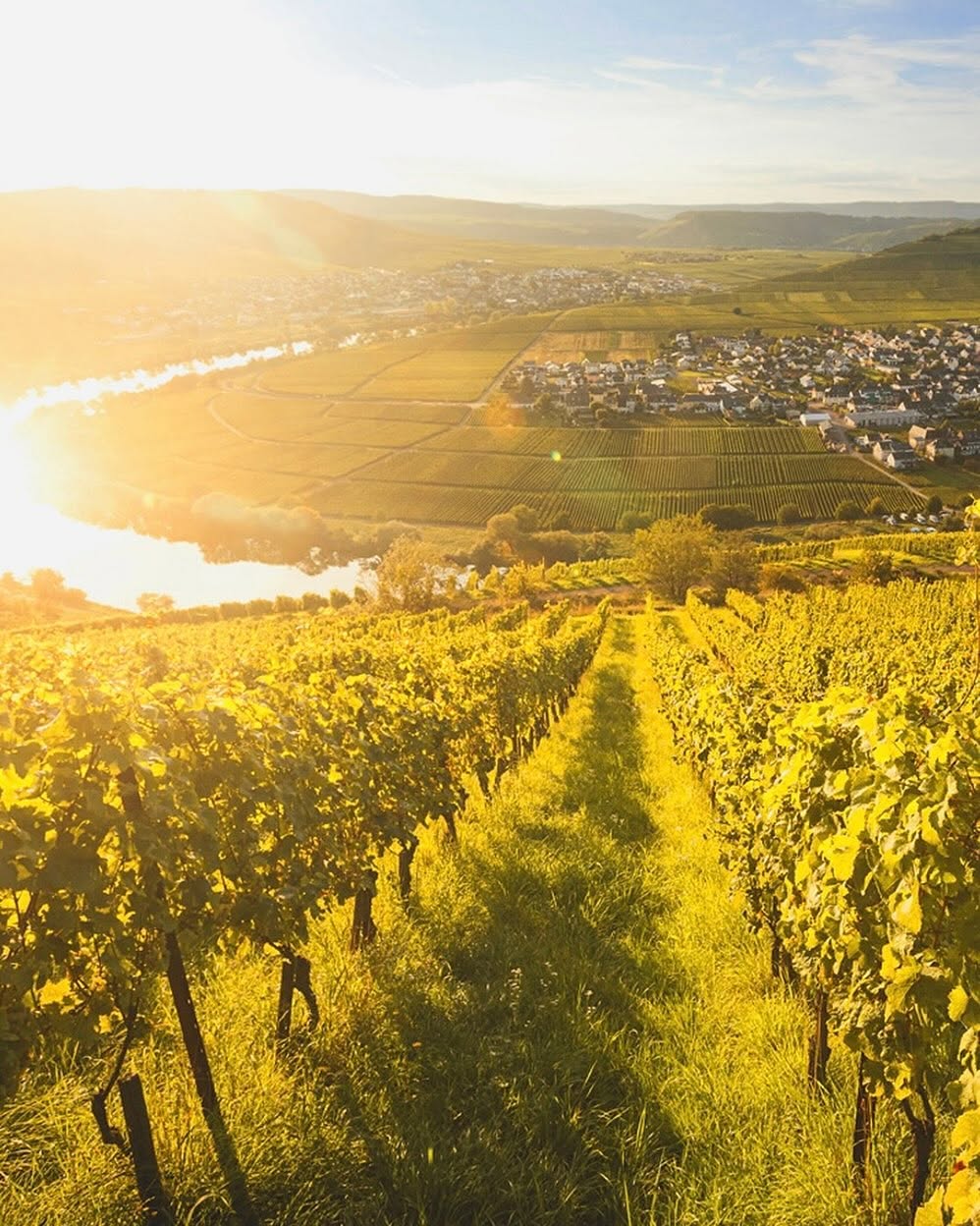
Photo Credit:
Bischöfliche Weingüter Trier
The Bischöfliche Weingüter Trier is extraordinarily impressive with its stunning historic ecclesiastical pedigree that is grounded in three esteemed institutions: Trier Cathedral, the Episcopal Seminary and the Episcopal Convent all located in the ancient town of Trier – founded around 16 BCE by the Roman Emperor Augustus and recognized as Germany’s oldest city. Trier Cathedral is not only the oldest church in Germany, dating back to Christianity becoming the official religion of the Roman Empire, but was also considered the largest church in the Roman Empire. Each of the above three sacred institutions has played a significant part in the elevation of German wine by all being founders of a key organization to safeguard quality control as well as to instill a sense of fierce devotion and veneration into the grape growing and winemaking practices. And considering that they are located in the Mosel region, with the steepest, most challenging vineyards to work in the world, it takes an unbreakable reverence for extraordinary wine to take on such backbreaking work.
The history of the Trier Cathedral has long been closely linked to viticulture, as documents from 1249 show that members of the archdiocese were exempt from their religious obligations during the grape harvest, reflecting the high priority they placed on their vines, and that devotion has continued for over 750 years.
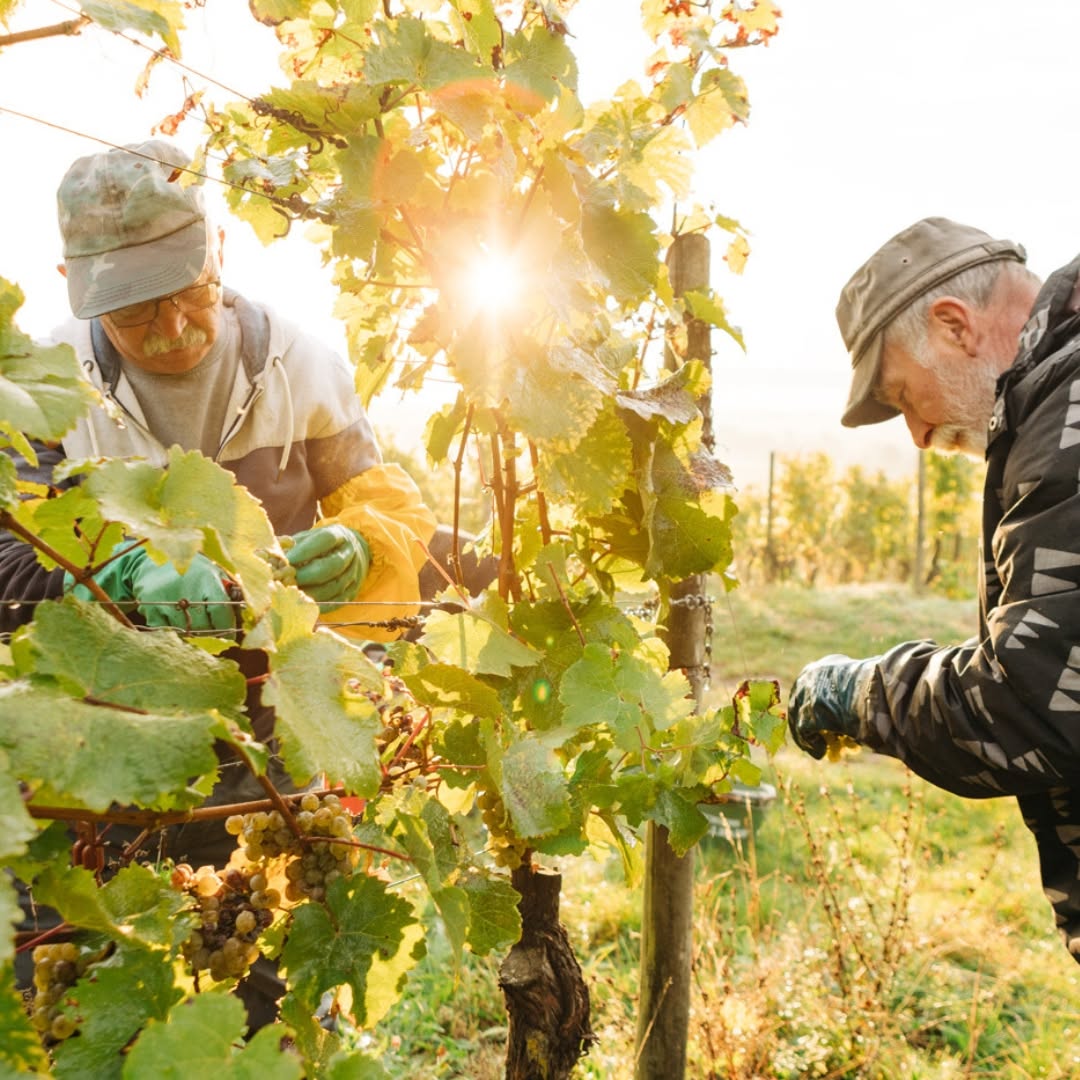
Photo Credit: Schloss Vollrads
Rieslings from the Mosel are known for a lighter body, electric acidity, and an overall delicate quality compared with those from the Rheingau. The other grand estate in this impressive vertical, Schloss Vollrads, is located in the Rheingau, and in comparison, their wines were richer and more structured. They complemented each other in the tasting: they didn’t directly compete, but instead highlighted two superlative styles of German Riesling. Schloss Vollrads traces their roots in winemaking at least back to 1211, and is a pillar within this remarkable region as the Rheingau is famous for having the first single-varietal Riesling vineyard, discovering Spätlese (a late-harvest wine, one of the top quality wine classifications in Germany) by accident, and in the 1800s, Rheingau Rieslings were so sought after that they commanded higher prices than top Bordeaux and Champagne.
Resilience of Perfection
The Soviet Union officially dissolved in 1991, a couple of years after the Berlin Wall came down. Despite the Soviet Union seemingly being, at one time, an indestructible superpower that would dominate the world for centuries to come, it crumbled without a spectacular bang; instead, it happened quietly in a hunting lodge in a forest in Belarus, where the Russian President Boris Yeltsin signed the Belavezha Accords which created the Commonwealth of Independent States, dissolving the Soviet Union behind the back of Soviet President Mikhail Gorbachev and created a chaotic environment that included a tremendous amount of violence and forced migration of millions of people.
Many Eastern countries were plunged into despair; although many Western countries celebrated it, the change was too sudden and left millions of unsuspecting people in extremely vulnerable positions, and some of these countries remain unstable today. After the Berlin Wall came down, West Germany supported East Germany with massive financial aid as it began the reunification process. It wasn’t an easy, quick fix, but German culture doesn’t expect anything worthwhile to be smooth sailing. Their fortitude as a people has helped them take on the greatest challenges over time, not only to become one of Europe’s main powerhouses but also a beacon of light to those less fortunate fleeing horrific conditions.
And that is what is so clear in the best Riesling wines from Germany: determination against all odds, an unrelenting quest for perfection, and a commitment to do better for the world through sacrifices of one’s own comfort. That is the story these vintages, ranging from 1976 to 2024, tell: a story of hope and hard work for a better Germany, becoming a standard-bearer for the rest of the world.
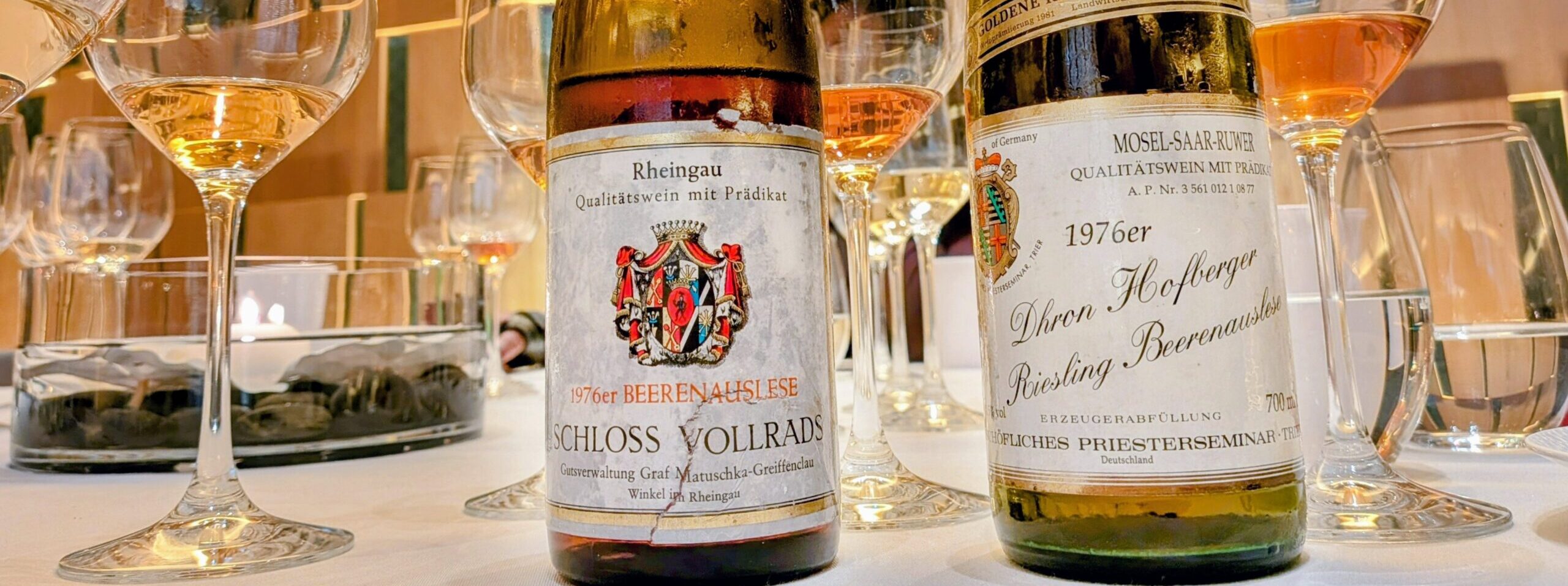
The below German Riesling vertical was tasted on September 21st, 2026:
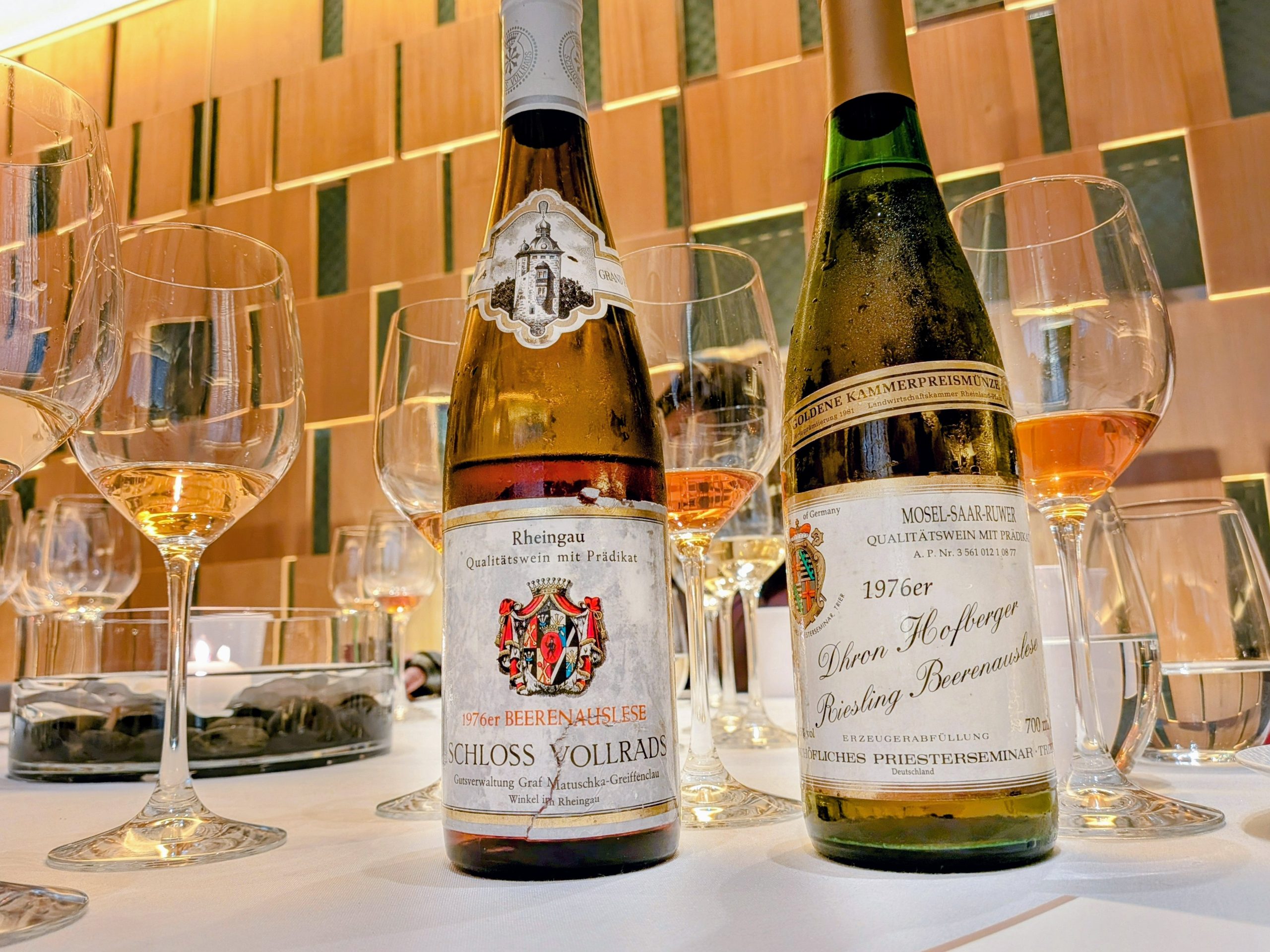
1976 Bischöfliche Weingüter Trier, Dhroner Hofberger, Riesling Beerenauslese, Mosel: 100% Riesling that comes from individually hand-selected berries to find the perfectly affected noble rot (Botrytis cinerea) grapes to make this outstanding sweet wine that is perfectly balanced by high crisp acidity, and hence, why it is called the high-level classification Beerenauslese. Sourced from the Grand Cru-classified vineyard site called Dhroner Hofberger (also referred to as Dhroner Hofberg), which is unique as it sits directly on the banks of the Mosel River unlike other prestigious Mosel vineyards. Gorgeous amber color with a salty minerality infused with a hint of caramel glazed apples with a touch of earthy wild morels that has an energetic, nimble quality.
1976 Schloss Vollrads, Riesling Beerenauslese, Rheingau: 100% Riesling, also classified as a Beerenauslese, which is a rare sweet wine that is picked berry by berry. Copper-tinted with an intensely aromatic nose of grilled figs , orange zest and tar with bright acidity and a long finish.
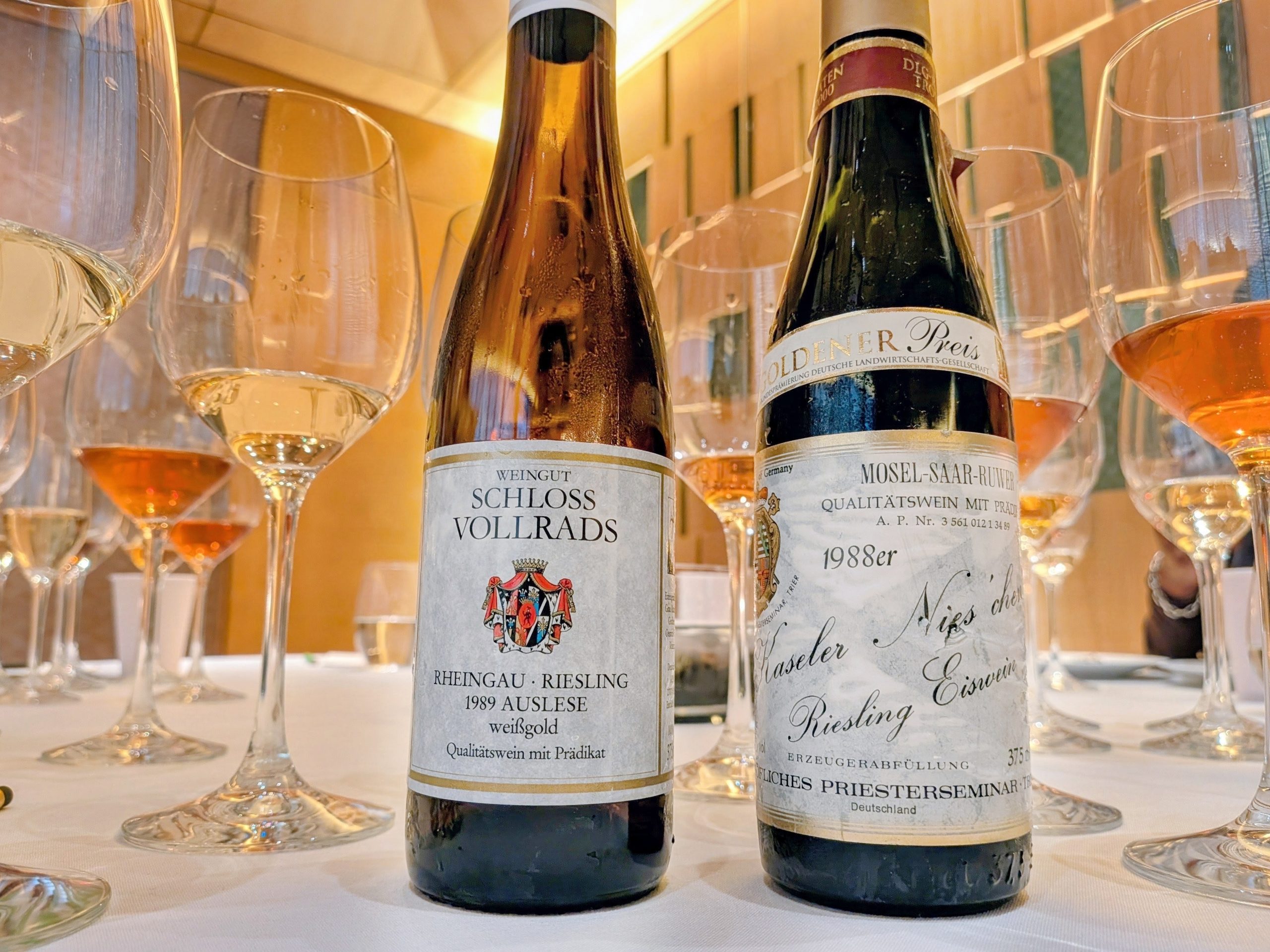
Photo Credit: Cathrine Todd
1988 Bischöfliche Weingüter Trier, Kaseler Nies’chen, Riesling Eiswein, Mosel: 100% Riesling from the single vineyard Kaseler Nies’chen, which has a steep slope, at an incline of 70%. It is categorized as Eiswein in the German quality classification: Eiswein (Ice wine) is a sweet dessert wine made from grapes that froze on the vines naturally. The most pristine expression of sultana grapes one could imagine, mingled with spice cake notes and lifted by a marked acidity, and it seems this wine, with its extraordinary length of flavor and incredible freshness, will outlive all of us.
1989 Schloss Vollrads, Riesling Auslese, Rheingau: 100% Riesling categorized as Auslese in the German quality classification, which is a later harvest wine. Seductively irresistible, with orange marmalade flavors that tango with an intriguing smokiness that has a powerful yet velvety texture with a pronounced acidity that is tender yet invigorating.
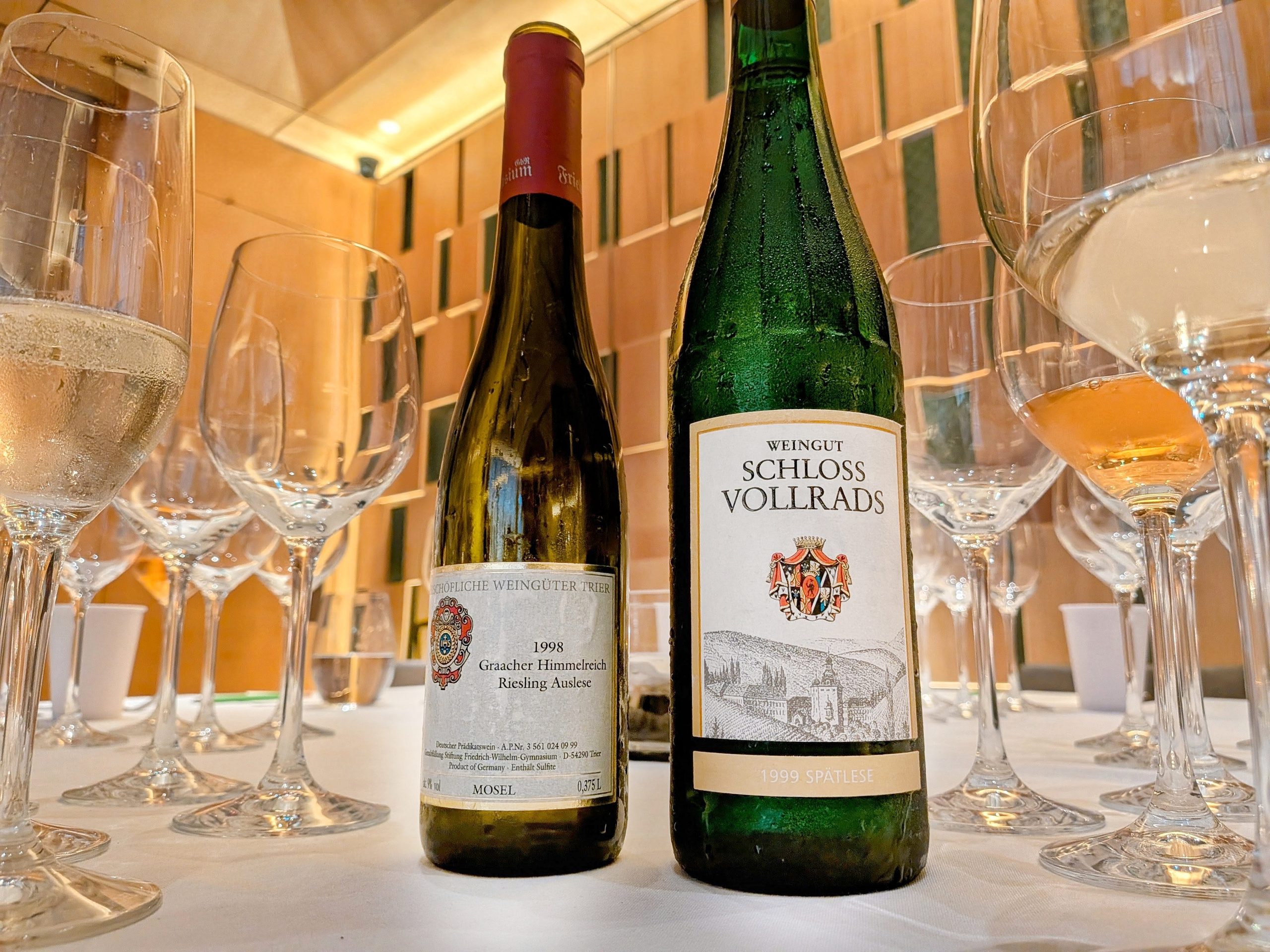
Photo Credit: Cathrine Todd
1998 Bischöfliche Weingüter Trier, Graacher Himmelreich, Riesling Auslese, Mosel: 100% Riesling, classified as an Auslese from the Graacher Himmelreich vineyard, a famous, high-ranking site. A beautifully delicate nose with delineated slate aromas intertwined with crushed flower notes that has a remarkably lithe and precise body that elegantly expresses its deep concentration
1999 Schloss Vollrads, Riesling Spätlese, Rheingau: 100% Riesling classified as a Spätlese, a riper style with grapes left on the vines longer, though not as ripe as Auslese. Richly exotic with mango flavors and underlying quince paste notes that has great overall intensity and an overall balance.
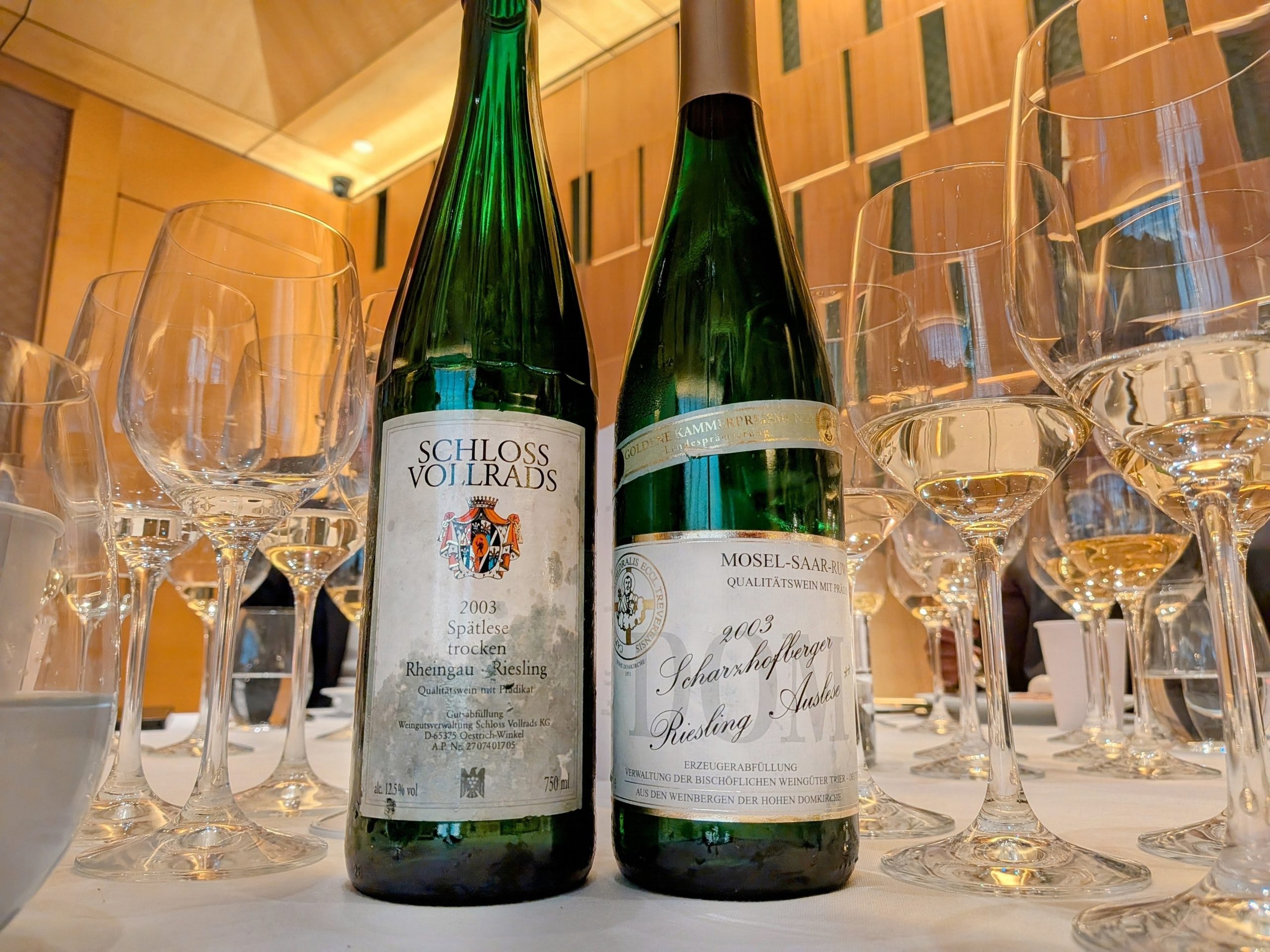
Photo Credit: Cathrine Todd
2003 Bischöfliche Weingüter Trier, Scharzhofberger Riesling Auslese, Mosel: 100% Riesling from the top-tier single vineyard Scharzhofberger and classified as an Auslese. One really feels the sunlight in this wine with an immense power of flavors of apricot tart and lemon meringue balanced by an incredible vitality that brings a stunning harmony.
2003 Schloss Vollrads, Riesling Spätlese Trocken, Rheingau: 100% Riesling classified as Spätlese Trocken, which means it is a Spätlese that is technically dry, but in general, Spätlese and Auslese classified wines usually don’t taste sweet despite some residual sugar as they have a high amount of acidity to balance it out. There is a lightness of being to this wine which is at first surprising but as time goes on it shows its multifaceted nature with lemon confit, saline minerality and firm structure.
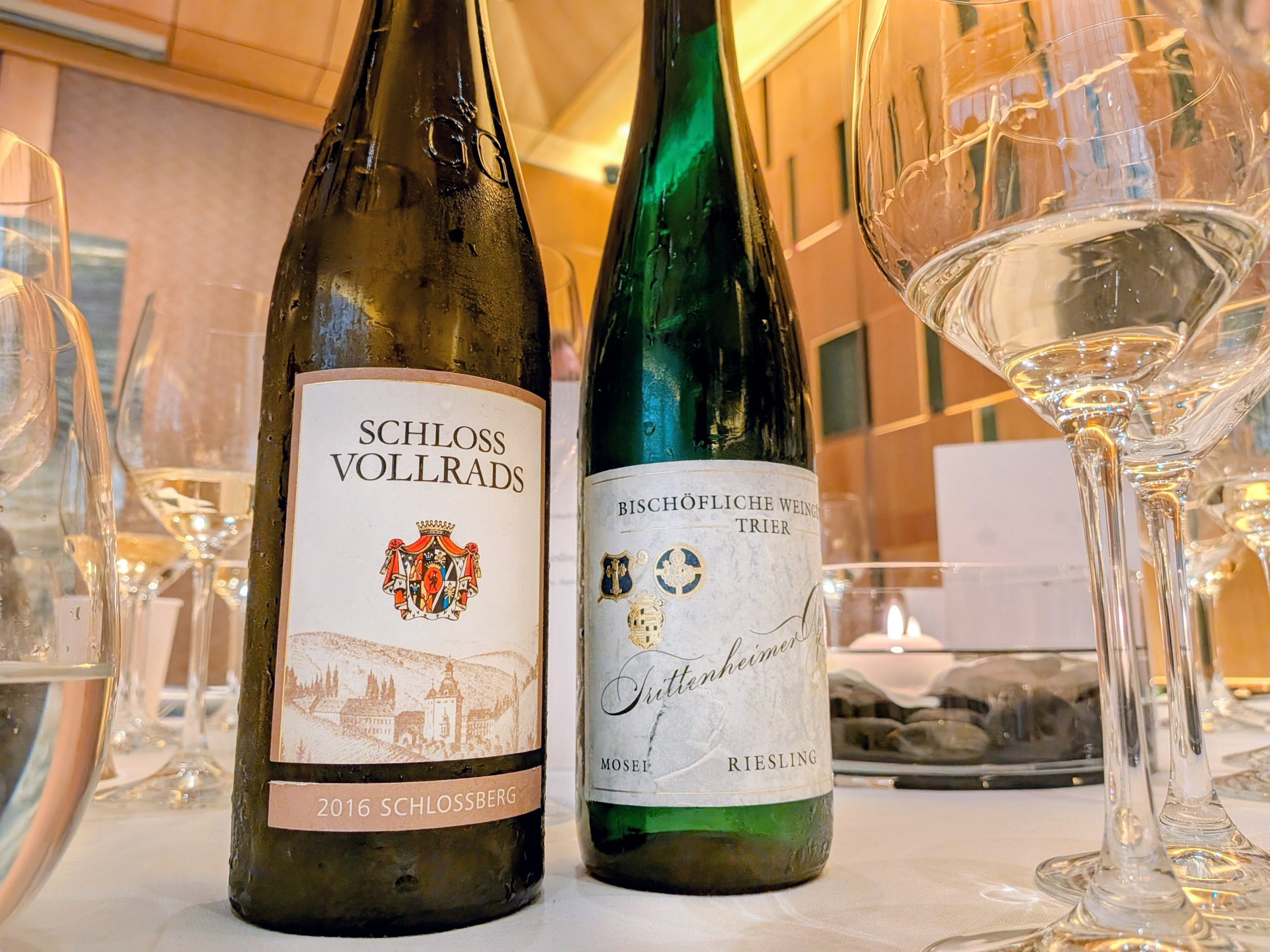
Photo Credit: Cathrine Todd
2015 Bischöfliche Weingüter Trier, Trittenheimer Apotheke, Riesling Reserve, Mosel: 100% Riesling, noted as a Reserve by this producer because it is vinified and aged in large traditional oak casks that gives much more complexity to the texture. Crystalline expression of nectarines and white peaches with a touch of spice and a breathtakingly long finish.
2016 Schloss Vollrads: Schlossberg Riesling GG, Rheingau: 100% Riesling from the esteemed Schlossberg vineyard, a true monopole site exclusively owned and controlled by Schloss Vollrads, and the GG (Großes Gewächs) is Germany’s official classification for a dry wine from a top single vineyard. Smoldering earth aromas compel, further enticing with grilled pineapple and wet river stones, with a thrilling linear drive.
2023 Bischöfliche Weingüter Trier Scharzhofberger Riesling GG, Mosel: 100% Riesling from the top-tier single vineyard Scharzhofberger and classified as a GG (Großes Gewächs). Extremely complex with intermingled lime blossom, iodine and flinty nuances that drives all Riesling wine connoisseurs crazy with ecstasy, as no other category of wine can deliver this type of intricacy.
2024 Schloss Vollrads, Schlossberg Riesling GG, Rheingau: 100% Riesling from the esteemed Schlossberg vineyard and classified as a GG (Großes Gewächs). Enchanting beauty with wildflowers and delectable apricot clafoutis, with an astonishing terroir expression of calcareous rocks and crumbling shale with a hint of white pepper and a long, expressive finish.