Photo Credit: Cathrine Todd
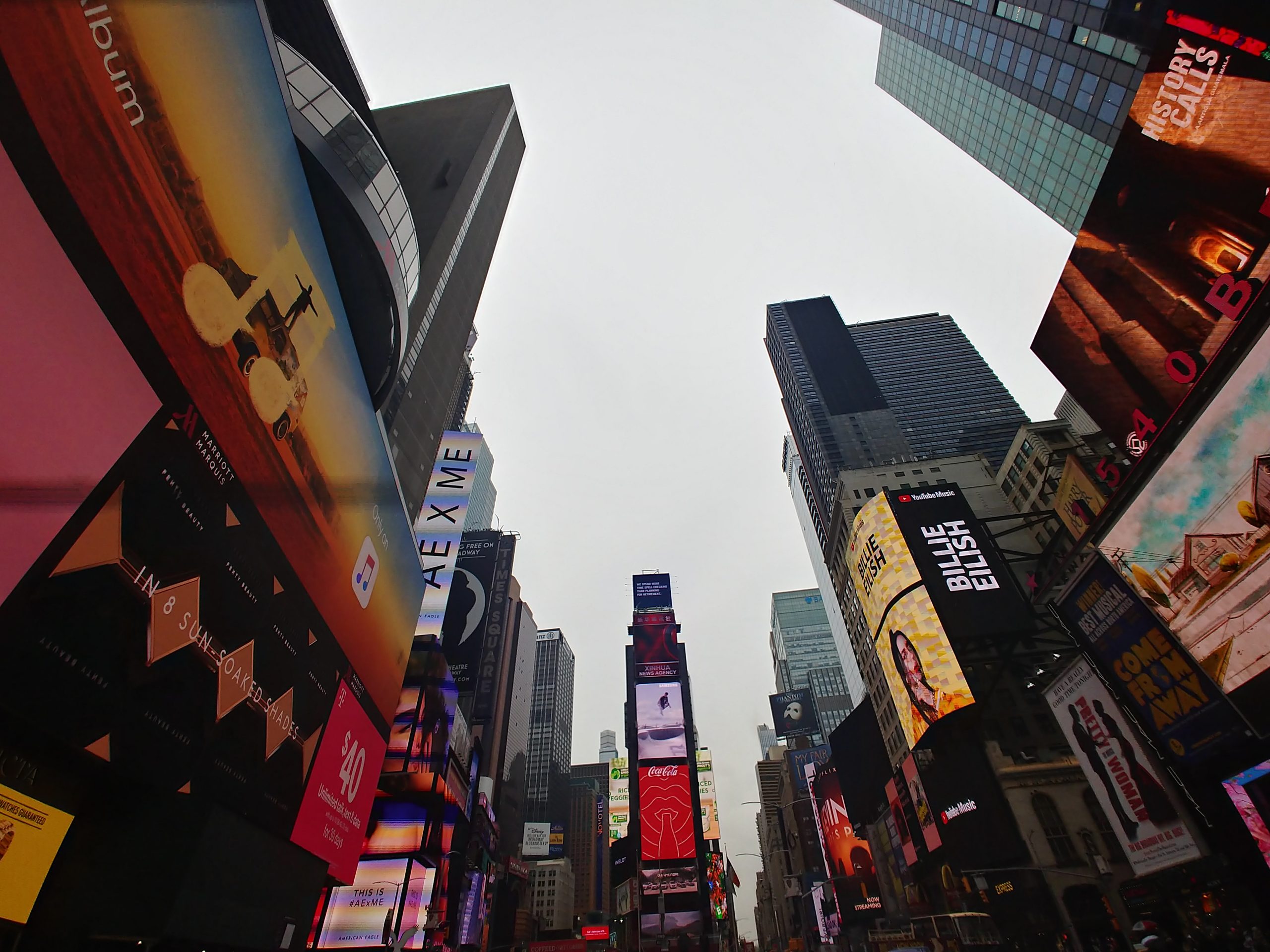
A frenzy of people speaking various languages seemed to meld into a harmonious mosaic of sounds that danced around a whimsically entranced 12-year-old boy. Then, a speeding car whisked by him and his family down the highway; cars flew past them, even as their own ride felt like a rocket. Huge billboards filled with advertisements merged with colorful graffiti on dilapidated buildings, some haphazardly sprayed, creating a dangerously derelict juxtaposition with stunning murals, profound in their beautiful detail, thrilling this adolescent boy, as he never could have imagined such a place. And then, as they approached the center of the city, the tallest buildings he had ever seen, gleaming in the light, left him awestruck. The boy’s once-firm belief that Paris was the center of the universe was challenged; now, he felt no place was as extraordinary as New York City.
This was Richard Frerejean Taittinger’s first visit to NYC in 1992, and it became a memory carved into his soul as he vividly remembers whispering to himself, “This is going to be my home someday.” Richard comes from two famous families with an impressive lineage: on his mother’s side, the Taittinger family of Champagne, whose involvement began when they acquired historic estates in 1932 that had been around since the mid-1700s. And his father’s family, Frerejean, has roots in Burgundy, dating back to respected craftsmen who made cannons for the French army during the Napoleonic era.
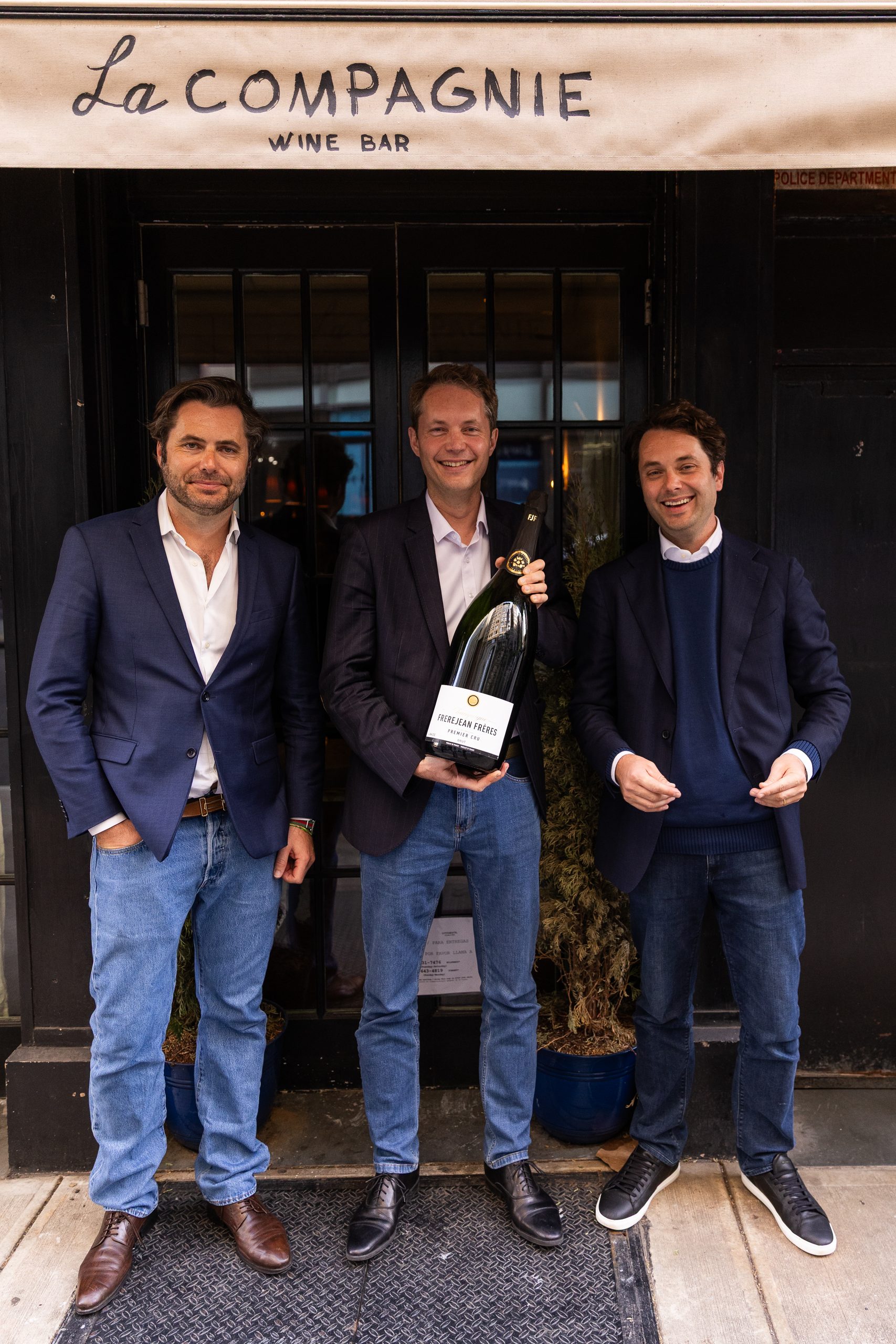
Photo Credit:
Champagne Frerejean Frères
In 2005, Richard and his brothers Rodolphe and Guillaume started their own Champagne house, Maison Frerejean Frères, in Avize, which is the center of where great Chardonnay vines grow in the Côte des Blancs sub-region (it is a Grand Cru village). They were given the opportunity to acquire around 15 acres (six hectares) of Premier and Grand Cru vineyards. But despite coming from one part of the Taittinger family, they pursued this project completely on their own, starting from scratch, and although that is a formidable task considering they are on their own, it opens the door for these passionate and creatively curious brothers to make Champagne that is exciting to them.
This means no compromises, as there is no larger company that needs to go over the balance sheet; it is all about being part of carving a new path for Champagne.
When One Love Dominates
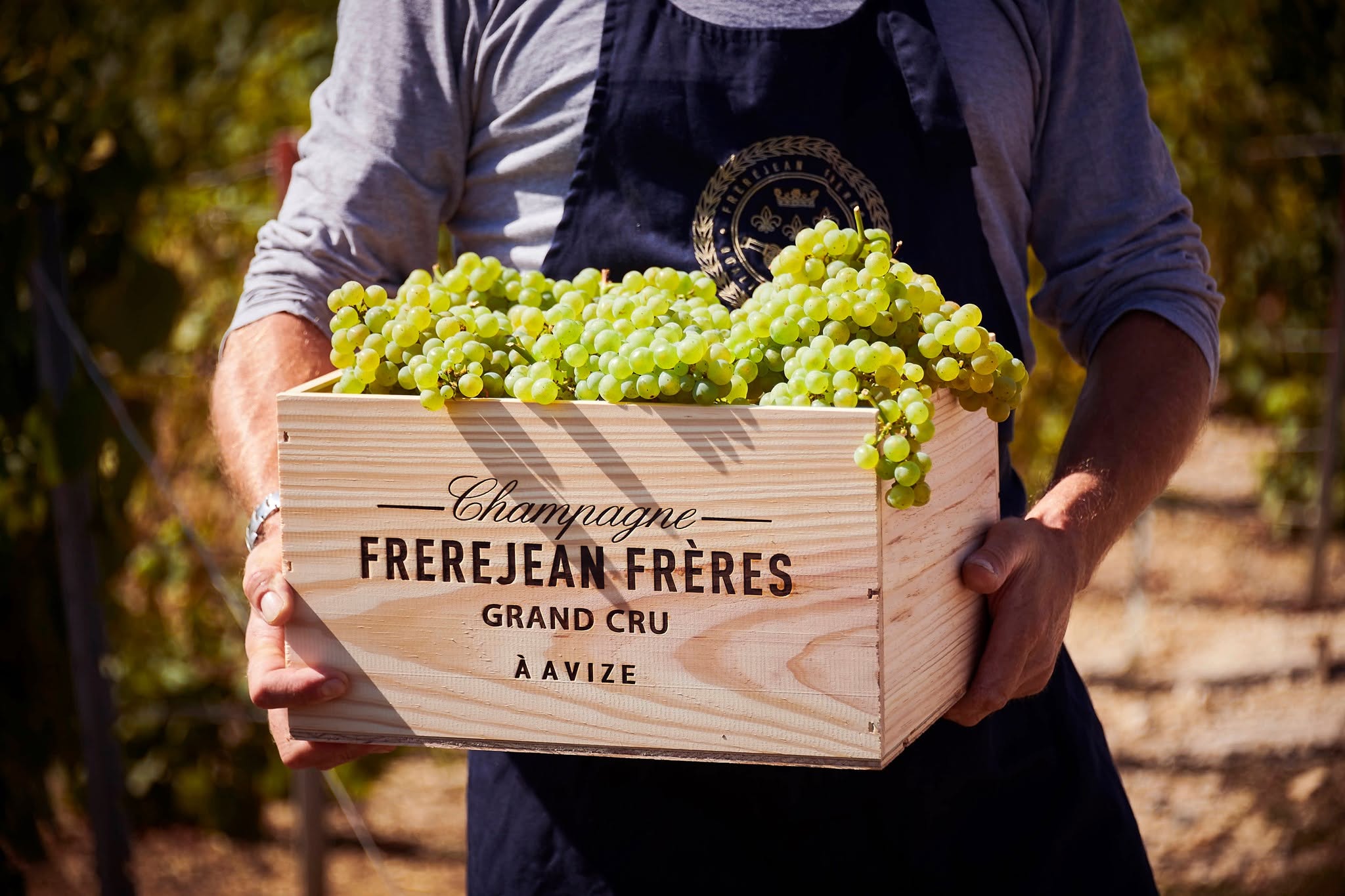
Photo Credit: Champagne Frerejean Frères
All those years ago, as an impressionable young boy, Richard Frerejean knew he would no longer be just French, as a part of his heart also belonged to New York City. He’d worked in various facets of the wine industry, but this special libation wasn’t his only great love; art played a key role in his life as well, and he holds degrees in both disciplines. Eventually, in 2015, he opened an art gallery in the Lower East Side of Manhattan, becoming a pioneer in establishing a vibrant art scene in this up-and-coming neighborhood. He focused on innovative art that often cut to the core of the human condition, and through the gallery, he created events paired with exquisite cuisine and poured Frerejean Frères Champagne at events, which didn’t have distribution in the highly competitive NYC market for a long time. Yet he saw patrons at these events move beyond their usual selves, connect with one another, and share moments richer and more meaningful than they had at the start of the evening. And despite it being a tough road to break into the New York City market with their Champagne, he knew that they offered something special: top sites, longer aging and an extreme focus on sense of place a.k.a. terroir, all for the fraction of the price of other Champagnes with less strict standards and made in massive quantities.
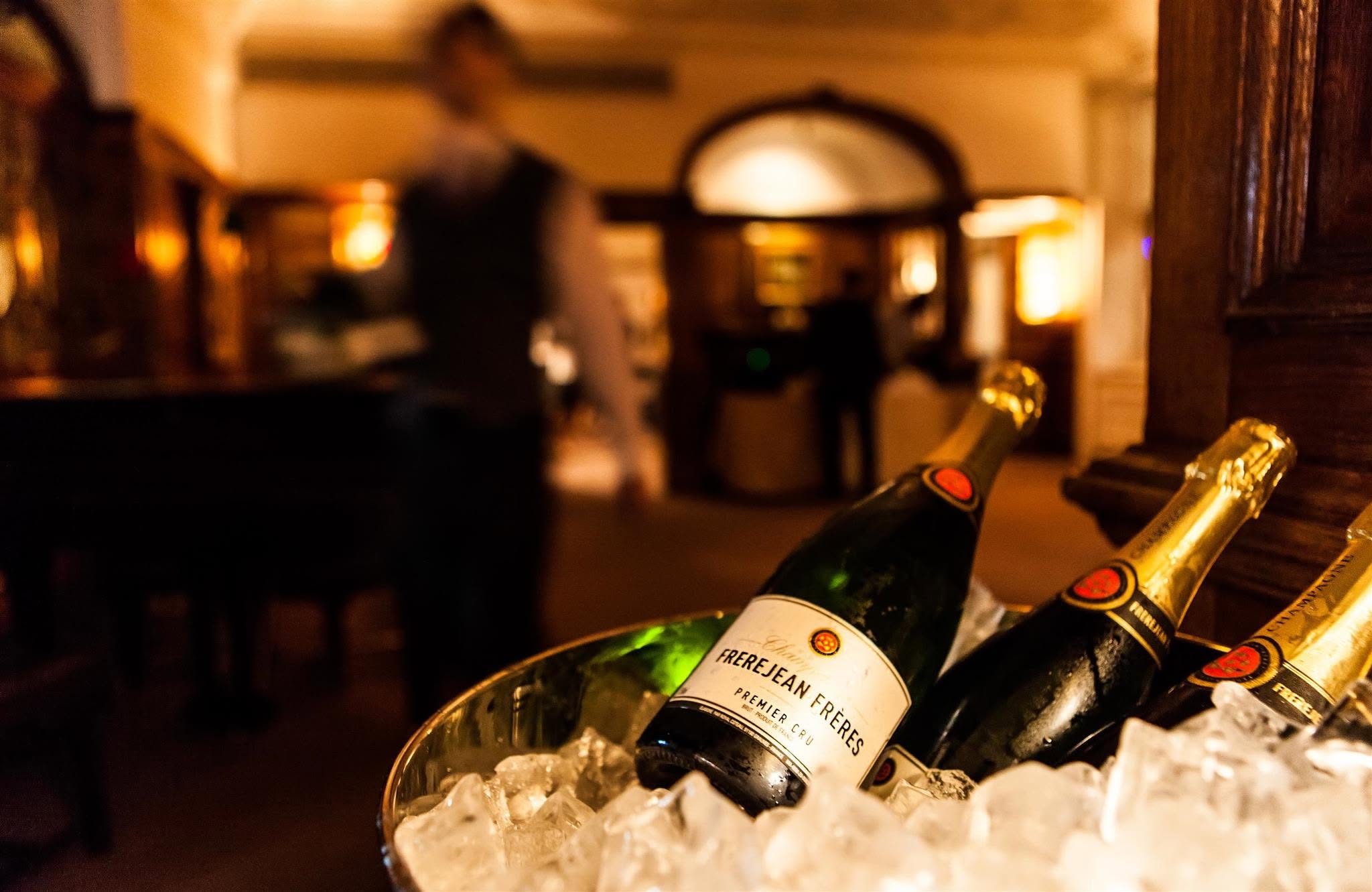
Photo Credit: Champagne Frerejean Frères
When the Frerejean brothers first started their small-scale, exquisitely crafted Champagne house that would be laser-focused on the expression of the vines, Richard’s older brother, Guillaume, who lives in Champagne where the brothers spent a big part of their childhood, and his younger brother Rodolphe, who had spent his whole adult life fully devoted to their Champagne house, spent all of their energies running Frerejean Frères Champagne. And Richard balanced overseeing the gallery while helping his brothers, although in February of 2025 his gallery held their last event and closed since his ten-year lease on the space was up and the rent was drastically increased to an insurmountable amount since it had become one of the trendiest areas in Manhattan due to people like Richard bringing in brilliant artists.
Champagne Frerejean Frères
The three brothers are fully commited to what makes Avize special, and so, they are specialists in making Blanc de Blancs Champagne, which typically uses 100% Chardonnay. So, the Blanc de Blancs bottlings made by Frerejean Frères are particularly spectaular.
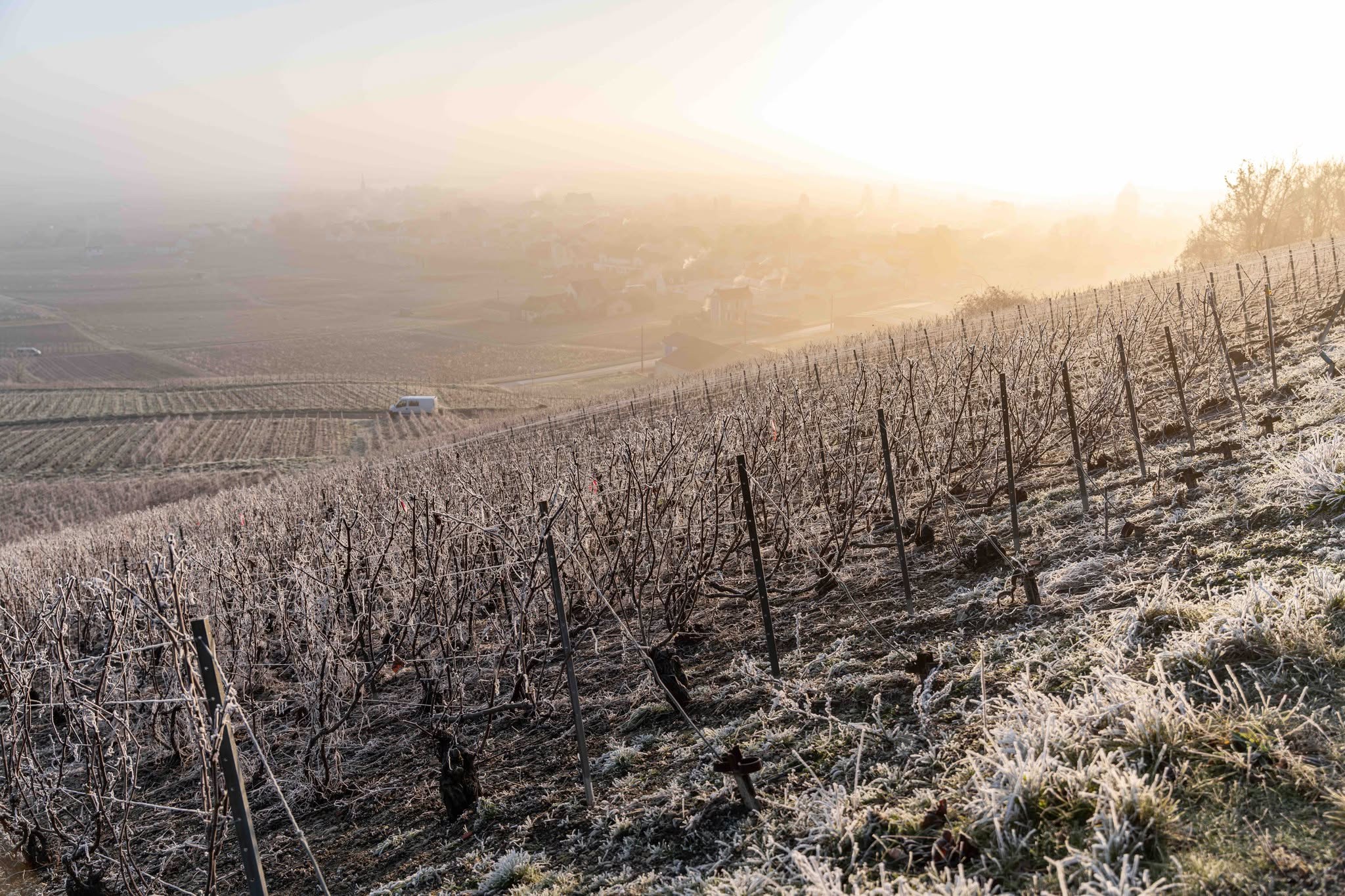
Photo Credit: Champagne Frerejean Frères
Richard and Rodolphe both note that they love how the intense minerality is prominent in their Blanc de Blancs and the brothers really show their Burgundy roots by having some of the wines ferment in neutral oak barrels which are sourced from artisan cooperages in Burgundy. Also, their Burgundian legacy is extremely evident in their fierce passion for terroir, that runs through their veins as they have gone to such lengths to understand their own soils, even going as far as tasting the rocks when they brought in an agronomist to analyze the various soils among their vineyards. As tasting them first hand helps one to truly understand what should be in the wine, according to the agronomist.
As Richard now pours all of his energy into their Champagne house, even with the heartache of rapidly rising NYC rents that ended his gallery, he still calls New York City the greatest place on earth. It’s filled with the greatest diversity of people from all walks of life, but a shared passion can bring them together; through that love, they learn and grow by being exposed to people with vastly different backgrounds. That’s what Richard experienced with the visual arts, yet he sees the connection with Champagne as well; to him, those who live in New York City truly understand terroir-driven Champagne on a deep, multifaceted level because embracing a place’s intricacies is inherently part of being a New Yorker. And NYC has continued to show its love to Richard, with them securing some placements at top restaurants in New York City as well as the world showing them love by key placements in Michelin-starred restaurants in other stellar cities like Paris and London.
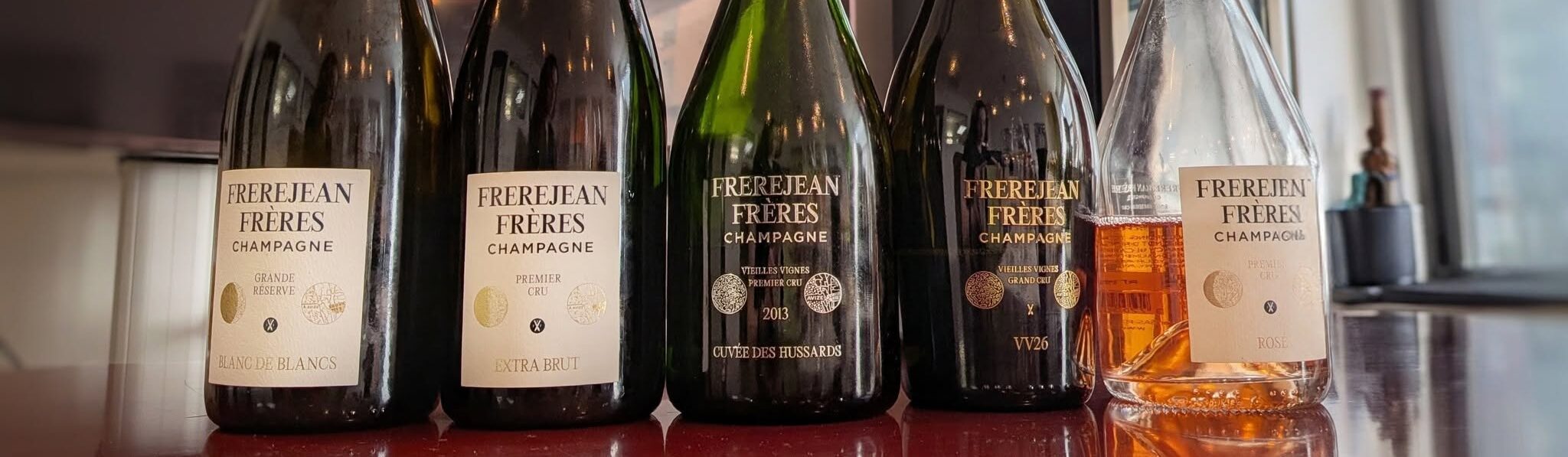
Photo Credit: Cathrine Todd
Champagne Frerejean Frères is currently imported by Duclot.
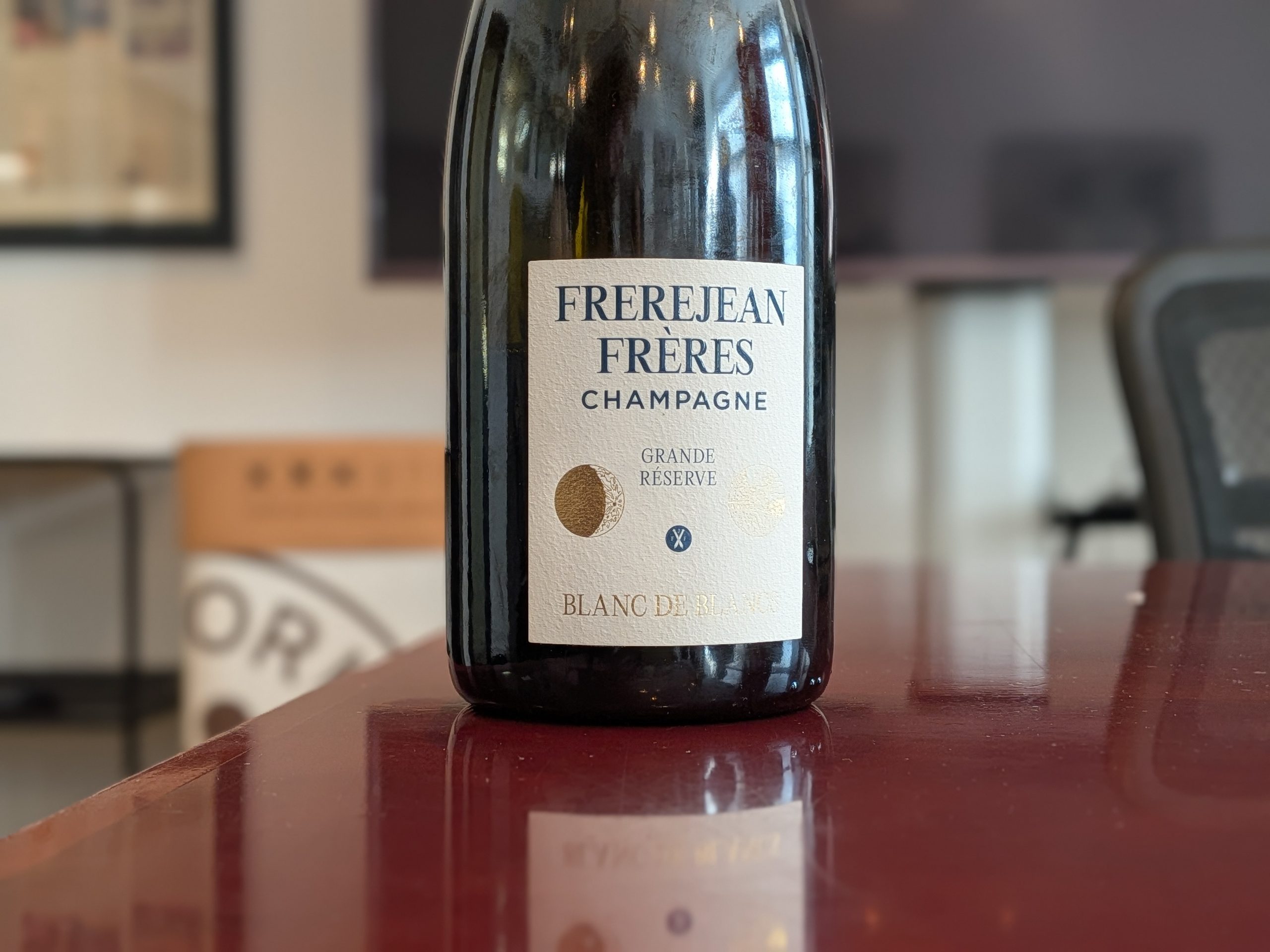
Blanc de Blancs, Grande Réserve
Photo Credit: Cathrine Todd
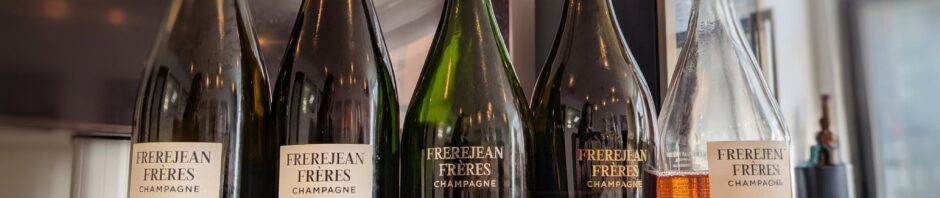
Champagne Frerejean Frères, Blanc de Blancs, Grande Réserve, Champagne, France: 100% Chardonnay sourced from a combination of Grand Cru and Premier Cru villages. Majority is from the 2016 vintage, with reserve wines from 2010 and 2012. This is an enormously impressive entry-level Champagne that reflects their house style. Yet unlike many other entry-level Champagnes, it is a Grande Réserve, meaning that it is aged eight years with two older vintages chosen to find ideal harmony with the 2016 and sourced from a significant amount of Grand Cru and Premier Cru sites. Unravels slowly with yellow orchard fruit, dried flowers and stony minerality, with hints of baked apple that has a pillowy, creamy texture with a sleek, energetic body that has tiny bubbles enlivening the elegantly expressed peach fruit flavors that is at once charming yet precise.
Champagne Frerejean Frères, Extra Brut, Premier Cru, Champagne, France: 50% Chardonnay and 50% Pinot Noir from Grand Cru of Chouilly, Cramant, Le Mesnil-sur-Oger and Premier Cru Mareuil-sur-Aÿ sourced from the sub-regions of Côte des Blancs and Vallée de la Marne. Most of the wine is from the 2019 vintage, with 20% to 30% reserve wines, and since 2019 was a significantly warmer year, they decided to make an Extra Brut style with less added residual sugar in the dosage than the Brut. But in general, their level of dosage is much lower on average. It offers delightful aromatics of nectarine and pink grapefruit, intertwined with a touch of quince, with crisp acidity enhanced by stony minerality and an elegant long finish; the bubbles are so delicate and delineated they seem to form an exquisite pearl necklace.
2013 Champagne Frerejean Frères, Cuvée des Hussards, Premier Cru, Champagne, France: 90% Chardonnay and 10% Pinot Noir from the Premier Cru Vertus; Extra Brut level of dosage so only two grams per liter of residual sugar. The Cuvée des Hussards pays tribute to the Napoleonic cavalry, to whom the Frerejean family supplied cannons. Perfumed fruit with warm strawberries and baked pears that seem to dance with wildflowers in the head, with an animated freshness that enlivens the fine mousse and an intense, chalky core that is saline-tinged.
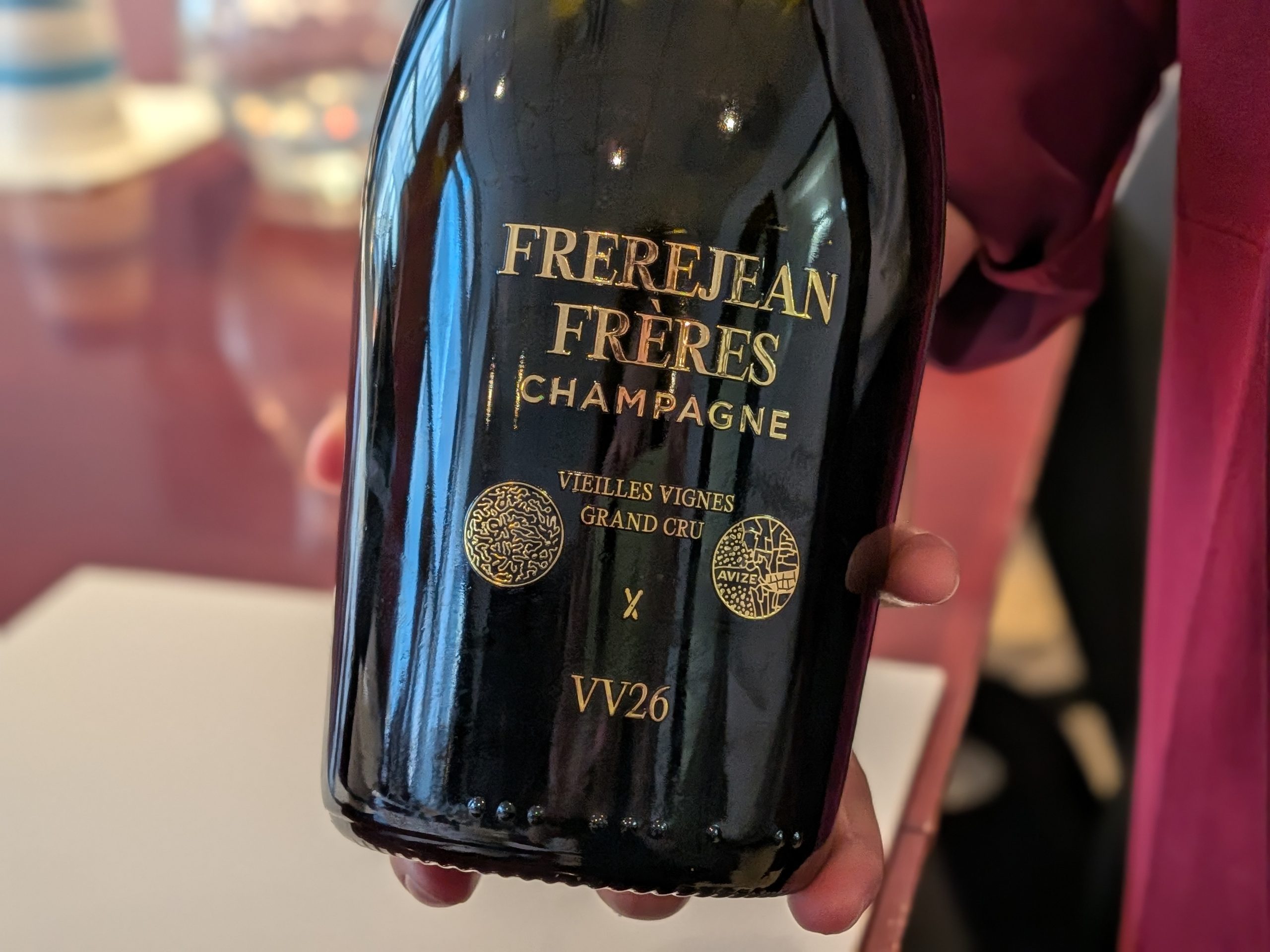
Champagne Frerejean Frères, VV26, Grand Cru, Champagne, France: 100% Chardonnay sourced from parcels in the Grand Cru village of Cramant where some of the century-old vines are planted. And so, VV26 stands for “Vieilles Vignes de 1926,” which translates into English as old vines of 1926. The base wines are from 2013, 2015 and 2016, with 20% to 30% reserve wines. The notes leisurely unfurl with a stunningly complex nose of freshly baked bread, citrus oil and oyster shell, with racy acids and a multidimensional palate that has a fierce mineral backbone that penetrates throughout the extremely prolonged finish. Aged entirely under a cork-and-staple closure called agrafe that allows for a minuscule level of oxygen exchange, which adds texture, savory complexity and depth.
Champagne Frerejean Frères, Rosé, Premier Cru, Champagne, France: 60% Chardonnay and 40% Pinot Noir (12% vinified as red wine and aged in oak barrels) from the Grand Cru sites of Chouilly, Cramant and Premier Cru Mareuil-sur-Aÿ sourced from the sub-regions of Côte des Blancs and Vallée de la Marne. Majority is from the 2018 vintage, with 20% to 30% reserve wines. This rosé soars from the glass with blood orange coulis, Sichuan peppers and raspberry strudel, balanced by a lively acidity and that distinctive minerality note that is laser-focused in the mid-palate, which seems to, at one moment, dance and prance with delight and the next become seductive in its undeniable beauty.